• HOME
  • NEWS
  • EXPLORE
    • CAREER
      • Companies
      • Jobs
    • EVENTS
    • iGEM
      • News
      • Team
    • PHOTOS
    • VIDEO
    • WIKI
  • BLOG
  • COMMUNITY
    • FACEBOOK
    • INSTAGRAM
    • TWITTER
Saturday, May 16, 2026
BIOENGINEER.ORG
No Result
View All Result
  • Login
  • HOME
  • NEWS
  • EXPLORE
    • CAREER
      • Companies
      • Jobs
        • Lecturer
        • PhD Studentship
        • Postdoc
        • Research Assistant
    • EVENTS
    • iGEM
      • News
      • Team
    • PHOTOS
    • VIDEO
    • WIKI
  • BLOG
  • COMMUNITY
    • FACEBOOK
    • INSTAGRAM
    • TWITTER
  • HOME
  • NEWS
  • EXPLORE
    • CAREER
      • Companies
      • Jobs
        • Lecturer
        • PhD Studentship
        • Postdoc
        • Research Assistant
    • EVENTS
    • iGEM
      • News
      • Team
    • PHOTOS
    • VIDEO
    • WIKI
  • BLOG
  • COMMUNITY
    • FACEBOOK
    • INSTAGRAM
    • TWITTER
No Result
View All Result
Bioengineer.org
No Result
View All Result
Home NEWS Science News Biology

Researchers identify a protein that protects against non-alcoholic fatty liver disease

Bioengineer by Bioengineer
May 3, 2019
in Biology
Reading Time: 2 mins read
0
IMAGE
Share on FacebookShare on TwitterShare on LinkedinShare on RedditShare on Telegram

IMAGE

Credit: IRB Barcelona.

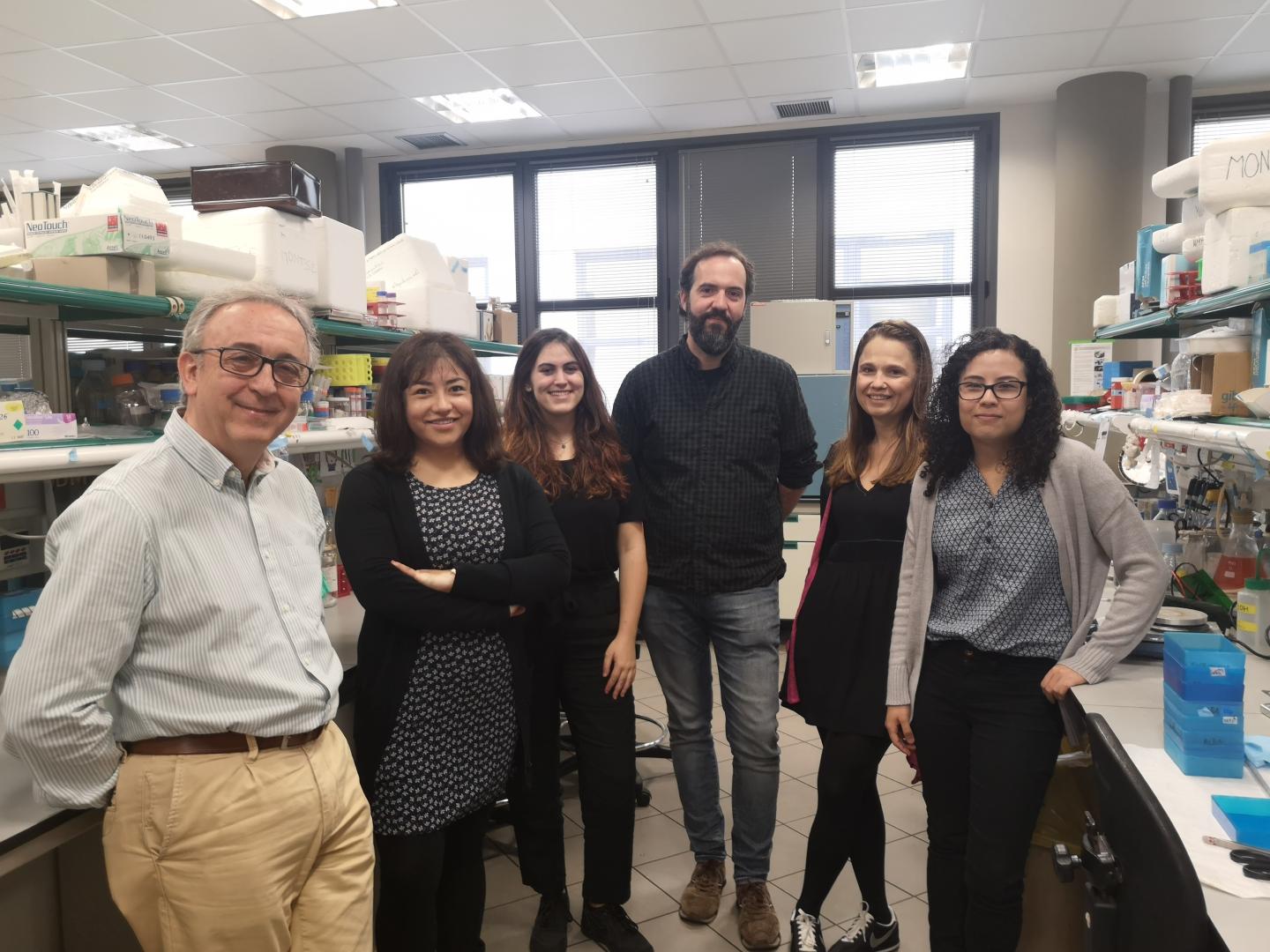
Non-alcoholic fatty liver disease describes several liver dysfunctions of varying severity, characterised by the accumulation of fat in hepatic cells and not caused by high alcohol consumption. This disease, one of the most common in developed countries, affects around 25% of the population worldwide. A team at the Institute for Research in Biomedicine (IRB Barcelona) has identified one of the factors that confer protection against this condition, namely the protein Mitofusin 2.

“Mitofusin 2 emerges as a possible therapeutic target to tackle fatty liver, a disease for which no treatments are available. Early diagnosis of this disease is difficult and physicians are currently only recommending weight loss to alleviate the condition,” explains Antonio Zorzano, head of the Complex Metabolic Diseases and Mitochondria laboratory at IRB Barcelona.

One of the most serious forms of fatty acid is non-alcoholic steatohepatitis (NASH), in which the accumulation of fat is accompanied by inflammation. In this study published in the journal Cell, the researchers have observed a decrease in the levels of Mitofusin 2 in patients with NASH, even in early stages of the disease.

Like humans, mice also develop this disease when the levels of Mitofusin 2 decreases. By injecting a mouse model of NASH with an adenovirus enconding Mitofusin 2 protein–a virus modified to artificially express proteins–the team headed by Zorzano, senior professor at the University of Barcelona and researcher of the CIBERDEM Programme, has observed the amelioration of NASH.

“We are now studying different approaches that will allow us to enhance the levels of Mitofusin 2, without producing side effects, and that could be relevant in the treatment of non-alcoholic fatty liver disease,” says María Isabel Hernández-Alvarez, postdoctoral fellow at IRB Barcelona and first author of the study.

This work has been supported by funding from the Ministry of Science, Innovation and Universities (previously known as MINECO), the Catalan Government, the Instituto de Salud Carlos III, CIBERDEM, “la Caixa” Foundation and the Pere Virgili Institute (IISPV).

###

Reference article:

Hernández-Alvarez MI, Sebastián D, Vives S, Ivanova S, Bartoccioni P, Kakimoto P, Plana N, Veiga SR, Hernández V, Vasconcelos N, Peddinti G, Adrover A, Jové M, Pamplona R, Gordaliza-Alaguero I, Calvo E, Cabré N, Castro R, Boutant M, Sala D, Hyotylainen T, Orešič M, Fort J, Errasti-Murugarren E, Rodrígues CMP, Orozco M, Joven J, Cantó C, Palacin M, Fernández-Veledo S, Vendrell J, Zorzano A.

Deficient endoplasmic reticulum-mitochondrial phosphatidylserine transfer causes liver disease.

Cell (2019) DOI: https://doi.org/10.1016/j.cell.2019.04.010

Media Contact
Communications IRB Barcelona
[email protected]

Original Source

https://www.irbbarcelona.org/en/news/researchers-at-irb-barcelona-identify-a-protein-that-protects-against-non-alcoholic-fatty-liver

Related Journal Article

http://dx.doi.org/10.1016/j.cell.2019.04.010

Tags: BiochemistryBiologyCell BiologyMolecular Biology
Share12Tweet8Share2ShareShareShare2

Related Posts

Single mother must adapt swiftly — the survival of her colony depends on it — Biology

Single mother must adapt swiftly — the survival of her colony depends on it

May 15, 2026
Why Are Nearly Everyone Right-Handed? It Might Be Linked to How We Learned to Walk — Biology

Why Are Nearly Everyone Right-Handed? It Might Be Linked to How We Learned to Walk

May 15, 2026

Excessive Neuronal Activity Initiates Severe Autoimmune Brain Disorder

May 15, 2026

Precision Anti-Aging Strategies Focus on Eliminating Harmful Senescent Cells While Preserving Beneficial Ones

May 15, 2026
Please login to join discussion

POPULAR NEWS

  • Research Indicates Potential Connection Between Prenatal Medication Exposure and Elevated Autism Risk

    844 shares
    Share 338 Tweet 211
  • New Study Reveals Plants Can Detect the Sound of Rain

    730 shares
    Share 291 Tweet 182
  • Salmonella Haem Blocks Macrophages, Boosts Infection

    62 shares
    Share 25 Tweet 16
  • Breastmilk Balances E. coli and Beneficial Bacteria in Infant Gut Microbiomes

    58 shares
    Share 23 Tweet 15

About

We bring you the latest biotechnology news from best research centers and universities around the world. Check our website.

Follow us

Recent News

Congenital Heart Disease’s Lasting Impact on Brain Health

Metabolic Stress Worsens Parkinson’s via Mitochondrial Ferroptosis

Four New Hydroxyl Fatty Acids from Bacillus sp.

Subscribe to Blog via Email

Enter your email address to subscribe to this blog and receive notifications of new posts by email.

Join 82 other subscribers
  • Contact Us

Bioengineer.org © Copyright 2023 All Rights Reserved.

Welcome Back!

Login to your account below

Forgotten Password?

Retrieve your password

Please enter your username or email address to reset your password.

Log In
No Result
View All Result
  • Homepages
    • Home Page 1
    • Home Page 2
  • News
  • National
  • Business
  • Health
  • Lifestyle
  • Science

Bioengineer.org © Copyright 2023 All Rights Reserved.