

• HOME
  • NEWS
  • EXPLORE
    • CAREER
      • Companies
      • Jobs
    • EVENTS
    • iGEM
      • News
      • Team
    • PHOTOS
    • VIDEO
    • WIKI
  • BLOG
  • COMMUNITY
    • FACEBOOK
    • INSTAGRAM
    • TWITTER
Monday, July 13, 2026
BIOENGINEER.ORG
No Result
View All Result
  • Login
  • HOME
  • NEWS
  • EXPLORE
    • CAREER
      • Companies
      • Jobs
        • Lecturer
        • PhD Studentship
        • Postdoc
        • Research Assistant
    • EVENTS
    • iGEM
      • News
      • Team
    • PHOTOS
    • VIDEO
    • WIKI
  • BLOG
  • COMMUNITY
    • FACEBOOK
    • INSTAGRAM
    • TWITTER
  • HOME
  • NEWS
  • EXPLORE
    • CAREER
      • Companies
      • Jobs
        • Lecturer
        • PhD Studentship
        • Postdoc
        • Research Assistant
    • EVENTS
    • iGEM
      • News
      • Team
    • PHOTOS
    • VIDEO
    • WIKI
  • BLOG
  • COMMUNITY
    • FACEBOOK
    • INSTAGRAM
    • TWITTER
No Result
View All Result
Bioengineer.org
No Result
View All Result
Home NEWS Science News Biology

Researchers find cereal rye is effective at reducing Amaranthus spp. density in soybean crops

Bioengineer by Bioengineer
September 15, 2017
in Biology
Reading Time: 2 mins read
0
Share on FacebookShare on TwitterShare on LinkedinShare on RedditShare on Telegram
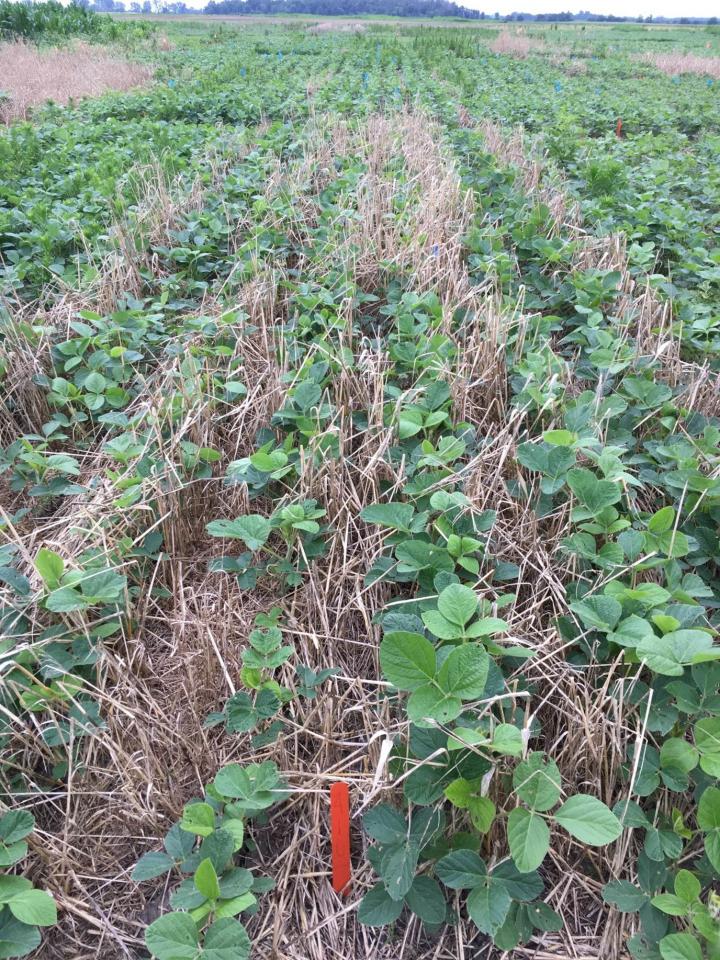
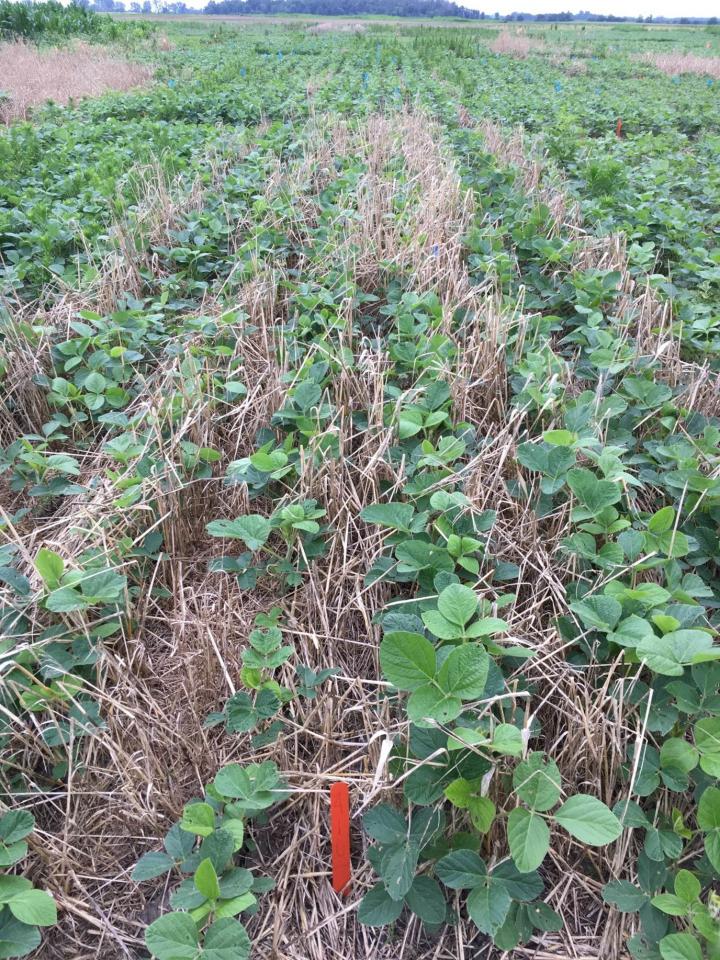
IMAGE

Credit: Photo provided by Mark Loux.

Fall-planted cover crops are often used as part of an integrated weed control program in herbicide-resistant soybean crops. But researchers writing in the journal Weed Technology say not all cover crops are equally effective against Palmer amaranth, waterhemp and other Amaranthus spp. weeds.

Their conclusions follow a two-year, multistate study to compare the impact of cereal rye, spring oat, forage radish and annual ryegrass on weed control and crop yields. The study was conducted in areas with known infestations of Amaranthus spp. weeds.

Two herbicide programs were used. The first involved a preemergence residual herbicide, followed by a postemergence application of a foliar and residual herbicide. The second program added a second postemergence application of residual herbicide.

Researchers found there were no variations in weed control or in crop yields among the various cover crops used as part of an integrated control program with herbicides. Cereal rye, though, consistently reduced the density of Amaranthus spp. weeds, even in the absence of herbicides.

"Cereal rye has the most potential to contribute to Amaranthus spp. control by reducing weed population density within the first month or so following soybean planting," said research team member Mark Loux of Ohio State University. "As a result, there is a better opportunity to reduce selection for weeds resistant to herbicides used in postemergence treatments. Cereal rye is also a great choice when weed density is high or when environmental conditions reduce herbicide effectiveness."

###

Full text of the article, "Influence of Cover Crops on Management of Amaranthus spp. in Glyphosate- and Glufosinate-Resistant Soybean" is now available in Weed Technology Vol. 31, Issue 4, 2017.

About Weed Technology

Weed Technology is a journal of the Weed Science Society of America, a nonprofit scientific society focused on weeds and their impact on the environment. The publication presents original research and special articles about weeds, crops and new technologies used for more effective weed management. To learn more, visit http://www.wssa.net.

Media Contact

Natalie Warrender
[email protected]
01-223-347-944

http://www.cambridge.org/

Original Source

http://blog.journals.cambridge.org/2017/09/14/battling-palmer-amaranth-in-herbicide-resistant-soybeans-choose-your-cover-crop-carefully/ http://dx.doi.org/10.1017/wet.2017.30


Share14Tweet8Share2ShareShareShare2

Related Posts

Han directs new $15M NIH center for organ-on-chip technology

Han directs new $15M NIH center for organ-on-chip technology

July 11, 2026
Bacteriophages Enable Next-Gen Smart Pathogen Detection Sensors

Bacteriophages Enable Next-Gen Smart Pathogen Detection Sensors

July 10, 2026

Temperature Fluctuations Have Greater Impact Than Previously Believed

July 10, 2026

New Study Uncovers Biology Behind Glioma Cancer Progression

July 10, 2026
Please login to join discussion

POPULAR NEWS

  • Detection of EDCs in Breast Milk and Infant Urine Up to Six Months Highlights Early Exposure Risks

    77 shares
    Share 31 Tweet 19
  • New Drug Candidate Developed at McMaster Shows Potential for Treating Brain Cancer

    58 shares
    Share 23 Tweet 15
  • KTU Researchers Explore Ultrasound’s Role in Enhancing Blood Flow Beyond Diagnostics

    53 shares
    Share 21 Tweet 13
  • Experimental Therapy Simultaneously Destroys Prostate Tumor Cells and Reactivates Antitumor Immunity

    46 shares
    Share 18 Tweet 12

About

BIOENGINEER.ORG

We bring you the latest biotechnology news from best research centers and universities around the world. Check our website.

Follow us

Recent News

Bioinspired Microcapsule Reactor Using Engineered Probiotics for IBD Treatment

KAIST Uncovers Key to Overcoming Semiconductor Electrical Bottleneck

Nationwide Study Reveals Multimorbidity Factors in Older Chinese Adults

Subscribe to Blog via Email

Enter your email address to subscribe to this blog and receive notifications of new posts by email.

Join 85 other subscribers
  • Contact Us

Bioengineer.org © Copyright 2023 All Rights Reserved.

Welcome Back!

Login to your account below

Forgotten Password?

Retrieve your password

Please enter your username or email address to reset your password.

Log In
No Result
View All Result
  • Homepages
    • Home Page 1
    • Home Page 2
  • News
  • National
  • Business
  • Health
  • Lifestyle
  • Science

Bioengineer.org © Copyright 2023 All Rights Reserved.