• HOME
  • NEWS
  • EXPLORE
    • CAREER
      • Companies
      • Jobs
    • EVENTS
    • iGEM
      • News
      • Team
    • PHOTOS
    • VIDEO
    • WIKI
  • BLOG
  • COMMUNITY
    • FACEBOOK
    • INSTAGRAM
    • TWITTER
Sunday, August 16, 2026
BIOENGINEER.ORG
No Result
View All Result
  • Login
  • HOME
  • NEWS
  • EXPLORE
    • CAREER
      • Companies
      • Jobs
        • Lecturer
        • PhD Studentship
        • Postdoc
        • Research Assistant
    • EVENTS
    • iGEM
      • News
      • Team
    • PHOTOS
    • VIDEO
    • WIKI
  • BLOG
  • COMMUNITY
    • FACEBOOK
    • INSTAGRAM
    • TWITTER
  • HOME
  • NEWS
  • EXPLORE
    • CAREER
      • Companies
      • Jobs
        • Lecturer
        • PhD Studentship
        • Postdoc
        • Research Assistant
    • EVENTS
    • iGEM
      • News
      • Team
    • PHOTOS
    • VIDEO
    • WIKI
  • BLOG
  • COMMUNITY
    • FACEBOOK
    • INSTAGRAM
    • TWITTER
No Result
View All Result
Bioengineer.org
No Result
View All Result
Home NEWS Science News Biology

Researchers expose new ‘origin’ theories, identify experimental systems for plant life

Bioengineer by Bioengineer
May 29, 2024
in Biology
Reading Time: 3 mins read
0
Ryan A. Folk
Share on FacebookShare on TwitterShare on LinkedinShare on RedditShare on Telegram

STARKVILLE, Miss.—A Mississippi State faculty member’s work on plant life symbiosis—a mutually beneficial relationship between living organisms—is pushing back against the newer theory of “single-origin”—that all life stems from one point—instead suggesting “multiple-origin” theory which opens a better understanding for genetically engineering crops.
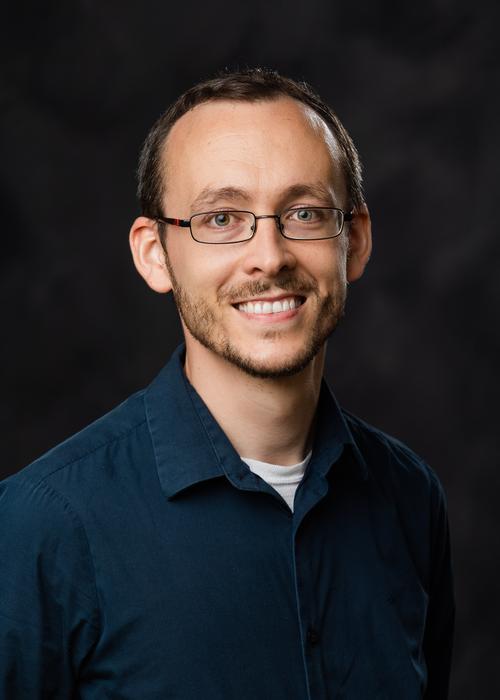
Ryan A. Folk

Credit: Office of Public Affairs, MSU

STARKVILLE, Miss.—A Mississippi State faculty member’s work on plant life symbiosis—a mutually beneficial relationship between living organisms—is pushing back against the newer theory of “single-origin”—that all life stems from one point—instead suggesting “multiple-origin” theory which opens a better understanding for genetically engineering crops.

Ryan A. Folk, an assistant professor in the MSU Department of Biological Sciences and herbarium curator, is an author on a paper published this month in Nature Communications examining root nodule symbiosis (RNS), which allows plants to access atmospheric nitrogen converted into usable forms through a mutualistic relationship with soil bacteria. He joins investigators at the University of Florida and an international team.

“A story of a single origin has become very popular in recent years, particularly among those hoping to genetically engineer symbiosis in crop plants, but using genomic data from 13,000 species and sophisticated statistical models, we confidently identified a scenario involving multiple origins. Symbiosis is a complex trait and our work identifies ideal experimental systems for better understanding the molecular mechanisms that led to the gain of symbiosis,” Folk said. “Our work is the first major push-back against the idea of a single origin as advocated by those working on genome comparisons.”

Folk said the single origin idea would suggest that the genetic engineering of crops, such as rice and maize, to work with nitrogen-fixing bacteria is a “lower hurdle” to cross.

“Our results, which point to multiple origins, complicates the picture because it suggests a lesser role for shared genetic machinery,” Folk said. “This would make it harder to transform crop plants that are not legumes to engage in a similar nitrogen-fixing symbiosis, but multiple origins also means diverse machinery, or as we argue, an enhanced ‘evolutionary palette’ to guide such experiments,” he said.

Folk’s paper laid the groundwork for his fall 2023 $1.6 National Science Foundation grant for detailed study of nitrogen conversions in nature.  

Folk’s MSU lab uses genomic and bioinformatic techniques to document the origins of plant diversity from evolutionary and ecological perspectives using a variety of plant groups and habitats. His work is based in MSU’s herbarium, housing approximately 38,000 vascular plant specimens from around the world with an emphasis on the Southeastern U.S.

For more details about MSU’s College of Arts and Sciences or the Department of Biological Sciences, visit www.cas.msstate.edu or www.biology.msstate.edu.

Mississippi State University is taking care of what matters. Learn more at www.msstate.edu.


Journal

Nature Communications

DOI

10.1038/s41467-024-48036-3

Method of Research

Computational simulation/modeling

Article Title

Shifts in evolutionary lability underlie independent gains and losses of root-nodule symbiosis in a single clade of plants

Article Publication Date

27-May-2024

COI Statement

Authors declare no competing interests.
Share12Tweet8Share2ShareShareShare2

Related Posts

Strubbelig–NHL3 Receptor Complex Helps Arabidopsis Respond to Cellulose Deficiency

Strubbelig–NHL3 Receptor Complex Helps Arabidopsis Respond to Cellulose Deficiency

August 15, 2026
Bombyx mori Satellitome Analysis Reveals Evolutionary Stability, Dispersed Chromosomal Organization, Transposon Origins

Bombyx mori Satellitome Analysis Reveals Evolutionary Stability, Dispersed Chromosomal Organization, Transposon Origins

August 15, 2026

Synthetic pyrenoid reconstruction reveals EPYC1-driven carbon concentration mechanisms and evolution

August 15, 2026

Endophytic Flavobacterium boosts root hairs and drought tolerance through ERF–CEP5 signaling

August 15, 2026

POPULAR NEWS

  • KAIST develops semiconductor neuron that harnesses noise to selectively process signals

    29 shares
    Share 12 Tweet 7
  • Imagining natural and extra robotic thumbs together strengthens kinesthetic sensorimotor networks

    29 shares
    Share 12 Tweet 7
  • PARP1 Drives Neuropathic Pain Through GPX4-Dependent Ferroptosis in Injured Mice’s Sensory Neurons

    29 shares
    Share 12 Tweet 7
  • Strubbelig–NHL3 Receptor Complex Helps Arabidopsis Respond to Cellulose Deficiency

    29 shares
    Share 12 Tweet 7

About

We bring you the latest biotechnology news from best research centers and universities around the world. Check our website.

Follow us

Recent News

KAIST develops semiconductor neuron that harnesses noise to selectively process signals

Imagining natural and extra robotic thumbs together strengthens kinesthetic sensorimotor networks

PARP1 Drives Neuropathic Pain Through GPX4-Dependent Ferroptosis in Injured Mice’s Sensory Neurons

Subscribe to Blog via Email

Success! An email was just sent to confirm your subscription. Please find the email now and click 'Confirm' to start subscribing.

Join 85 other subscribers
  • Contact Us

Bioengineer.org © Copyright 2023 All Rights Reserved.

Welcome Back!

Login to your account below

Forgotten Password?

Retrieve your password

Please enter your username or email address to reset your password.

Log In
No Result
View All Result
  • Homepages
    • Home Page 1
    • Home Page 2
  • News
  • National
  • Business
  • Health
  • Lifestyle
  • Science

Bioengineer.org © Copyright 2023 All Rights Reserved.