In a groundbreaking study set to reshape our understanding of neuronal differentiation, researchers at Hiroshima University have uncovered a pivotal role for a G protein-coupled receptor (GPCR) known as GPR3. Contrary to the long-standing view that these receptors gradually increase during cellular maturation, GPR3 exhibits properties akin to an immediate-early gene, triggering critical pathways that initiate neuronal development far earlier than previously appreciated. This revelation not only challenges established paradigms in neurobiology but also opens new avenues for exploring how early gene expression patterns influence brain plasticity and neurodevelopmental disorders.
Classically, GPCRs are recognized for their role in transducing extracellular signals to intracellular responses, commonly classified as delayed-response genes activated during the later stages of cell differentiation. However, the Hiroshima-based team led by Associate Professor Shigeru Tanaka has demonstrated that GPR3 breaks this mold. It reacts swiftly—within mere minutes of stimulation—translating acute extracellular cues into sustained intracellular signaling cascades essential for neuronal identity formation. This discovery underscores GPR3’s unique function as both an early responder and a potent amplifier of differentiation signals.
The implications of these findings are profound, particularly given the complexity of neuronal maturation and synapse formation. Neurons rely on precise temporal and spatial gene expression programs to establish the intricate circuits underpinning cognition and behavior. Dysregulation in such programs is implicated in a spectrum of neurodevelopmental disorders, including autism and cognitive impairments. By elucidating GPR3’s early role in these pathways, the study provides a molecular foothold to dissect how transcriptional dynamics influence neural network assembly and plasticity.
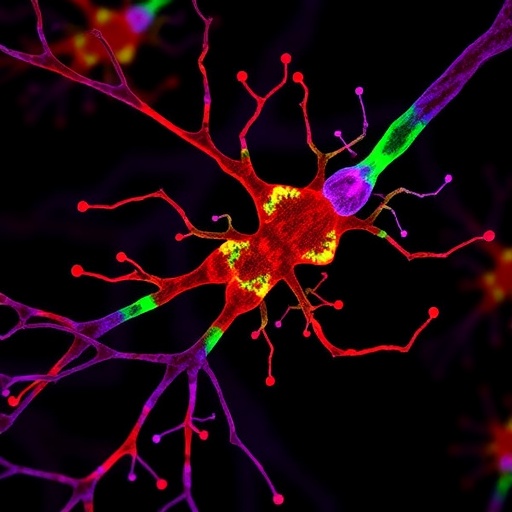
Employing the well-characterized PC12 cell line, a staple model for neuronal differentiation studies, Tanaka’s team meticulously tracked cellular changes triggered by nerve growth factor (NGF). Normally, NGF stimulation prompts these cells to extend neurites, precursors to axons and dendrites, over a 48-hour window. Remarkably, GPR3 expression surged within 30 minutes of NGF exposure, a temporal profile reminiscent of immediate-early genes such as c-Fos and Egr1 rather than typical GPCRs. This rapid induction suggests that GPR3 participates directly at the inception of neuronal programming, rather than as a downstream effector.
Mechanistic exploration revealed that GPR3’s activity potentiates the cyclic AMP (cAMP)-CREB signaling axis, a cornerstone pathway regulating gene transcription in response to extracellular stimuli. The elevation of cAMP facilitates the phosphorylation and activation of CREB, a transcription factor that orchestrates the expression of genes critical for neuronal survival and synaptic architecture. Among these downstream genes is NR4A, another immediate-early gene integral to synaptic development and neuronal health. Through this cascade, GPR3 effectively bridges ephemeral early signals and enduring genetic programs necessary for neurogenesis.
Beyond its role as a signal transducer, GPR3 is unique among GPCRs in exhibiting constitutive activity—meaning it can initiate signaling even in the absence of a traditional ligand. This ligand-independent functionality positions GPR3 as a continuous modulator of intracellular environments, potentially priming cells for differentiation even before external neurotrophic cues arrive. Such a feature is rare and suggests that GPR3 could provide an intrinsic baseline signal that calibrates cellular readiness for maturation transitions.
This intrinsic activity compels a reevaluation of how early receptor signaling integrates with established transcriptional networks. The team proposes that GPR3 acts as a “signal amplifier,” translating early upstream signals into amplified and sustained transcriptional responses that drive the complex morphological and functional changes in developing neurons. This nuanced understanding may prove critical in comprehending how timing and intensity of early gene expression dictate neuronal fate and plasticity.
While these discoveries significantly advance the field, many questions remain. Future investigations will focus on how GPR3 influences synaptic function and neural circuit formation in vivo, with particular attention to its roles in higher-order brain functions and behavioral outputs. Moreover, understanding how aberrations in GPR3 signaling contribute to neurodevelopmental pathologies may illuminate novel targets for therapeutic intervention.
This study sheds light on a previously unrecognized signaling cascade linking immediate-early transcriptional responses to the regulation of synaptic development. By framing GPR3 as an integral component of early neuronal differentiation, the research provides a molecular blueprint for decoding the temporal dynamics of brain development. Such insights are critical for designing strategies to mitigate or reverse dysfunctions associated with psychiatric and neurodevelopmental disorders.
Supported by the Japan Society for the Promotion of Science, the research highlights the power of integrating molecular pharmacology with developmental neuroscience to reveal hidden layers of complexity in brain maturation. The team, including Fumiaki Ikawa, Hiroko Shiraki, Kana Harada, Izumi Hide, and Norio Sakai, exemplify multidisciplinary collaboration in addressing fundamental questions about neuronal identity.
Associate Professor Tanaka emphasized the translational potential of their findings, stating, “Our ultimate goal is to clarify how activity-dependent transcriptional programs regulate brain development and to identify new therapeutic targets for neurodevelopmental and neuropsychiatric diseases.” As such, this work not only deepens biological understanding but also lays groundwork for innovative clinical applications.
In summary, the identification of GPR3 as an immediate-early gene-like GPCR redefines existing models of neuronal differentiation by positioning it as a critical early regulator that enhances CREB-dependent transcriptional programs. This discovery underscores the complexity and precision of cellular signaling pathways that orchestrate brain development and highlights the importance of timing in gene regulatory networks. As neuroscience continues to unravel these intricate mechanisms, findings like these will be instrumental in forming the foundation for novel therapeutic strategies aimed at cognitive and developmental disorders.
Subject of Research: Neuronal differentiation and early gene expression signaling pathways involving G protein-coupled receptor 3 (GPR3).
Article Title: GPR3 is an immediate-early gene-like GPCR regulating CREB-dependent neuronal differentiation
News Publication Date: 20 March 2026
Web References:
https://www.sciencedirect.com/science/article/pii/S2589004226003196?via%3Dihub
http://dx.doi.org/10.1016/j.isci.2026.114944
Image Credits: Tanaka et al., 2026, iScience, CC BY 4.0
Keywords: GPR3, GPCR, immediate-early gene, neuronal differentiation, CREB signaling, cAMP, neurite outgrowth, synaptic development, neurodevelopmental disorders, brain plasticity, PC12 cells, nerve growth factor.
Tags: brain plasticity and gene regulationearly signaling pathways in neuron developmentG protein-coupled receptor early gene expressionGPCRs in early neuron maturationGPR3 role in neuronal differentiationHiroshima University neuron researchimmediate-early genes in neurodevelopmentintracellular signaling cascades in neuronsneurodevelopmental disorder molecular basisneuronal identity formation mechanismsrapid gene activation in neurobiologyShigeru Tanaka neuron study