• HOME
  • NEWS
  • EXPLORE
    • CAREER
      • Companies
      • Jobs
    • EVENTS
    • iGEM
      • News
      • Team
    • PHOTOS
    • VIDEO
    • WIKI
  • BLOG
  • COMMUNITY
    • FACEBOOK
    • INSTAGRAM
    • TWITTER
Monday, May 11, 2026
BIOENGINEER.ORG
No Result
View All Result
  • Login
  • HOME
  • NEWS
  • EXPLORE
    • CAREER
      • Companies
      • Jobs
        • Lecturer
        • PhD Studentship
        • Postdoc
        • Research Assistant
    • EVENTS
    • iGEM
      • News
      • Team
    • PHOTOS
    • VIDEO
    • WIKI
  • BLOG
  • COMMUNITY
    • FACEBOOK
    • INSTAGRAM
    • TWITTER
  • HOME
  • NEWS
  • EXPLORE
    • CAREER
      • Companies
      • Jobs
        • Lecturer
        • PhD Studentship
        • Postdoc
        • Research Assistant
    • EVENTS
    • iGEM
      • News
      • Team
    • PHOTOS
    • VIDEO
    • WIKI
  • BLOG
  • COMMUNITY
    • FACEBOOK
    • INSTAGRAM
    • TWITTER
No Result
View All Result
Bioengineer.org
No Result
View All Result
Home NEWS Science News Biology

Researchers discover how plants distinguish beneficial from harmful microbes

Bioengineer by Bioengineer
August 7, 2020
in Biology
Reading Time: 2 mins read
0
IMAGE
Share on FacebookShare on TwitterShare on LinkedinShare on RedditShare on Telegram

IMAGE

Credit: Christina Krönauer and Damiano Lironi, Aarhus University

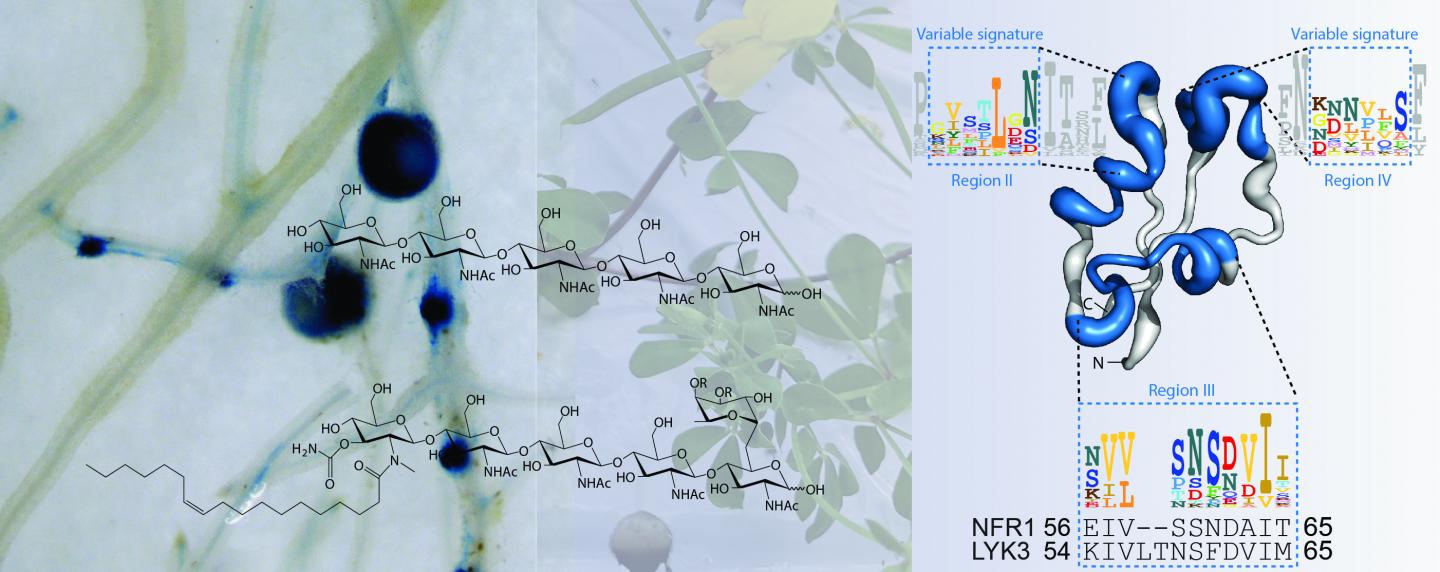
Legume plants fix atmospheric nitrogen with the help of symbiotic bacteria, called Rhizobia, which colonize their roots. Therefore, plants have to be able to precisely recognize their symbiont to avoid infection by pathogenic microbes. To this end, legumes use different LysM receptor proteins located on the outer cell surface of their roots. In the study published in Science, an international team of researchers led by Aarhus University show that pathogenic (chitin) or symbiotic signalling molecules (Nod factors) are recognized by small molecular motifs on the receptors that direct the signalling output towards either antimicrobial defence or symbiosis.

All land plants have LysM receptors that ensure detection of various microbial signals, but how a plant decides to mount a symbiotic or an immune response towards an incoming microbe is unknown. “We started by asking a basic and, maybe at start, naïve question: Can we identify the important elements by using very similar receptors, but with opposing function as background for a systematic analysis?” says Zoltán Bozsoki. “The first crystal structure of a Nod factor receptor was a breakthrough. It gave us a better understanding of these receptors and guided our efforts to engineer them in plants.” Kira Gysel adds.

The study combines the structure-assisted dissection of defined regions in LysM receptors for biochemical experiments and in planta functional analysis. “To really understand these receptors, we needed to work closely together and combine structural biology and biochemistry with the systematic functional tests in plants,” says Simon Boje Hansen. By using this approach, the researchers identified previously unknown motifs in the LysM1 domain of chitin and Nod factor receptors as determinants for immunity and symbiosis. “It turns out that there are only very few, but important, residues that separate an immune from a symbiotic receptor and we now identified these and demonstrate for the first time that it is possible to reprogram LysM receptors by changing these residues,” says Kasper Røjkjær Andersen.

The long-term goal is to transfer the unique nitrogen-fixing ability that legume plants have into cereal plants to limit the need for polluting commercial nitrogen fertilizers and to benefit and empower the poorest people on Earth. Simona Radutoiu concludes, “We now provide the conceptual understanding required for a stepwise and rational engineering of LysM receptors, which is an essential first step towards this ambitious goal”.

###

Media Contact
Simona Radutoiu
[email protected]

Original Source

https://mbg.au.dk/en/news-and-events/news-item/artikel/researchers-discover-how-plants-distinguish-beneficial-from-harmful-microbes/

Related Journal Article

http://dx.doi.org/10.1126/science.abb3377

Tags: Agricultural Production/EconomicsBiochemistryBiologyBiotechnologyFertilizers/Pest ManagementGeneticsMicrobiologyMolecular Biology
Share12Tweet8Share2ShareShareShare2

Related Posts

Ancient Plant Populations Reveal Fresh Insights into Climate Resilience — Biology

Ancient Plant Populations Reveal Fresh Insights into Climate Resilience

May 8, 2026
Rare Brain Disorders in Children Linked to Mutations in Lesser-Known Protein Complex — Biology

Rare Brain Disorders in Children Linked to Mutations in Lesser-Known Protein Complex

May 8, 2026

From Odd Insect to Underwater Predator: The Remarkable Evolution of a Bloodthirsty Fruit Fly

May 8, 2026

SNU Professor Sangwoo Seo’s Team Develops Next-Generation CRISPR Biocontainment Technology to Control Microbial Survival Without DNA Cleavage

May 8, 2026
Please login to join discussion

POPULAR NEWS

  • Research Indicates Potential Connection Between Prenatal Medication Exposure and Elevated Autism Risk

    840 shares
    Share 336 Tweet 210
  • New Study Reveals Plants Can Detect the Sound of Rain

    727 shares
    Share 290 Tweet 181
  • Salmonella Haem Blocks Macrophages, Boosts Infection

    61 shares
    Share 24 Tweet 15
  • Breastmilk Balances E. coli and Beneficial Bacteria in Infant Gut Microbiomes

    57 shares
    Share 23 Tweet 14

About

We bring you the latest biotechnology news from best research centers and universities around the world. Check our website.

Follow us

Recent News

New Post-Hoc Analysis Explores Daily Oral Orforglipron Use in Adults Over 65 with Obesity, Regardless of Diabetes Status

Evaluating Digoxin Use in Patients with Symptomatic Rheumatic Heart Disease

Evaluating the Effectiveness and Safety of Digitalis Glycosides in Treating Heart Failure

Subscribe to Blog via Email

Enter your email address to subscribe to this blog and receive notifications of new posts by email.

Join 82 other subscribers
  • Contact Us

Bioengineer.org © Copyright 2023 All Rights Reserved.

Welcome Back!

Login to your account below

Forgotten Password?

Retrieve your password

Please enter your username or email address to reset your password.

Log In
No Result
View All Result
  • Homepages
    • Home Page 1
    • Home Page 2
  • News
  • National
  • Business
  • Health
  • Lifestyle
  • Science

Bioengineer.org © Copyright 2023 All Rights Reserved.