The Centers for Disease Control and Prevention estimate that someone in the United States has a stroke every 40 seconds. Hundreds of thousands of people each year are living with the long-term impacts caused by strokes — including partial paralysis, cognitive difficulties and persistent pain — with no consistently effective treatment options for improving their neurological conditions.
Credit: Penn State College of Engineering
The Centers for Disease Control and Prevention estimate that someone in the United States has a stroke every 40 seconds. Hundreds of thousands of people each year are living with the long-term impacts caused by strokes — including partial paralysis, cognitive difficulties and persistent pain — with no consistently effective treatment options for improving their neurological conditions.
Now, researchers at Penn State and The Lundquist Institute for Biomedical Innovation and the University of California Los Angeles are developing novel biomaterials to target post-stroke immune response and promote new blood vessel and axon — the part of the neuron that carries nerve impulses away from the cell’s processing center — formation at the site of the stroke. The National Institutes of Health’s National Institute of Neurological Disorders and Stroke funded the five-year project with a $2.29 million multiple program director/principal investigator (multi-PD/PI) grant, a model that supports equal collaboration between independent research groups working on problems requiring a multidisciplinary approach.
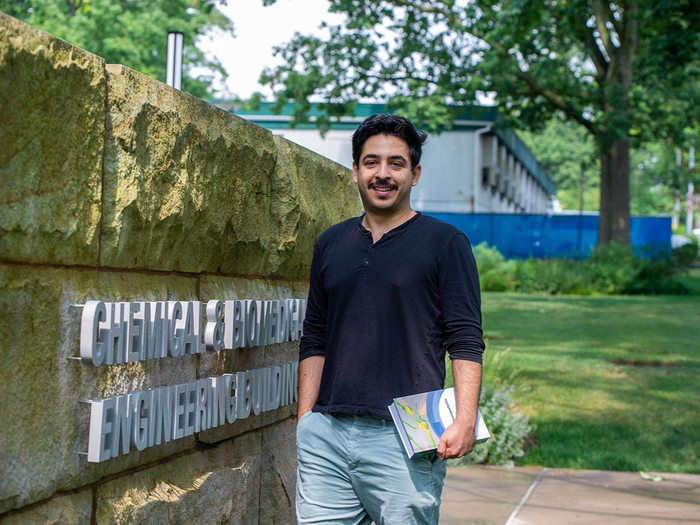
“In this research, we will develop the next generation of injectable granular hydrogels for brain regeneration and function recovery after stroke,” said Amir Sheikhi, assistant professor of chemical engineering and biomedical engineering and multi-PD/PI at Penn State. “If our approach is successful, it could lead to improved outcomes for stroke patients.”
Previously, researchers injected the stroke lesion with various types of hydrogels to aid in tissue repair. However, this biomaterial was not designed specifically to promote growth and reduce inflammation, limiting its contribution to stroke recovery.
One of the main research thrusts of Sheikhi’s Bio-Soft Materials Laboratory is the micro- and nanoengineering of biomaterials for tissue engineering and regeneration, with a special focus on granular hydrogels that mimic the microenvironment of native tissues. The hydrogels are described as granular because micro- and/or nanoparticles are assembled to form the material. The result is a nimble scaffold that can dynamically support the varied needs of forming new blood vessels and axons.
Sheikhi, multi-PD/PI Lina Nih at Lundquist and UCLA and their teams will further explore a new “biomimetic regenerative angiogenic immunomodulation nanocomposite” — or BRAIN — material that builds on two engineered systems designed to both heal damaged brain tissue and help alleviate stroke effects.
“Harnessing the power of biomaterials that mimic the microenvironment of native brain tissue, stimulate the cells, decrease the inflammation and enhance the formation of blood vessels and axons in damaged brain tissues after stroke is truly exciting,” said Nih, investigator at Lundquist and assistant professor at UCLA.
The Lundquist Institute for Biomedical Innovation is a non-profit research organization, whose researchers are academically affiliated with UCLA and work with the Harbor-UCLA Medical Center. Other researchers on the project are James Connor, distinguished professor and vice chair for research at Penn State College of Medicine’s Department of Neurosurgery, and Stanley Thomas Carmichael, department chair and professor of neurology at UCLA.