• HOME
  • NEWS
  • EXPLORE
    • CAREER
      • Companies
      • Jobs
    • EVENTS
    • iGEM
      • News
      • Team
    • PHOTOS
    • VIDEO
    • WIKI
  • BLOG
  • COMMUNITY
    • FACEBOOK
    • INSTAGRAM
    • TWITTER
Monday, May 11, 2026
BIOENGINEER.ORG
No Result
View All Result
  • Login
  • HOME
  • NEWS
  • EXPLORE
    • CAREER
      • Companies
      • Jobs
        • Lecturer
        • PhD Studentship
        • Postdoc
        • Research Assistant
    • EVENTS
    • iGEM
      • News
      • Team
    • PHOTOS
    • VIDEO
    • WIKI
  • BLOG
  • COMMUNITY
    • FACEBOOK
    • INSTAGRAM
    • TWITTER
  • HOME
  • NEWS
  • EXPLORE
    • CAREER
      • Companies
      • Jobs
        • Lecturer
        • PhD Studentship
        • Postdoc
        • Research Assistant
    • EVENTS
    • iGEM
      • News
      • Team
    • PHOTOS
    • VIDEO
    • WIKI
  • BLOG
  • COMMUNITY
    • FACEBOOK
    • INSTAGRAM
    • TWITTER
No Result
View All Result
Bioengineer.org
No Result
View All Result
Home NEWS Science News Chemistry

Researcher wins award for strong, lightweight armor discovery

Bioengineer by Bioengineer
January 28, 2021
in Chemistry
Reading Time: 2 mins read
0
IMAGE
Share on FacebookShare on TwitterShare on LinkedinShare on RedditShare on Telegram

IMAGE

Credit: U.S. Army

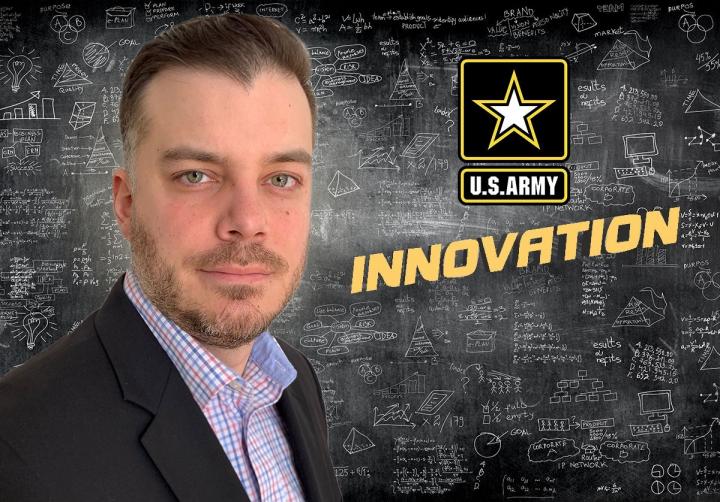
ABERDEEN PROVING GROUND, Md. — A U.S. Army researcher won the Army’s top award for innovation, using a futuristic approach to more quickly identify the best protective materials for Soldiers.

Using robotics and machine learning, Michael Golt, a scientist at the U.S. Army Combat Capabilities Development Command, now known as DEVCOM, Army Research Laboratory, developed a method to quickly assess the best ceramic materials for hard armor. For this work, Golt received the Army’s Maj. Gen. Harold J. Greene Award for Innovation during a virtual ceremony Jan. 28.

Hard armors use ceramic materials that are lightweight but also strong, and therefore an ideal material to defeat ballistic threats; however, ceramics are among the most challenging to develop and manufacture, and can be prone to variability in performance.

Golt used a combination of research automation and artificial intelligence to reimagine the traditional but slow process of experimental data collection of materials, which typically includes a lengthy process to manually characterize, analyze, adjust and repeat.

“By disrupting the traditional R&D models of the past, tangible and high-impact products are being developed at an increased pace by Army scientists and quickly transitioned to today’s Soldier,” Golt said.

Golt developed a system that uses robotics to automate the characterization of the structure of each specimen to be tested. A researcher can load hundreds of ceramic specimens at one time onto a testing surface. The robot selects an individual specimen, collects electrical measurements across the surface–which captures key characteristics and variations in the internal structure of the specimen–and non-destructively characterizes the materials without human intervention.

To guide the ballistic testing, the laboratory developed an artificial intelligence algorithm that uses the characterization dataset and real-time learning algorithms. This algorithm accompanies the researchers at the ballistic testing range and literally calls the shots, specifying for the range operator the next best specimen and projectile velocity that will maximize researchers’ understanding of the processing-structure-performance relationships. The result is rapid discovery using far fewer ballistic tests and decreased uncertainty.

The Lab has worked with an industrial manufacturing partner to design an optimal process, discover high-performing armor ceramics, and validate through testing that the ceramics substantially increase the protection level for Soldiers. Best of all, because these rapid discoveries were obtained on a production-level industrial process, the material is ready to be manufactured in high volumes for immediate use.

###

DEVCOM Army Research Laboratory is an element of the U.S. Army Combat Capabilities Development Command. As the Army’s corporate research laboratory, ARL is operationalizing science to achieve transformational overmatch. Through collaboration across the command’s core technical competencies, DEVCOM leads in the discovery, development and delivery of the technology-based capabilities required to make Soldiers more successful at winning the nation’s wars and come home safely. DEVCOM is a major subordinate command of the Army Futures Command.

Media Contact
Patti Riippa
[email protected]

Tags: Algorithms/ModelsChemistry/Physics/Materials SciencesMaterialsResearch/DevelopmentResearchers/Scientists/AwardsRobotry/Artificial IntelligenceTechnology/Engineering/Computer Science
Share12Tweet8Share2ShareShareShare2

Related Posts

Miniature Sensor Uses Light to Detect Touch — Chemistry

Miniature Sensor Uses Light to Detect Touch

May 8, 2026
Iron Minerals Determine Whether Dissolved Organic Matter Fuels Microbes or Becomes Long-Term Carbon Storage — Chemistry

Iron Minerals Determine Whether Dissolved Organic Matter Fuels Microbes or Becomes Long-Term Carbon Storage

May 8, 2026

Kate Evans Appointed Associate Lab Director for Biological and Environmental Systems Science at ORNL

May 8, 2026

Advancing Multiscale Modeling and Overcoming Operational Challenges in Autothermal COâ‚‚-to-Methanol Reactors

May 8, 2026
Please login to join discussion

POPULAR NEWS

  • Research Indicates Potential Connection Between Prenatal Medication Exposure and Elevated Autism Risk

    841 shares
    Share 336 Tweet 210
  • New Study Reveals Plants Can Detect the Sound of Rain

    728 shares
    Share 290 Tweet 182
  • Salmonella Haem Blocks Macrophages, Boosts Infection

    62 shares
    Share 25 Tweet 16
  • Breastmilk Balances E. coli and Beneficial Bacteria in Infant Gut Microbiomes

    57 shares
    Share 23 Tweet 14

About

We bring you the latest biotechnology news from best research centers and universities around the world. Check our website.

Follow us

Recent News

Global City Growth Decouples from Fossil Fuels

ACAD8 Deficiency Drives Cardiac Hypertrophy via Histone Modification

CRISPRi Screening Identifies Fungal-Specific Drug Targets

Subscribe to Blog via Email

Enter your email address to subscribe to this blog and receive notifications of new posts by email.

Join 82 other subscribers
  • Contact Us

Bioengineer.org © Copyright 2023 All Rights Reserved.

Welcome Back!

Login to your account below

Forgotten Password?

Retrieve your password

Please enter your username or email address to reset your password.

Log In
No Result
View All Result
  • Homepages
    • Home Page 1
    • Home Page 2
  • News
  • National
  • Business
  • Health
  • Lifestyle
  • Science

Bioengineer.org © Copyright 2023 All Rights Reserved.