• HOME
  • NEWS
  • EXPLORE
    • CAREER
      • Companies
      • Jobs
    • EVENTS
    • iGEM
      • News
      • Team
    • PHOTOS
    • VIDEO
    • WIKI
  • BLOG
  • COMMUNITY
    • FACEBOOK
    • INSTAGRAM
    • TWITTER
Sunday, May 17, 2026
BIOENGINEER.ORG
No Result
View All Result
  • Login
  • HOME
  • NEWS
  • EXPLORE
    • CAREER
      • Companies
      • Jobs
        • Lecturer
        • PhD Studentship
        • Postdoc
        • Research Assistant
    • EVENTS
    • iGEM
      • News
      • Team
    • PHOTOS
    • VIDEO
    • WIKI
  • BLOG
  • COMMUNITY
    • FACEBOOK
    • INSTAGRAM
    • TWITTER
  • HOME
  • NEWS
  • EXPLORE
    • CAREER
      • Companies
      • Jobs
        • Lecturer
        • PhD Studentship
        • Postdoc
        • Research Assistant
    • EVENTS
    • iGEM
      • News
      • Team
    • PHOTOS
    • VIDEO
    • WIKI
  • BLOG
  • COMMUNITY
    • FACEBOOK
    • INSTAGRAM
    • TWITTER
No Result
View All Result
Bioengineer.org
No Result
View All Result
Home NEWS Science News Health

Research uncovers new path for melanoma detection and treatment

Bioengineer by Bioengineer
February 10, 2020
in Health
Reading Time: 2 mins read
0
IMAGE
Share on FacebookShare on TwitterShare on LinkedinShare on RedditShare on Telegram

IMAGE

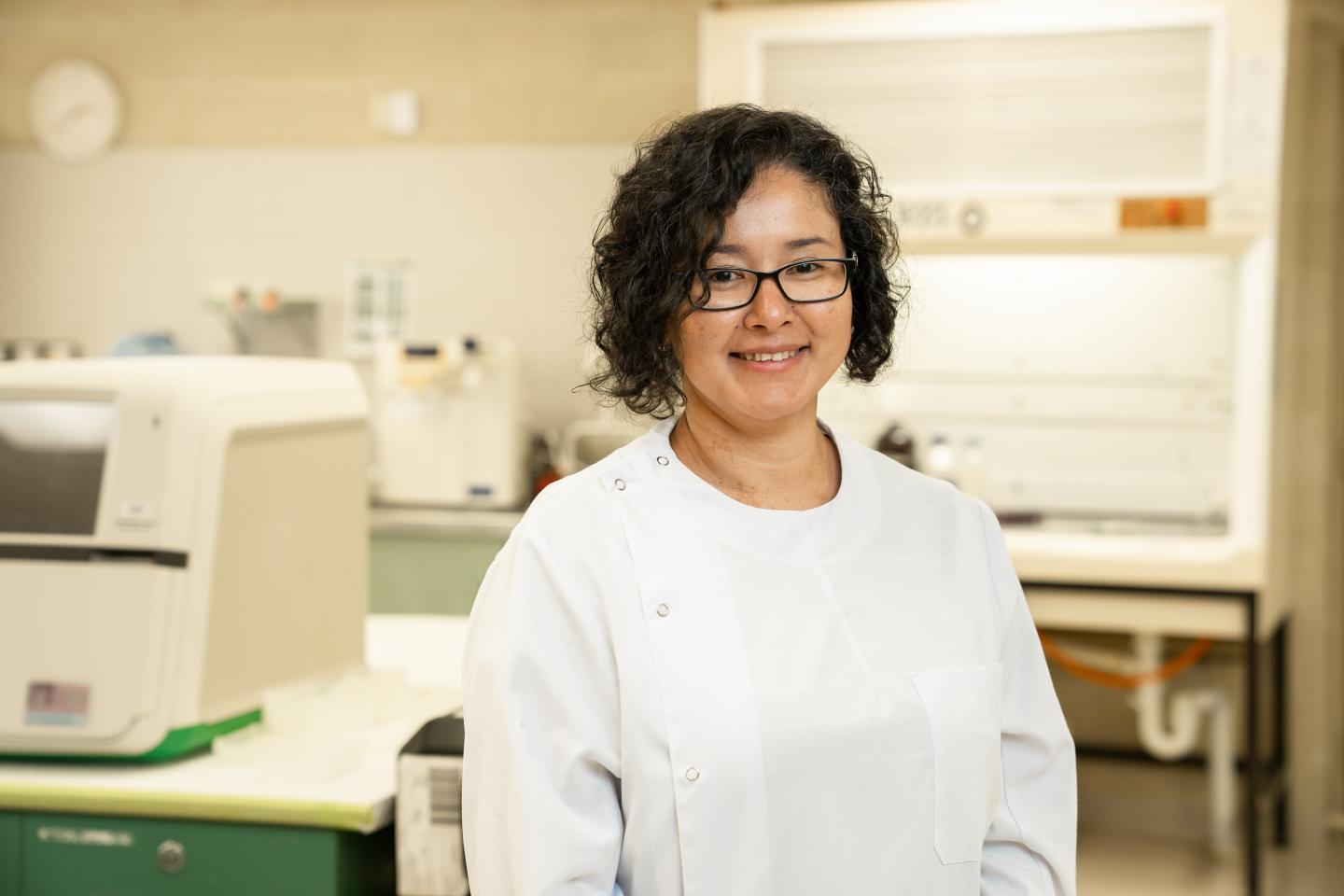
Credit: Edith Cowan University


A new way to spot melanoma cells circulating in the blood has the potential to significantly improve the monitoring of cancer patients and guide future treatment.

Edith Cowan University’s Melanoma Research Group, in collaboration with Harvard Medical School and clinicians at Western Australian hospitals, has pioneered a new technique to detect circulating tumour cells (CTCs) that could provide a new avenue for cancer diagnosis and therapies.

This work builds on the continued success of the Melanoma Research Group, who developed the world’s first blood test capable of detecting melanoma in its early stages.

Lead researcher Associate Professor Elin Gray said this new step was the first study to comprehensively describe the immense diversity found in melanoma CTCs.

“These preliminary findings are a first step towards a new way to stop melanoma from spreading around the body,” Professor Gray said.

“Cancer spreads around the body when CTCs shed from the primary tumour and travel through the blood to form secondary tumours (metastases) in other organs.

“If we can find a way to reliably detect these cells, then we have a chance to stop melanoma in its tracks with a powerful diagnostic tool and perhaps opportunities for therapies in the future.”

Like a needle in a haystack

Until now Melanoma CTCs have proved to be incredibly elusive, with detection rates wildly varying from 40 to 87 per cent.

Professor Gray said this ECU-led research has explained why CTCs have been so hard to find.

“We now understand that CTC detection cannot be resolved with a one-size-fits-all approach,” she said.

“There is a huge amount of variety in the shape and bioactivity of these CTCs and so they all look different and respond differently to assay tests.

“To complicate things further, melanoma CTCs are hidden among thousands of other cells and matter in blood. Within one millilitre of blood, there are often fewer than 10 cancer cells among one billion red cells and one million white blood cells.

“It is much like finding a needle in a haystack.”

A new approach

Armed with a better understanding of the complexity of the task, the researchers tried a multifaceted approach to detecting melanoma CTCs.

“By combining three assays together, we raised detection rates to 72 per cent, which was a significantly and consistently higher result than using one test,” Dr Gray said.

“We are confident this approach is a move towards the reliable detection of CTCs, but we now need to tweak the assay to include a better combination to capture the broadest range of CTCs.”

The ECU Melanoma Research Group is now working with artificial intelligence experts to fast-track the identification of CTCs.

The latest research was published in the British Journal of Cancer.

###

Media Contact
Pepita Smyth
[email protected]
61-417-171-551

Related Journal Article

http://dx.doi.org/10.1038/s41416-020-0750-9

Tags: cancerMedicine/Health
Share12Tweet8Share2ShareShareShare2

Related Posts

Advancements and Insights into Life Expectancy for Chronic Obstructive Pulmonary Disease Patients

May 17, 2026

Intrinsic Capacity, Resilience, Frailty in Stroke Recovery

May 17, 2026

Physical Resilience Linked to Aging Views in Chinese Elders

May 17, 2026

Tau T205 Phosphorylation Controls Memory and Engrams

May 17, 2026
Please login to join discussion

POPULAR NEWS

  • Research Indicates Potential Connection Between Prenatal Medication Exposure and Elevated Autism Risk

    844 shares
    Share 338 Tweet 211
  • New Study Reveals Plants Can Detect the Sound of Rain

    730 shares
    Share 291 Tweet 182
  • Salmonella Haem Blocks Macrophages, Boosts Infection

    62 shares
    Share 25 Tweet 16
  • Breastmilk Balances E. coli and Beneficial Bacteria in Infant Gut Microbiomes

    58 shares
    Share 23 Tweet 15

About

We bring you the latest biotechnology news from best research centers and universities around the world. Check our website.

Follow us

Recent News

Targeted Radiotherapy Extends Control of Early-Stage Breast Cancer Spread

Just Two Radiotherapy Sessions Over Eight Days Effectively Treat Prostate Cancer Without Additional Side Effects

Advancements and Insights into Life Expectancy for Chronic Obstructive Pulmonary Disease Patients

Subscribe to Blog via Email

Enter your email address to subscribe to this blog and receive notifications of new posts by email.

Join 82 other subscribers
  • Contact Us

Bioengineer.org © Copyright 2023 All Rights Reserved.

Welcome Back!

Login to your account below

Forgotten Password?

Retrieve your password

Please enter your username or email address to reset your password.

Log In
No Result
View All Result
  • Homepages
    • Home Page 1
    • Home Page 2
  • News
  • National
  • Business
  • Health
  • Lifestyle
  • Science

Bioengineer.org © Copyright 2023 All Rights Reserved.