

• HOME
  • NEWS
  • EXPLORE
    • CAREER
      • Companies
      • Jobs
    • EVENTS
    • iGEM
      • News
      • Team
    • PHOTOS
    • VIDEO
    • WIKI
  • BLOG
  • COMMUNITY
    • FACEBOOK
    • INSTAGRAM
    • TWITTER
Thursday, December 18, 2025
BIOENGINEER.ORG
No Result
View All Result
  • Login
  • HOME
  • NEWS
  • EXPLORE
    • CAREER
      • Companies
      • Jobs
        • Lecturer
        • PhD Studentship
        • Postdoc
        • Research Assistant
    • EVENTS
    • iGEM
      • News
      • Team
    • PHOTOS
    • VIDEO
    • WIKI
  • BLOG
  • COMMUNITY
    • FACEBOOK
    • INSTAGRAM
    • TWITTER
  • HOME
  • NEWS
  • EXPLORE
    • CAREER
      • Companies
      • Jobs
        • Lecturer
        • PhD Studentship
        • Postdoc
        • Research Assistant
    • EVENTS
    • iGEM
      • News
      • Team
    • PHOTOS
    • VIDEO
    • WIKI
  • BLOG
  • COMMUNITY
    • FACEBOOK
    • INSTAGRAM
    • TWITTER
No Result
View All Result
Bioengineer.org
No Result
View All Result
Home NEWS Science News Health

Research suggests strategy for more equitable Medicare reimbursement

Bioengineer by Bioengineer
April 29, 2019
in Health
Reading Time: 2 mins read
0
IMAGE
Share on FacebookShare on TwitterShare on LinkedinShare on RedditShare on Telegram

IMAGE

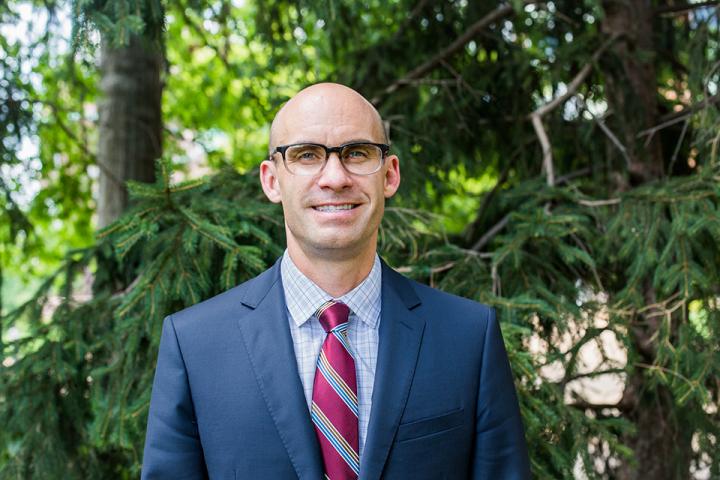
Credit: SLU submitted photo

Those who were enrolled in both Medicare and Medicaid were sicker, had more cognitive impairments and difficulty functioning, and needed more social support than those who were not enrolled in both government programs, Saint Louis University research found. These patients also had significantly higher healthcare costs.

Kenton Johnston, Ph.D., assistant professor of health management and policy at Saint Louis University, is the lead author of the paper, which was published in the April 2019 issue of Health Affairs.

The findings have implications for improving outcomes and reducing disparities in that they target a more vulnerable patient population that faces higher medical expenses.

“For example, home-based primary care has shown significant promise for reducing costs and adverse health events in frail elders. Such programs might also benefit dual enrollees with poor functional status, many of whom may also be at risk for frailty,” Johnston wrote.

The findings also suggest that adjusting for the risk factors seen in patients who receive both Medicare and Medicaid could be a more equitable way of reimbursing for health care.

“This suggests that such adjustment would not only reduce potentially inappropriate penalties among providers that disproportionately care for vulnerable populations but would also reduce inappropriate bonuses for providers that care for less complex populations,” Johnston wrote.

“Medicare could consider using such adjustment to improve accuracy and fairness in value-based payment programs in the future.”

###

Karen Joynt Maddox, M.D., assistant professor of medicine at Washington University, is co-author of the paper. Her work is supported by the National Heart, Lung and Blood Institute (grant number K23-HL109177-03). She also does work under contract with the Office of the Assistant Secretary for Planning and Evaluation in the Department of Health and Human Services.

Johnston received support from Saint Louis University, which purchased and provided access to data from the Medicare Current Beneficiary Survey and respondents’ fee-for-service Medicare claims and administrative data used in this study.

The Saint Louis University College for Public Health and Social Justice is the only academic unit of its kind, studying social, environmental and physical influences that together determine the health and well-being of people and communities. It also is the only accredited school or college of public health among nearly 250 Catholic institutions of higher education in the United States.

Guided by a mission of social justice and focus on finding innovative and collaborative solutions for complex health problems, the College offers nationally recognized programs in public health, social work, health administration, applied behavior analysis, and criminology and criminal justice.

Media Contact
Nancy Solomon
[email protected]

Original Source

https://www.slu.edu/news/2019/april/medicare-medicaid-patients.php

Related Journal Article

http://dx.doi.org/10.1377/hlthaff.2018.05032

Tags: Health CareHealth Care Systems/ServicesInsuranceMedicine/HealthPoverty/WealthSocioeconomics
Share13Tweet8Share2ShareShareShare2

Related Posts

Gene-Specific Sweeps Dominate Human Gut Microbiomes

December 18, 2025

Forensic Reporting Practices of Non-Fatal Injuries Examined

December 18, 2025

Analyzing Hospital Activity Growth: Key Influencing Factors

December 18, 2025

Healthcare Use Among Asian Origin Groups by Citizenship

December 18, 2025
Please login to join discussion

POPULAR NEWS

  • Nurses’ Views on Online Learning: Effects on Performance

    Nurses’ Views on Online Learning: Effects on Performance

    70 shares
    Share 28 Tweet 18
  • NSF funds machine-learning research at UNO and UNL to study energy requirements of walking in older adults

    70 shares
    Share 28 Tweet 18
  • MoCK2 Kinase Shapes Mitochondrial Dynamics in Rice Fungal Pathogen

    72 shares
    Share 29 Tweet 18
  • Unraveling Levofloxacin’s Impact on Brain Function

    53 shares
    Share 21 Tweet 13

About

We bring you the latest biotechnology news from best research centers and universities around the world. Check our website.

Follow us

Recent News

Gene-Specific Sweeps Dominate Human Gut Microbiomes

Forensic Reporting Practices of Non-Fatal Injuries Examined

Remote Astrocytes Drive White Matter Repair

Subscribe to Blog via Email

Enter your email address to subscribe to this blog and receive notifications of new posts by email.

Join 70 other subscribers
  • Contact Us

Bioengineer.org © Copyright 2023 All Rights Reserved.

Welcome Back!

Login to your account below

Forgotten Password?

Retrieve your password

Please enter your username or email address to reset your password.

Log In
No Result
View All Result
  • Homepages
    • Home Page 1
    • Home Page 2
  • News
  • National
  • Business
  • Health
  • Lifestyle
  • Science

Bioengineer.org © Copyright 2023 All Rights Reserved.


