• HOME
  • NEWS
  • EXPLORE
    • CAREER
      • Companies
      • Jobs
    • EVENTS
    • iGEM
      • News
      • Team
    • PHOTOS
    • VIDEO
    • WIKI
  • BLOG
  • COMMUNITY
    • FACEBOOK
    • INSTAGRAM
    • TWITTER
Sunday, August 30, 2026
BIOENGINEER.ORG
No Result
View All Result
  • Login
  • HOME
  • NEWS
  • EXPLORE
    • CAREER
      • Companies
      • Jobs
        • Lecturer
        • PhD Studentship
        • Postdoc
        • Research Assistant
    • EVENTS
    • iGEM
      • News
      • Team
    • PHOTOS
    • VIDEO
    • WIKI
  • BLOG
  • COMMUNITY
    • FACEBOOK
    • INSTAGRAM
    • TWITTER
  • HOME
  • NEWS
  • EXPLORE
    • CAREER
      • Companies
      • Jobs
        • Lecturer
        • PhD Studentship
        • Postdoc
        • Research Assistant
    • EVENTS
    • iGEM
      • News
      • Team
    • PHOTOS
    • VIDEO
    • WIKI
  • BLOG
  • COMMUNITY
    • FACEBOOK
    • INSTAGRAM
    • TWITTER
No Result
View All Result
Bioengineer.org
No Result
View All Result
Home NEWS Science News Biology

Research shows fungicides effective in fighting Fusarium wilt of watermelon

Bioengineer by Bioengineer
May 14, 2020
in Biology
Reading Time: 2 mins read
0
IMAGE
Share on FacebookShare on TwitterShare on LinkedinShare on RedditShare on Telegram

IMAGE

Credit: Jeff Standish

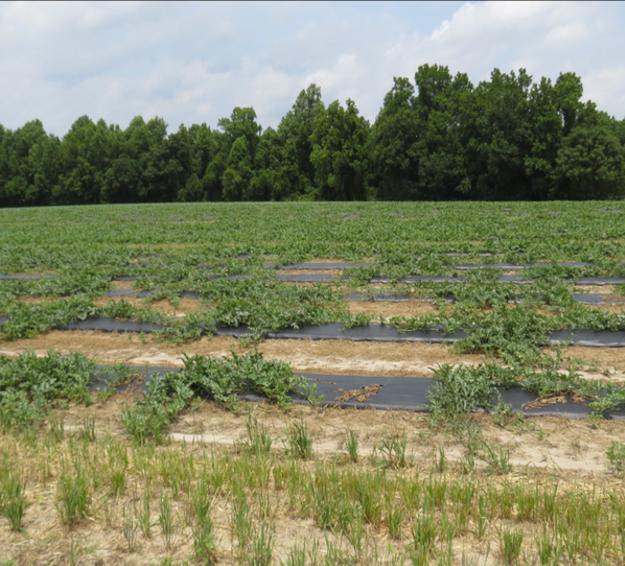
Fusarium wilt is one of the most economically important diseases of watermelon and a major problem to growers worldwide. In the past, watermelon growers based in the Southeastern United States were able to use methyl bromide to manage this disease, but this is no longer an option due to environmental concerns.

There are two fungicides available, but, until recently, little information was available on the efficacy of these two chemicals, Prothioconazole and pydiflumetofen, against Fusarium wilt in North Carolina. As a result, North Carolina State University plant pathologists sought to characterize Fusarium wilt under seven fungicide programs and determine the efficacy.

Their results show that both fungicides provide effective control of Fusarium wilt, regardless of application rate or method. According to Jeff Standish, one of the scientists behind this research, “Based on our results, pydiflumetofen and prothioconazole were equally as effective at reducing Fusarium wilt, and pydiflumetofen seemed to be more effective at preserving yield when disease was severe. This provides evidence that pydiflumetofen could be used as an additional mode of action for watermelon growers, which will likely reduce selection for fungicide resistance.”

“Documenting that efficacy of pydiflumetofen was similar to that of prothiconazole regardless of rate was a nice and surprising finding,” Standish explains, adding that “Despite there only being one year of yield data, the plants grown in nontreated control plots produced no marketable fruit, which really highlights the importance of managing this disease.”

Before the publication of this work, the sensitivity of Fusarium oxysporum f. sp. Niveum (the fungus that causes Fusarium wilt) isolates to pydiflumetofen had never been described. This knowledge will be useful for determining when and if fungicide resistance management strategies are needed in the future.

More details about this development can be found in “Sensitivity of Fusarium oxysporum f. sp. niveum to Prothioconazole and Pydiflumetofen In Vitro and Efficacy for Fusarium Wilt Management in Watermelon” published in Plant Health Progress Volume 20, Issue 1.

###

Media Contact
Ashley Bergman Carlin
[email protected]

Related Journal Article

http://dx.doi.org/10.1094/PHP-08-19-0056-RS

Tags: Agricultural Production/EconomicsAgricultureEcology/EnvironmentFood/Food SciencePlant Sciences
Share12Tweet8Share2ShareShareShare2

Related Posts

Blood metabolites reveal distinct adaptations to heavy versus light resistance training

Blood metabolites reveal distinct adaptations to heavy versus light resistance training

August 30, 2026
Two-step process turns hempseed oil pomace into enzymes and hydrochar

Two-step process turns hempseed oil pomace into enzymes and hydrochar

August 30, 2026

New meta-analysis maps Europe-wide spread of Echinococcus multilocularis in animals

August 30, 2026

Newly discovered Bacillus phage CM1 fights milk contamination

August 30, 2026
Please login to join discussion

POPULAR NEWS

  • Temperature drives quality loss and fungal shifts in stored paddy rice

    29 shares
    Share 12 Tweet 7
  • AI in agriculture: breakthroughs, challenges, and the future of farming

    29 shares
    Share 12 Tweet 7
  • AIbranch platform lets users branch conversations across multiple LLMs

    29 shares
    Share 12 Tweet 7
  • New SHAP-McNemar feature selection method boosts machine learning credit risk models

    29 shares
    Share 12 Tweet 7

About

We bring you the latest biotechnology news from best research centers and universities around the world. Check our website.

Follow us

Recent News

Temperature drives quality loss and fungal shifts in stored paddy rice

AI in agriculture: breakthroughs, challenges, and the future of farming

AIbranch platform lets users branch conversations across multiple LLMs

Subscribe to Blog via Email

Enter your email address to subscribe to this blog and receive notifications of new posts by email.

Join 85 other subscribers
  • Contact Us

Bioengineer.org © Copyright 2023 All Rights Reserved.

Welcome Back!

Login to your account below

Forgotten Password?

Retrieve your password

Please enter your username or email address to reset your password.

Log In
No Result
View All Result
  • Homepages
    • Home Page 1
    • Home Page 2
  • News
  • National
  • Business
  • Health
  • Lifestyle
  • Science

Bioengineer.org © Copyright 2023 All Rights Reserved.