• HOME
  • NEWS
  • EXPLORE
    • CAREER
      • Companies
      • Jobs
    • EVENTS
    • iGEM
      • News
      • Team
    • PHOTOS
    • VIDEO
    • WIKI
  • BLOG
  • COMMUNITY
    • FACEBOOK
    • INSTAGRAM
    • TWITTER
Thursday, December 18, 2025
BIOENGINEER.ORG
No Result
View All Result
  • Login
  • HOME
  • NEWS
  • EXPLORE
    • CAREER
      • Companies
      • Jobs
        • Lecturer
        • PhD Studentship
        • Postdoc
        • Research Assistant
    • EVENTS
    • iGEM
      • News
      • Team
    • PHOTOS
    • VIDEO
    • WIKI
  • BLOG
  • COMMUNITY
    • FACEBOOK
    • INSTAGRAM
    • TWITTER
  • HOME
  • NEWS
  • EXPLORE
    • CAREER
      • Companies
      • Jobs
        • Lecturer
        • PhD Studentship
        • Postdoc
        • Research Assistant
    • EVENTS
    • iGEM
      • News
      • Team
    • PHOTOS
    • VIDEO
    • WIKI
  • BLOG
  • COMMUNITY
    • FACEBOOK
    • INSTAGRAM
    • TWITTER
No Result
View All Result
Bioengineer.org
No Result
View All Result
Home NEWS Science News Immunology

Research reveals how bacteria defeat drugs that fight cystic fibrosis

Bioengineer by Bioengineer
February 26, 2021
in Immunology
Reading Time: 2 mins read
0
IMAGE
Share on FacebookShare on TwitterShare on LinkedinShare on RedditShare on Telegram

IMAGE

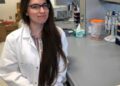
Credit: UM photo

MISSOULA – University of Montana researchers and their partners have discovered a slimy strategy used by bacteria to defeat antibiotics and other drugs used to combat infections afflicting people with cystic fibrosis. The research was published Feb. 23 in the journal Cell Reports.

Cystic fibrosis is a life-threatening disease that causes persistent lung infections and limits a person’s ability to breathe over time. A common strain of bacteria, Pseudomonas aeruginosa, often thrives in the lungs of people with cystic fibrosis, as well as in wounds from burns or diabetic ulcers. Once a P. aeruginosa infection is established, it can be incredibly difficult to cure, despite repeated courses of antibiotics.

Dr. Laura Jennings, a research assistant professor in UM’s Division of Biological Sciences and an affiliate with the University’s Center for Translational Medicine, said their research showed that the stubborn germs living in the lungs of cystic fibrosis patients create a self-produced carbohydrate slime. And this slime makes the bacteria more resistant to the antibiotics prescribed by doctors, as well as drugs that reduce the thickness of mucus.

“We found the first direct evidence that these carbohydrates are produced at the sites of infection,” Jennings said. “We showed that one of the carbohydrates, called Pel, sticks to extracellular DNA, which is abundant in the thick mucus secretions prominent in cystic fibrosis lungs.

“This interaction makes a slimy protective layer around the bacteria, making them harder to kill,” she said. “As such, it reduces the pathogen’s susceptibility to antibiotics and drugs aimed at reducing the thickness of airway mucus by digesting DNA.”

She said the work supports a hypothesis that it’s the carbohydrates that group, or aggregate, the bacteria in cystic fibrosis lungs.

“This is important because we know that physically breaking up bacterial aggregates can restore bacterial susceptibility to killing with antibiotics and cells of the immune system,” Jennings said. “Therefore, understanding the mechanisms that promote bacterial aggregation may facilitate new therapeutic approaches aimed at digesting the carbohydrates holding bacterial cells together.”

The research also suggests that the carbohydrate Pel likely diminishes the efficacy of the most commonly used therapeutics for cystic fibrosis, which are inhaled antibiotics and a drug that breaks down the thickness of the airway mucus, making it easier to cough up.

###

The paper in Cell Reports is titled “P. aeruginosa aggregates in cystic-fibrosis sputum produce exopolysaccharides that likely impede current therapies.” Dr. Matthew Parsek from the University of Washington is the senior author. Jennings is the lead author and a former postdoctoral fellow in Parsek’s laboratory. Other authors are from UW, UM and The Ohio State University.

Media Contact
Laura Jennings
[email protected]

Original Source

http://bit.ly/3aTpsTx

Tags: BacteriologyInfectious/Emerging DiseasesMedicine/HealthPharmaceutical SciencePulmonary/Respiratory Medicine
Share13Tweet8Share2ShareShareShare2

Related Posts

IMAGE

UMass Amherst grad student awarded fellowship for food allergy research

July 23, 2021
IMAGE

Less-sensitive COVID-19 tests may still achieve optimal results if enough people tested

July 22, 2021

Public trust in CDC, FDA, and Fauci holds steady, survey shows

July 20, 2021

USC study shows male-female differences in immune cell function

July 19, 2021
Please login to join discussion

POPULAR NEWS

  • Nurses’ Views on Online Learning: Effects on Performance

    Nurses’ Views on Online Learning: Effects on Performance

    70 shares
    Share 28 Tweet 18
  • NSF funds machine-learning research at UNO and UNL to study energy requirements of walking in older adults

    70 shares
    Share 28 Tweet 18
  • MoCK2 Kinase Shapes Mitochondrial Dynamics in Rice Fungal Pathogen

    72 shares
    Share 29 Tweet 18
  • Unraveling Levofloxacin’s Impact on Brain Function

    53 shares
    Share 21 Tweet 13

About

We bring you the latest biotechnology news from best research centers and universities around the world. Check our website.

Follow us

Recent News

3D Nanolithography Via Metalens Arrays and Adaptive Illumination

Exploring Health Service Access in Southeast Nigeria’s Slums

Expert Panel Highlights Risks of Inappropriate Prescribing

Subscribe to Blog via Email

Enter your email address to subscribe to this blog and receive notifications of new posts by email.

Join 70 other subscribers
  • Contact Us

Bioengineer.org © Copyright 2023 All Rights Reserved.

Welcome Back!

Login to your account below

Forgotten Password?

Retrieve your password

Please enter your username or email address to reset your password.

Log In
No Result
View All Result
  • Homepages
    • Home Page 1
    • Home Page 2
  • News
  • National
  • Business
  • Health
  • Lifestyle
  • Science

Bioengineer.org © Copyright 2023 All Rights Reserved.