• HOME
  • NEWS
  • EXPLORE
    • CAREER
      • Companies
      • Jobs
    • EVENTS
    • iGEM
      • News
      • Team
    • PHOTOS
    • VIDEO
    • WIKI
  • BLOG
  • COMMUNITY
    • FACEBOOK
    • INSTAGRAM
    • TWITTER
Tuesday, October 27, 2026
BIOENGINEER.ORG
No Result
View All Result
  • Login
  • HOME
  • NEWS
  • EXPLORE
    • CAREER
      • Companies
      • Jobs
        • Lecturer
        • PhD Studentship
        • Postdoc
        • Research Assistant
    • EVENTS
    • iGEM
      • News
      • Team
    • PHOTOS
    • VIDEO
    • WIKI
  • BLOG
  • COMMUNITY
    • FACEBOOK
    • INSTAGRAM
    • TWITTER
No Result
View All Result
Bioengineer.org
No Result
View All Result
Home NEWS Science News Health

Research report: Subjective sleep quality and sustained attention before and after a 24-hour smartphone restriction in adolescent swimmers: a single-group pretest–posttest study

by
October 27, 2026
in Health
Reading Time: 2 mins read
0
Research report: Subjective sleep quality and sustained attention before and after a 24-hour smartphone restriction in adolescent swimmers: a single-group pretest–posttest study

Research report: Subjective sleep quality and sustained attention before and after a 24-hour smartphone restriction in adolescent swimmers: a single-group pretest–posttest study

Share on FacebookShare on TwitterShare on LinkedinShare on RedditShare on Telegram

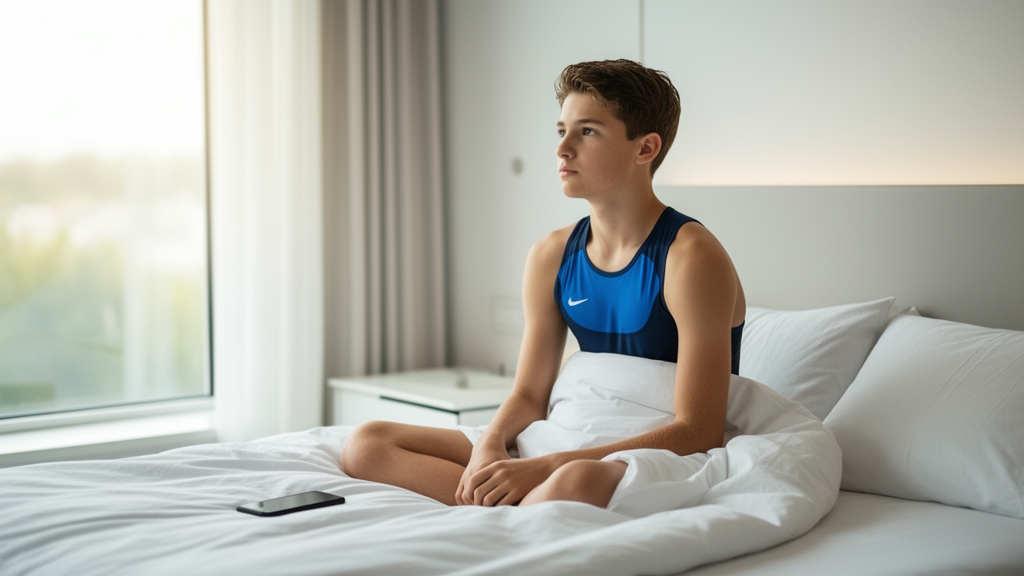
A single-group pretest–posttest study investigated the impact of a 24-hour smartphone restriction on the subjective sleep quality and sustained attention of adolescent competitive swimmers. The research, conducted by Gönen Dogan, Dilan Futsi, Oznur Akyuz, Hakan Guler, and colleagues, examined 43 competitive swimmers aged 10–16 years (mean age 12.84 ± 1.90 years; 26 male) who underwent a 24-hour smartphone restriction period. This intervention was rigorously verified using tamper-evident sealed bags to ensure compliance. The study employed two primary metrics: subjective sleep quality, assessed using a 10-cm visual analogue scale (VAS) where 0 cm represented good sleep and 10 cm represented poor sleep, and sustained attention, measured via the Bourdon Attention Test, which evaluated both accuracy and completion time.

The results indicated statistically significant improvements in both sleep quality and sustained attention following the restriction period. Regarding sleep quality, the VAS scores demonstrated a decrease from a mean of 2.93 ± 1.96 cm before the intervention to 1.91 ± 1.80 cm after the restriction. This change represents a mean difference of −1.01 cm, which was highly statistically significant (p < .001; dz = 0.69), suggesting better self-rated sleep quality post-restriction. Furthermore, the Bourdon Attention Test revealed marked cognitive benefits. Total accuracy increased by 6.30 correct responses (95% CI 3.80 to 8.80; p < .001; dz = 0.78), and the total completion time decreased by 32.4 seconds (95% CI 20.5 to 44.3; p < .001; dz = 0.84).

Further analysis explored potential moderating factors within the cohort. The researchers found no statistically significant differences in the pre–post changes based on the swimmers’ sex or their habitual screen time. However, a notable association was identified: swimmers who reported higher levels of habitual screen time across both sessions tended to report poorer sleep quality (p = .023, ηp² = 0.12).

Despite the positive outcomes observed in this single-group pretest–posttest design, the authors cautioned that the results must be interpreted with clinical prudence. Because the study lacked a control condition—meaning there was no comparison group that did not undergo the restriction—the observed improvements cannot be definitively attributed solely to the smartphone restriction. The researchers acknowledge that these changes may partially reflect practice effects or other confounding variables inherent in a single-group design. Therefore, they emphasize that future research should employ randomized controlled studies to isolate the specific effects of smartphone restriction on adolescent health and performance.

Subject of Research: The effects of a 24-hour smartphone restriction on subjective sleep quality and sustained attention in adolescent competitive swimmers.

Article Title: Subjective sleep quality and sustained attention before and after a 24-hour smartphone restriction in adolescent swimmers: a single-group pretest–posttest study

Article References: dogan, G., futsi, D., akyuz, O., guler, H., & gunay, E. (2026). Subjective sleep quality and sustained attention before and after a 24-hour smartphone restriction in adolescent swimmers: a single-group pretest–posttest study. BMC Pediatrics. https://doi.org/10.1186/s12887-026-07951-8

Image Credits: AI Generated

DOI: 10.1186/s12887-026-07951-8

Keywords: Smartphone use, Adolescent health, Sleep quality, Sustained attention, Competitive swimming, Behavioral intervention, Cognitive function, Digital detox, Subjective, sleep, quality, sustained

News Source: Ophelia Keating. (October 27, 2026). Research report: Subjective sleep quality and sustained attention before and after a 24-hour smartphone restriction in adolescent swimmers: a single-group pretest–posttest study. Scienmag.


Tags: adolescent healthbehavioral interventioncognitive functionCompetitive swimmingDigital detoxqualitysleepsleep qualitysmartphone usesubjectivesustainedSustained attention
Share12Tweet7Share2ShareShareShare1

Related Posts

MicroRNA miR-221-3p Linked to Increased Respiratory Risks in Children Undergoing General Anesthesia

MicroRNA miR-221-3p Linked to Increased Respiratory Risks in Children Undergoing General Anesthesia

October 27, 2026
Sixty Years After ARDS Was Named, Scientists Ask Whether Ventilation Can Help Lungs Repair

Sixty Years After ARDS Was Named, Scientists Ask Whether Ventilation Can Help Lungs Repair

October 27, 2026

Genetic Myopathy and Mental Health Crisis: A Case Study of Severe Depression and Suicidality

October 27, 2026

Eight Weeks of Flexi-Bar Vibration Exercise Improves Cardiovascular Health in Middle-Aged and Older Women

October 27, 2026

POPULAR NEWS

  • MicroRNA miR-221-3p Linked to Increased Respiratory Risks in Children Undergoing General Anesthesia

    MicroRNA miR-221-3p Linked to Increased Respiratory Risks in Children Undergoing General Anesthesia

    29 shares
    Share 12 Tweet 7
  • Research report: Subjective sleep quality and sustained attention before and after a 24-hour smartphone restriction in adolescent swimmers: a single-group pretest–posttest study

    29 shares
    Share 12 Tweet 7
  • Sixty Years After ARDS Was Named, Scientists Ask Whether Ventilation Can Help Lungs Repair

    29 shares
    Share 12 Tweet 7
  • Ten New Moth Species Unveiled in Landmark Review of China’s Metathrinca

    29 shares
    Share 12 Tweet 7

About

We bring you the latest biotechnology news from best research centers and universities around the world. Check our website.

Follow us

Recent News

MicroRNA miR-221-3p Linked to Increased Respiratory Risks in Children Undergoing General Anesthesia

Research report: Subjective sleep quality and sustained attention before and after a 24-hour smartphone restriction in adolescent swimmers: a single-group pretest–posttest study

Sixty Years After ARDS Was Named, Scientists Ask Whether Ventilation Can Help Lungs Repair

Subscribe to Blog via Email

Enter your email address to subscribe to this blog and receive notifications of new posts by email.

Join 85 other subscribers
  • Contact Us

Bioengineer.org © Copyright 2023 All Rights Reserved.

Welcome Back!

Login to your account below

Forgotten Password?

Retrieve your password

Please enter your username or email address to reset your password.

Log In
No Result
View All Result
  • Homepages
    • Home Page 1
    • Home Page 2
  • News
  • National
  • Business
  • Health
  • Lifestyle
  • Science

Bioengineer.org © Copyright 2023 All Rights Reserved.