• HOME
  • NEWS
  • EXPLORE
    • CAREER
      • Companies
      • Jobs
    • EVENTS
    • iGEM
      • News
      • Team
    • PHOTOS
    • VIDEO
    • WIKI
  • BLOG
  • COMMUNITY
    • FACEBOOK
    • INSTAGRAM
    • TWITTER
Tuesday, October 27, 2026
BIOENGINEER.ORG
No Result
View All Result
  • Login
  • HOME
  • NEWS
  • EXPLORE
    • CAREER
      • Companies
      • Jobs
        • Lecturer
        • PhD Studentship
        • Postdoc
        • Research Assistant
    • EVENTS
    • iGEM
      • News
      • Team
    • PHOTOS
    • VIDEO
    • WIKI
  • BLOG
  • COMMUNITY
    • FACEBOOK
    • INSTAGRAM
    • TWITTER
No Result
View All Result
Bioengineer.org
No Result
View All Result
Home NEWS Science News Health

MicroRNA miR-221-3p Linked to Increased Respiratory Risks in Children Undergoing General Anesthesia

by
October 27, 2026
in Health
Reading Time: 2 mins read
0
MicroRNA miR-221-3p Linked to Increased Respiratory Risks in Children Undergoing General Anesthesia

MicroRNA miR-221-3p Linked to Increased Respiratory Risks in Children Undergoing General Anesthesia

Share on FacebookShare on TwitterShare on LinkedinShare on RedditShare on Telegram

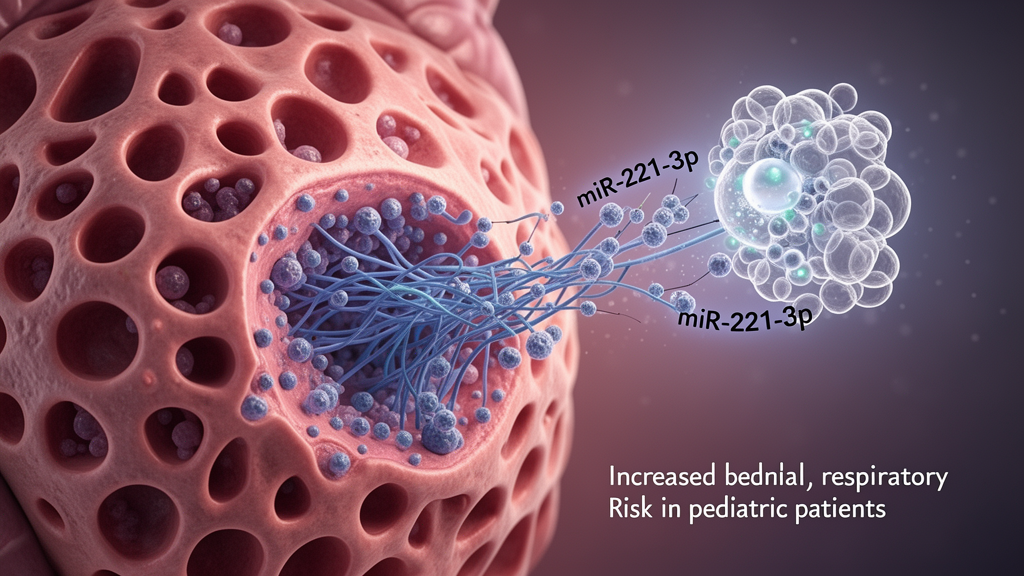
High expression of microRNA-221-3p (miR-221-3p) may increase the risk of perioperative respiratory adverse events (PRAE) in children undergoing general anesthesia. Current methods for predicting PRAE rely on subjective clinical factors, highlighting a need for objective biomarkers. This research investigated miR-221-3p in PRAE and explored its role in airway inflammation by targeting the transcription factor ETS1. A total of 194 pediatric patients requiring general anesthesia were enrolled and grouped based on the occurrence of PRAE. Researchers analyzed miR-221-3p and ETS1 levels using RT-qPCR and utilized ROC curves and multivariate logistic regression to evaluate clinical value. Furthermore, an airway inflammation model was established by stimulating Human Pulmonary Microvascular Endothelial Cells (HPMECs) with Lipopolysaccharide (LPS). Cell proliferation, apoptosis, and inflammatory factors were assessed using the CCK-8 assay, flow cytometry, and ELISA.

The results demonstrated that markedly elevated postoperative serum miR-221-3p was observed in children who experienced PRAE. The postoperative serum miR-221-3p exhibited exploratory discriminatory performance for PRAE, achieving an Area Under the Curve (AUC) greater than 0.8. Higher levels of miR-221-3p were associated with an increased risk of PRAE. To investigate the underlying mechanism, researchers observed that knocking down miR-221-3p increased ETS1 levels. This reduction in miR-221-3p expression subsequently promoted cell proliferation, inhibited apoptosis, and reduced cellular damage in the HPMECs.

The study concluded that postoperative serum miR-221-3p is associated with increased PRAE risk in children and may promote airway inflammation by negatively regulating ETS1. The mechanistic findings suggest that miR-221-3p contributes to pathological processes by suppressing ETS1, which in turn influences cellular health. The cellular assays provided evidence that the inhibition of apoptosis and promotion of cell proliferation following miR-221-3p suppression suggest the microRNA normally promotes cellular stress or death pathways in the airway endothelium.

However, the researchers emphasized that these findings remain exploratory. A critical limitation is that blood samples were collected only after the surgical procedure, meaning the preoperative predictive value of this association could not be established. Therefore, longitudinal preoperative and postoperative studies are necessary. In summary, the study provides significant molecular understanding of respiratory complications in pediatric anesthesia, linking elevated postoperative serum miR-221-3p to increased PRAE risk and its potential role in promoting airway inflammation through the negative regulation of ETS1.

Subject of Research: Role of miR-221-3p in predicting perioperative respiratory adverse events in pediatric patients.

Article Title: High expression of miR-221-3p may increase the risk of perioperative respiratory adverse events in children undergoing general anesthesia

Article References: Wang, J., Miao, Z., Sun, L., & Zhang, X. (2026). High expression of miR-221-3p may increase the risk of perioperative respiratory adverse events in children undergoing general anesthesia. BMC Pediatrics. https://doi.org/10.1186/s12887-026-07917-w

Image Credits: AI Generated

DOI: 10.1186/s12887-026-07917-w

Keywords: microRNA, miR-221-3p, Perioperative Adverse Events, General Anesthesia, Airway Inflammation, Pediatric Health, ETS1, Biomarkers, Respiratory Health, High, expression, increase

News Source: Ophelia Keating. (October 27, 2026). MicroRNA miR-221-3p Linked to Increased Respiratory Risks in Children Undergoing General Anesthesia. Scienmag.


Tags: airway inflammationbiomarkersETS1expressiongeneral anesthesiahighincreasemicroRNAmiR-221-3ppediatric healthPerioperative Adverse Eventsrespiratory health
Share12Tweet7Share2ShareShareShare1

Related Posts

Rare Bilateral Globus Pallidus Injury Linked to Heat Stroke and Chorea

Rare Bilateral Globus Pallidus Injury Linked to Heat Stroke and Chorea

October 27, 2026
Research report: Subjective sleep quality and sustained attention before and after a 24-hour smartphone restriction in adolescent swimmers: a single-group pretest–posttest study

Research report: Subjective sleep quality and sustained attention before and after a 24-hour smartphone restriction in adolescent swimmers: a single-group pretest–posttest study

October 27, 2026

Sixty Years After ARDS Was Named, Scientists Ask Whether Ventilation Can Help Lungs Repair

October 27, 2026

Genetic Myopathy and Mental Health Crisis: A Case Study of Severe Depression and Suicidality

October 27, 2026

POPULAR NEWS

  • Attention-Guided Distillation Boost Alzheimer's Stage Identification Using MRI Scans

    Attention-Guided Distillation Boost Alzheimer’s Stage Identification Using MRI Scans

    29 shares
    Share 12 Tweet 7
  • Rare Bilateral Globus Pallidus Injury Linked to Heat Stroke and Chorea

    29 shares
    Share 12 Tweet 7
  • MicroRNA miR-221-3p Linked to Increased Respiratory Risks in Children Undergoing General Anesthesia

    29 shares
    Share 12 Tweet 7
  • Research report: Subjective sleep quality and sustained attention before and after a 24-hour smartphone restriction in adolescent swimmers: a single-group pretest–posttest study

    29 shares
    Share 12 Tweet 7

About

We bring you the latest biotechnology news from best research centers and universities around the world. Check our website.

Follow us

Recent News

Attention-Guided Distillation Boost Alzheimer’s Stage Identification Using MRI Scans

Rare Bilateral Globus Pallidus Injury Linked to Heat Stroke and Chorea

MicroRNA miR-221-3p Linked to Increased Respiratory Risks in Children Undergoing General Anesthesia

Subscribe to Blog via Email

Enter your email address to subscribe to this blog and receive notifications of new posts by email.

Join 85 other subscribers
  • Contact Us

Bioengineer.org © Copyright 2023 All Rights Reserved.

Welcome Back!

Login to your account below

Forgotten Password?

Retrieve your password

Please enter your username or email address to reset your password.

Log In
No Result
View All Result
  • Homepages
    • Home Page 1
    • Home Page 2
  • News
  • National
  • Business
  • Health
  • Lifestyle
  • Science

Bioengineer.org © Copyright 2023 All Rights Reserved.