A boron-modified high-entropy selenide electrocatalyst maintained continuous, stable oxygen evolution for more than 1,000 hours in highly corrosive simulated seawater, according to a peer-reviewed experimental study published in Science Bulletin. The material, designated B-HESs, operated at an industrial current density of 500 mA cm−2, showed low overpotential and maintained nearly 100% selectivity for the oxygen evolution reaction, effectively suppressing the toxic chlorine evolution reaction under the tested conditions. Its durability came from two linked features: dynamic repair of active metal sites and a negatively charged selenate layer that repels chloride.
Direct use of seawater for electrolysis could reduce reliance on freshwater, but the saline environment is highly aggressive toward anodes. Chloride ions can trigger parasitic reactions at the anode and promote rapid structural collapse in oxygen evolution reaction electrocatalysts, making long-term operation in marine environments a major materials challenge. The research team, led by Jinchun Tu and Weiwei Li of Hainan University, together with Chenghua Sun of Swinburne University of Technology, investigated whether a high-entropy selenide could withstand that environment.
By introducing trace amounts of interstitial boron into the high-entropy matrix, the researchers created B-HESs with enhanced anti-corrosion properties and long-term structural retention in laboratory tests using simulated seawater. The catalyst’s protection strategy combines dynamic and static elements. During seawater electrolysis, transition-metal active sites undergo repeated valence oscillations associated with localized lattice-oxygen redox.
This redox cycling supports self-repair at the active sites and helps prevent irreversible over-oxidation followed by structural breakdown. The same dynamic process promotes formation of a robust, negatively charged selenate shielding layer on the catalyst surface. According to the study, the layer protects the material through electrostatic repulsion and steric hindrance, restricting chloride access and limiting the continued leaching of internal metal elements.
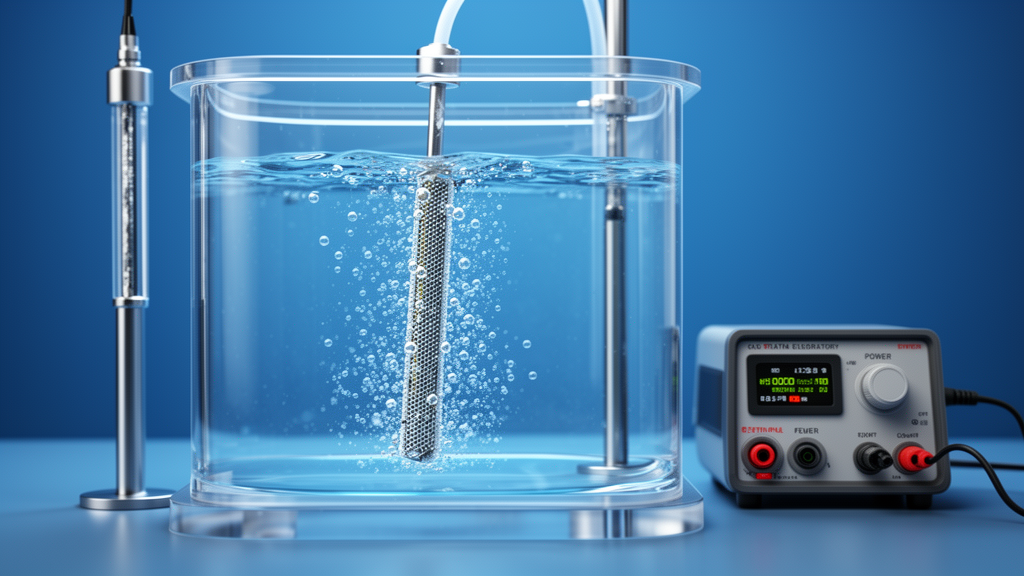
The research team described this combination as a “dynamic and static synergy”: reinforced covalent structure and intrinsic self-repair work together with the chloride-repelling surface layer. In highly corrosive simulated seawater, the B-HESs anode sustained continuous oxygen evolution for over 1,000 hours at 500 mA cm−2, while retaining favorable reaction kinetics and nearly 100% oxygen evolution selectivity. These results support the material’s potential for durable direct seawater oxidation under the experimental conditions.
They do not establish performance in natural seawater, at full marine scale or during extended field deployment, because the reported test used simulated seawater and the release provides no information about such operation. The authors nevertheless said the self-stabilizing mechanism offers a practical design strategy for balancing catalytic activity with long-term stability and may provide guidance for electrocatalysts intended to operate in other extreme, corrosive electrochemical environments.
Subject of Research: Experimental development of a boron-modified high-entropy selenide electrocatalyst for durable direct seawater oxidation.
Article Title: Self-stabilizing electrocatalyst for seawater oxidation: Repelling chloride and sustaining over 1000 hours of operation
Article References: Self-stabilizing electrocatalyst for seawater oxidation: Repelling chloride and sustaining over 1000 hours of operation. Original publication (Bibliographic details unavailable.)
Image Credits: AI Generated
DOI: Not provided
Keywords: seawater electrolysis, high-entropy selenide, boron modification, chloride corrosion, oxygen evolution reaction, electrocatalyst stability, selenate shielding, self-repairing catalyst, simulated seawater, Self-stabilizing, electrocatalyst, seawater
News Source: Bethany Barker. (October 22, 2026). Research report: Self-stabilizing electrocatalyst for seawater oxidation: Repelling chloride and sustaining over 1000 hours of operation. Scienmag.