


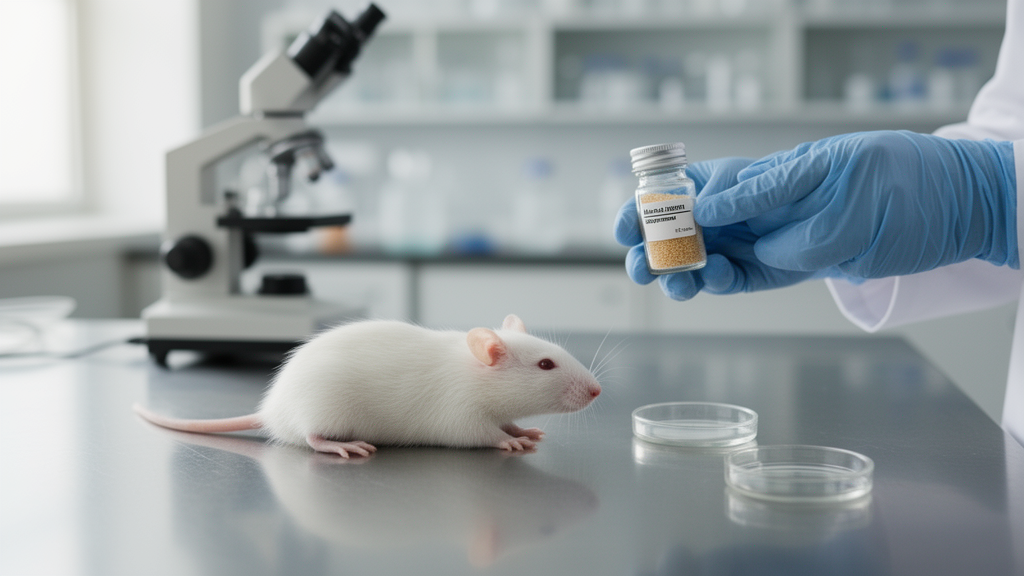
The findings, drawn from an animal experiment rather than human trials, point to the mechanistic target of rapamycin (mTOR) signaling pathway as a possible molecular link between trace element nutrition and ovarian health in this common endocrine disorder.
PCOS is a complex endocrine condition whose underlying biology involves oxidative stress, insulin resistance, and dysregulated signaling within the ovary. Zinc and manganese are essential trace elements with established roles in reproductive health, but the researchers noted that their individual and comparative effects on ovarian molecular pathways had remained poorly characterized. The study set out to test whether manganese supplementation could ameliorate PCOS-induced ovarian dysfunction in association with changes in mTOR gene expression, and to compare those effects against zinc status.
The experiment involved one hundred fifty adult female Wistar rats. Each group then received one of five dietary treatments for six weeks: a basal diet, a zinc-deficient diet, a zinc-supplemented diet providing 200 mg/kg, a manganese-deficient diet, or a manganese-supplemented diet providing 100 mg/kg. Serum estradiol and testosterone were measured by ELISA, ovarian histomorphology was evaluated, and mTOR gene expression was quantified by real-time PCR. Two-way ANOVA was used to assess main effects and interactions, and Pearson correlation analysis examined relationships between variables.
The PCOS induction itself produced the expected hormonal signature. It significantly decreased estradiol, from 97.83 to 88.58 pmol/L (P < 0.05), increased testosterone, from 0.032 to 0.050 ng/mL (P = 0.047), and downregulated mTOR expression, from 1.54 to 1.09 (P = 0.020). These baseline shifts established the dysfunction that the dietary interventions were then tested against.
Manganese supplementation at 100 mg/kg produced the most striking results. In supplemented animals, estradiol rose to 124.96 pmol/L compared with 62.19 pmol/L in the deficient group (P < 0.05), and the reported testosterone values were 0.042 versus 0.040 ng/mL. mTOR expression showed a tendency to increase, reaching 1.24 versus 1.00, though the authors characterized this as a tendency rather than a statistically confirmed increase. The researchers concluded that manganese was associated with protective effects against PCOS-induced ovarian dysfunction, likely through modulation of the mTOR signaling pathway.
Zinc told a more complicated story. Zinc deficiency negatively affected several reproductive and endocrine indices, most notably elevating testosterone and reducing ovarian follicle reserves, but the authors emphasized that this effect was not uniform across all measured parameters.
One of the study’s most intriguing observations was the correlation structure around mTOR. Across the experiment, mTOR expression correlated positively with estradiol (r = 0.72, P < 0.01) and negatively with testosterone (r = −0.68, P < 0.01). Significant interactions between physiological status and dietary treatment were observed for most variables (P < 0.05), meaning that the effect of a given diet depended on whether the animal was healthy or PCOS-induced. That interaction pattern suggests trace element requirements may differ substantially between normal and diseased ovarian states.
The authors suggest that manganese supplementation may represent a promising nutritional strategy for PCOS management, but the evidence base for that claim remains firmly preclinical. The work was conducted entirely in a chemically induced rat model, with estradiol valerate injection rather than the natural development of the syndrome in humans, and the reported hormonal shifts, while statistically significant, were modest in absolute terms. The testosterone change under manganese supplementation in particular was small. The article was published as an open-access paper on 22 October 2026, and the version shared early is subject to further edits before the final Version of Record.
For now, the study’s value lies in its comparative design and its molecular framing. By measuring mTOR expression alongside hormones and ovarian histomorphology across five dietary conditions, it offers a template for testing how individual trace elements reshape ovarian signaling in PCOS-like physiology. Whether manganese supplementation translates into a safe and effective intervention for women with PCOS will require human studies, which this rat experiment does not provide. What it does establish is a measurable association between manganese status, mTOR expression, and ovarian hormone profiles in a controlled animal system, and a caution against treating zinc and manganese as interchangeable players in reproductive nutrition.
Subject of Research: Effects of zinc and manganese supplementation on ovarian hormones and mTOR gene expression in a rat model of polycystic ovary syndrome.
Article Title: Effects of zinc and manganese supplementation on ovarian function and mTOR gene expression in a rat model of polycystic ovary syndrome
Article References: Khosravi, S., Kheiri, F., Faghani, M., Khodaei, H. R., & Karimiankakolaki, Z. (2026). Effects of zinc and manganese supplementation on ovarian function and mTOR gene expression in a rat model of polycystic ovary syndrome. BMC Women's Health. https://doi.org/10.1186/s12905-026-05025-6
Image Credits: AI Generated
DOI: 10.1186/s12905-026-05025-6
Keywords: polycystic ovary syndrome, manganese, zinc, mTOR, ovarian function, trace elements, rat model, estradiol, testosterone, gene expression, reproductive endocrinology, animal study
News Source: Juliet Wilcox. (October 30, 2026). Research report: Effects of zinc and manganese supplementation on ovarian function and mTOR gene expression in a rat model of polycystic ovary syndrome. Scienmag.



