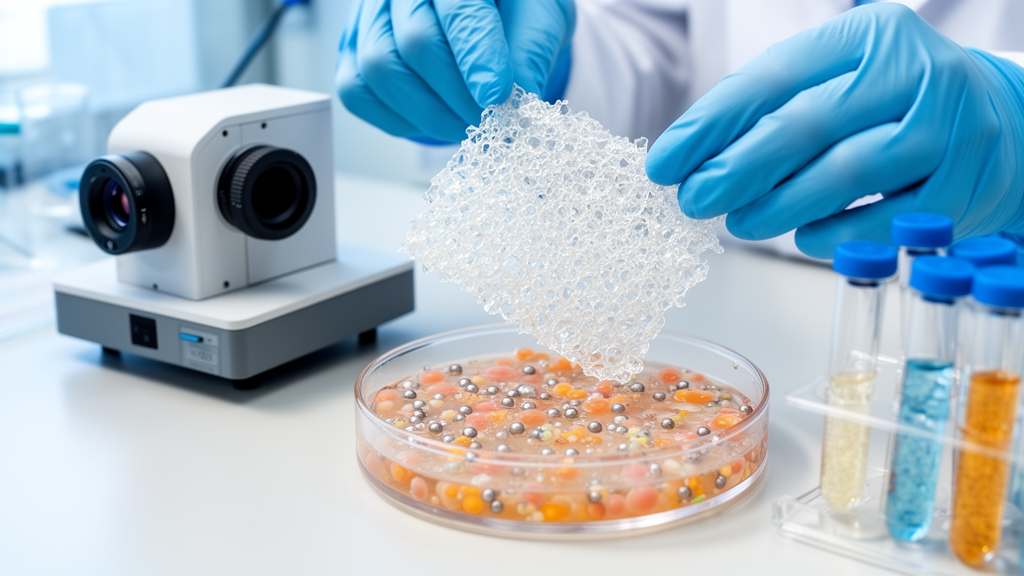
An editorial published in 2026 in Frontiers in Bioengineering and Biotechnology surveys a research collection on engineered biomaterials with potential applications in chronic disease theranostics, an approach that combines diagnosis and therapy. The article does not report a new clinical trial or a single therapeutic breakthrough. Instead, it brings together contributions involving human lung-tissue scaffolds, an electrically conductive hydrogel tested in diabetic wounds, extracellular vesicles and liver-targeted nanoparticles.
The collection illustrates a translational path from laboratory fabrication toward materials intended to model diseased tissue, regulate local repair and deliver treatments through the body, while also emphasizing that long-term safety, reproducible manufacturing and clinical validation remain unresolved. The research topic was organized around practical requirements for translating materials science into clinically usable systems. The editorial identifies reproducible fabrication, biological safety, preservation of tissue-relevant functions and a credible route to scale-up as essential conditions for progress.
It also presents clinical translation as an iterative process requiring materials scientists, biologists, clinicians and regulatory specialists to work together, rather than as an outcome that follows automatically from a promising laboratory demonstration. A decellularized lung scaffold study provides a foundation for modeling fibrosis and screening candidate treatments. The work examined lungs affected by interstitial lung diseases, including idiopathic pulmonary fibrosis and fibrotic hypersensitivity pneumonitis, and sought to create a platform that preserves the architecture and biochemical composition of human tissue.
The extracellular matrix is a key regulator of tissue homeostasis and remodeling, but existing decellularization procedures can leave cells behind, disrupt important matrix components or depend on agarose embedding for thin lung slices. The reported agarose-free, apoptosis-assisted method used camptothecin and raptinal together with a mild detergent to assist cellular removal. It also introduced a temporary gelatin-based cutting support that was removed before the scaffolds were repopulated.
According to the editorial, this approach removed more than 99.8% of nuclei from both fibrotic and non-fibrotic lung tissue. Semi-quantitative image analysis indicated that collagen and elastin were preserved, and the scaffolds supported repopulation with primary human lung fibroblasts. Non-fibrotic scaffolds showed pronounced contraction after fibroblast repopulation, whereas scaffolds made from fibrotic lungs retained their dimensions.
Fibroblast viability on the scaffolds was lower than on plastic, although the reported cytotoxicity remained acceptable. The measured differences describe the behavior of this scaffold system under the reported culture conditions; they do not establish that the materials can distinguish disease stages or that they will perform similarly in patients. The preclinical findings nevertheless support the platform as a tool for investigating matrix–cell interactions and screening candidate interventions in interstitial lung disease models.
The collection then moves from disease modeling to an active intervention for chronic wounds. Diabetic wounds can remain open because oxidative stress, prolonged inflammation, impaired angiogenesis and disrupted bioelectric cues interfere with re-epithelialization. The researchers developed an injectable composite by uniformly embedding electrospun Prussian Blue nanofibers in a physically crosslinked polyvinyl alcohol matrix.
The resulting flexible, adhesive hydrogel had stable conductivity and was designed to combine electrical signaling with immunomodulation. In vitro, the material showed good cytocompatibility, reduced pro-inflammatory indicators such as interleukin-6, tumor necrosis factor alpha and the CD86 marker, and increased markers associated with regeneration, including CD206 and CD31. These laboratory observations indicate that the hydrogel affected the measured cellular markers under the experimental conditions.
When tested in mice with streptozotocin-induced diabetic wounds, the hydrogel accelerated wound closure, reduced inflammatory-cell infiltration and promoted collagen deposition and CD31-positive staining. The findings show that the dressing improved several measured outcomes in that animal model. They do not yet establish the same effects, mechanisms or safety profile in human diabetic wounds.
The editorial also preserves a limitation identified by the study authors: reactive oxygen species levels and the wounds’ endogenous electrical fields were not directly quantified. Mechanistic interpretations therefore remain plausible rather than fully demonstrated, and the animal findings cannot be equated with established clinical benefit. Two reviews extend the scope beyond local tissue repair.
One examines extracellular vesicles, naturally derived carriers with stable physicochemical properties, relatively low immunogenicity and inherent biocompatibility. The editorial describes these vesicles as mediators of intercellular communication and promising nanotherapeutics for diagnostic and therapeutic applications. Although several extracellular-vesicle products have begun to emerge and clinical investigations are under way, the review identifies persistent technical and translational obstacles.
Its contribution at this stage is strategic rather than clinical: it surveys completed and emerging investigations and identifies work needed to move extracellular-vesicle technologies toward standardized, clinically assessable products. A second review focuses on nanoparticle technologies for liver targeting, taking advantage of the liver’s natural tropism for circulating nanoparticles and its central role in detoxification. Following systemic administration, nanoparticles can accumulate in the liver and be internalized by hepatic macrophages, sinusoidal endothelial cells and hepatocytes.
The editorial says that understanding hepatic sinusoidal physiology and these cellular interactions is important for optimizing delivery systems and improving accumulation at pathological sites. Together, the two reviews cover naturally derived carriers and synthetic, organ-targeted platforms. Across these contributions, the editorial presents a continuum of translational development.
Decellularized scaffolds provide human-tissue environments for studying fibrosis, a conductive hydrogel modifies measured inflammatory and regenerative features in diabetic wounds, extracellular vesicles are considered for communication-based diagnosis and therapy, and liver-targeted nanoparticles are designed to exploit organ-specific delivery. The approaches differ in their materials, purposes and stages of development, so the collection does not demonstrate a unified clinical solution. Instead, it shows how biomaterial innovation can address distinct parts of the chronic disease problem, from recreating a diseased microenvironment to circulating through the body with a therapeutic cargo.
The human scaffold and cell experiments remain preclinical, the wound-healing evidence comes from mice, and the vesicle and nanoparticle contributions are reviews of research and development rather than new clinical efficacy results. The central message is that clinically useful biomaterials must satisfy technical, biological and regulatory requirements at the same time. That includes standardized and reproducible production, retention of the functions for which a material was designed, favorable safety profiles, mechanistic testing and manufacturing processes capable of meeting clinical quality standards.
Future studies must also assess long-term safety and efficacy, refine patient-specific disease models and establish reliable quality-control methods. The research topic therefore functions as a roadmap rather than a declaration of clinical readiness. Its most credible translational contribution is the identification of testable platforms and biological questions that must be answered before engineered biomaterials can become dependable diagnostic and therapeutic tools for people with cancer, cardiovascular disease, diabetes, chronic respiratory disorders and other chronic illnesses.
Subject of Research: Preclinical engineered biomaterials for chronic disease diagnosis and therapy
Article Title: Editorial: Development of novel engineered biomaterials with clinical translation prospects for chronic disease theranostics
Article References: Chen, H., Lin, H., Liang, X., Zhang, J., & Chu, C. (2026). Editorial: Development of novel engineered biomaterials with clinical translation prospects for chronic disease theranostics. Frontiers in Bioengineering and Biotechnology, 14, Article 2017353. https://doi.org/10.3389/fbioe.2026.2017353
Image Credits: AI Generated
DOI: 10.3389/fbioe.2026.2017353
Keywords: engineered biomaterials, chronic diseases, theranostics, decellularized lung scaffolds, diabetic wound healing, conductive hydrogels, Prussian Blue nanofibers, extracellular vesicles, liver-targeted nanoparticles, clinical translation, Editorial, Development
News Source: Matthew Wilson. (October 21, 2026). Research report: Editorial: Development of novel engineered biomaterials with clinical translation prospects for chronic disease theranostics. Scienmag.