• HOME
  • NEWS
  • EXPLORE
    • CAREER
      • Companies
      • Jobs
    • EVENTS
    • iGEM
      • News
      • Team
    • PHOTOS
    • VIDEO
    • WIKI
  • BLOG
  • COMMUNITY
    • FACEBOOK
    • INSTAGRAM
    • TWITTER
Thursday, June 25, 2026
BIOENGINEER.ORG
No Result
View All Result
  • Login
  • HOME
  • NEWS
  • EXPLORE
    • CAREER
      • Companies
      • Jobs
        • Lecturer
        • PhD Studentship
        • Postdoc
        • Research Assistant
    • EVENTS
    • iGEM
      • News
      • Team
    • PHOTOS
    • VIDEO
    • WIKI
  • BLOG
  • COMMUNITY
    • FACEBOOK
    • INSTAGRAM
    • TWITTER
  • HOME
  • NEWS
  • EXPLORE
    • CAREER
      • Companies
      • Jobs
        • Lecturer
        • PhD Studentship
        • Postdoc
        • Research Assistant
    • EVENTS
    • iGEM
      • News
      • Team
    • PHOTOS
    • VIDEO
    • WIKI
  • BLOG
  • COMMUNITY
    • FACEBOOK
    • INSTAGRAM
    • TWITTER
No Result
View All Result
Bioengineer.org
No Result
View All Result
Home NEWS Science News Chemistry

Research moves closer to brain-machine interface autonomy

Bioengineer by Bioengineer
June 11, 2019
in Chemistry
Reading Time: 2 mins read
0
IMAGE
Share on FacebookShare on TwitterShare on LinkedinShare on RedditShare on Telegram

Findings could help seamlessly integrate prosthetics
IMAGE

Credit: University of Houston

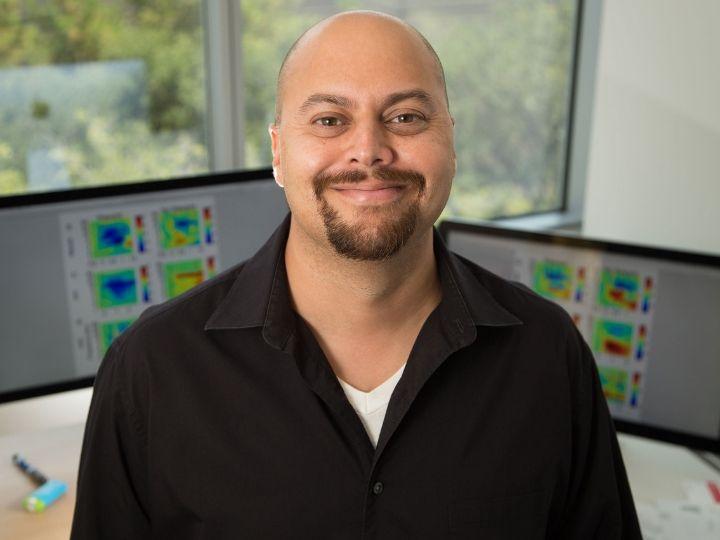
A University of Houston engineer is reporting in eNeuro that a brain-computer interface, a form of artificial intelligence, can sense when its user is expecting a reward by examining the interactions between single-neuron activities and the information flowing to these neurons, called the local field potential.

Professor of biomedical engineering Joe Francis reports his team’s findings allow for the development of an autonomously updating brain-computer interface (BCI) that improves on its own, learning about its subject without having to be programed.

The findings potentially have applications for robotic prosthetics, which would sense what a user wants to do (pick up a glass, for example) and do it. The work represents a significant step forward for prosthetics that perform more naturally.

“This will help prosthetics work the way the user wants them to,” said Francis. “The BCI quickly interprets what you’re going to do and what you expect as far as whether the outcome will be good or bad.” Francis said that information drives scientists’ abilities to predict reward outcome to 97%, up from the mid-70s.

To understand the effects of reward on the brain’s primary motor cortex activity, Francis used implanted electrodes to investigate brainwaves and spikes in brain activity while tasks were performed to see how interactions are modulated by conditioned reward expectations.

“We assume intention is in there, and we decode that information by an algorithm and have it control either a computer cursor, for example, or a robotic arm,” said Francis. Interestingly even when the task called for no movement, just passively observing an activity, the BCI was able to determine intention because the pattern of neural activity resembled that during movement.

“This is important because we are going to have to extract this information and brain activity out of people who cannot actually move, so this is our way of showing we can still get the information even if there is no movement,” said Francis. This process utilizes mirror neurons, which fire when action is taken and action is observed.

“This examination of reward motivation in the primary motor cortex could be useful in developing an autonomously updating brain machine interface,” said Francis.

###

Media Contact
Laurie Fickman
[email protected]

Original Source

http://www.uh.edu/news-events/stories/2019/june-2019/061119-brain-computer-francis.php

Tags: Alternative MedicineBiomechanics/BiophysicsBiomedical/Environmental/Chemical EngineeringBiotechnologyDisabled PersonsRehabilitation/Prosthetics/Plastic SurgeryRobotry/Artificial IntelligenceTechnology/Engineering/Computer Science
Share12Tweet8Share2ShareShareShare2

Related Posts

International Team Including Dresden Scientists Develops Novel Designer Proteins for Advanced Study of Living Tissue

June 25, 2026

New Study Uncovers Key Factors Driving Water Chemistry in Nanoscale Environments

June 25, 2026

Plasma Technology Extends Catalyst Lifespan in Hydrogen Production

June 24, 2026

Electric Field and Oxygen Spillover Collaborate to Control Electrode Migration in SOECs

June 24, 2026
Please login to join discussion

POPULAR NEWS

  • Saying Goodbye to PGY-6: Pediatric Fellowship Realities

    103 shares
    Share 41 Tweet 26
  • Multi-Hospital Study Reveals Long Covid Burden Is Twice as High as Current Estimates

    92 shares
    Share 36 Tweet 23
  • Detection of EDCs in Breast Milk and Infant Urine Up to Six Months Highlights Early Exposure Risks

    77 shares
    Share 31 Tweet 19
  • New Drug Candidate Developed at McMaster Shows Potential for Treating Brain Cancer

    58 shares
    Share 23 Tweet 15

About

We bring you the latest biotechnology news from best research centers and universities around the world. Check our website.

Follow us

Recent News

Energy-Saving Membrane Technology Developed by KAIST and Georgia Tech Enables Crude Oil Separation Without Boiling

Cracking the Code: How Cancer Evades Antibody-Drug Conjugates and New Strategies to Overcome Resistance

Chiral Laser Gyroscopes Surpass Lock-In Limit

Subscribe to Blog via Email

Enter your email address to subscribe to this blog and receive notifications of new posts by email.

Join 82 other subscribers
  • Contact Us

Bioengineer.org © Copyright 2023 All Rights Reserved.

Welcome Back!

Login to your account below

Forgotten Password?

Retrieve your password

Please enter your username or email address to reset your password.

Log In
No Result
View All Result
  • Homepages
    • Home Page 1
    • Home Page 2
  • News
  • National
  • Business
  • Health
  • Lifestyle
  • Science

Bioengineer.org © Copyright 2023 All Rights Reserved.