• HOME
  • NEWS
  • EXPLORE
    • CAREER
      • Companies
      • Jobs
    • EVENTS
    • iGEM
      • News
      • Team
    • PHOTOS
    • VIDEO
    • WIKI
  • BLOG
  • COMMUNITY
    • FACEBOOK
    • INSTAGRAM
    • TWITTER
Monday, June 8, 2026
BIOENGINEER.ORG
No Result
View All Result
  • Login
  • HOME
  • NEWS
  • EXPLORE
    • CAREER
      • Companies
      • Jobs
        • Lecturer
        • PhD Studentship
        • Postdoc
        • Research Assistant
    • EVENTS
    • iGEM
      • News
      • Team
    • PHOTOS
    • VIDEO
    • WIKI
  • BLOG
  • COMMUNITY
    • FACEBOOK
    • INSTAGRAM
    • TWITTER
  • HOME
  • NEWS
  • EXPLORE
    • CAREER
      • Companies
      • Jobs
        • Lecturer
        • PhD Studentship
        • Postdoc
        • Research Assistant
    • EVENTS
    • iGEM
      • News
      • Team
    • PHOTOS
    • VIDEO
    • WIKI
  • BLOG
  • COMMUNITY
    • FACEBOOK
    • INSTAGRAM
    • TWITTER
No Result
View All Result
Bioengineer.org
No Result
View All Result
Home NEWS Science News Biology

Research identifies more sustainable, cost-effective approach to treating citrus canker

Bioengineer by Bioengineer
February 3, 2021
in Biology
Reading Time: 2 mins read
0
IMAGE
Share on FacebookShare on TwitterShare on LinkedinShare on RedditShare on Telegram

IMAGE

Credit: APS

An important bacterial disease that affects citrus trees and causes lesions, citrus canker has been effectively controlled by spraying copper. However standard management techniques involve spraying excessive amounts of copper and water without consideration for the size of the trees.

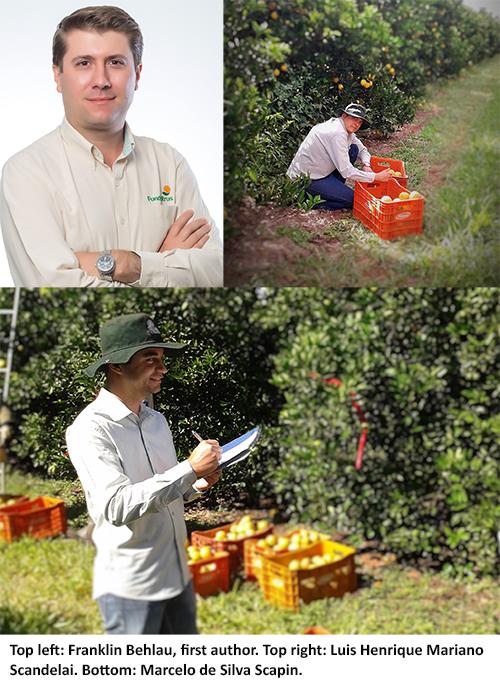
“This technique resulted in a waste of resources as well as higher costs, detrimental environmental impact, and risk for development of copper resistant strains,” explained plant pathologist Franklin Behlau, who recently published an article discussing a more sustainable approach to managing citrus canker.

Behlau and his colleagues showed that it is possible to control citrus canker by spraying much less water and copper. “By adjusting both copper and water usage based on the volume of the citrus trees without affecting the quality of disease control, we have taken an important step to a more economically and environmentally sustainable citrus industry.”

This research was conducted in a field trial carried out during two seasons in a commercial orchard of Pera sweet orange in Brazil. This is the first study to show that citrus canker can be managed with such a small amount of copper and water. It also identified the minimum copper deposition on the treated surface per spray necessary to protect against the disease.

“The impact for the citrus industry is huge. By using the most efficient treatments identified in our study, growers can save up 80% in the amount of copper and up to 60% in the volume of water used annually to manage citrus canker,” explained Behlau. “By using less active ingredient, growers can prevent accumulation of copper in the soil and reduce the long-term effects that it may have on the development of the root system and the tree canopy.”

In addition to studying citrus canker, scientists in the São Paulo state and the West-Southwest Minas Gerais state have been studying the most important diseases and pests that threaten the Brazilian citrus belt. Recent findings have been incorporated into the orchard management routine by producers, resulting in a more conscious and balanced production system.

“Our research, and the other research coming out of Brazil, can contribute significantly to a more sustainable citrus industry not only in Brazil but throughout the world. These results can help meet the global challenge of using fewer conventional pesticides in agriculture.”

###

For more information, read “Spray Volume and Rate Based on the Tree Row Volume for a Sustainable Use of Copper in the Control of Citrus Canker” in the January issue of Plant Disease.

Media Contact
Ashley Bergman Carlin
[email protected]

Related Journal Article

http://dx.doi.org/10.1094/PDIS-12-19-2673-RE

Tags: Agricultural Production/EconomicsAgricultureBiologyEcology/EnvironmentFertilizers/Pest ManagementFood/Food SciencePlant Sciences
Share12Tweet8Share2ShareShareShare2

Related Posts

Groundbreaking Photos Confirm Survival of Elusive Cozumel Dwarf Fox After 20 Years — Biology

Groundbreaking Photos Confirm Survival of Elusive Cozumel Dwarf Fox After 20 Years

June 8, 2026
Study Finds Horses Exhibit No Behavioral Changes When Petted in Children’s Zoo Environment — Biology

Study Finds Horses Exhibit No Behavioral Changes When Petted in Children’s Zoo Environment

June 8, 2026

New Study Reveals the Role of Insects in Our Ancestors’ Diet

June 5, 2026

RNA-Protein Self-Replication Systems Show Path Toward Evolutionary Extinction

June 5, 2026
Please login to join discussion

POPULAR NEWS

  • ESMO 2025: mRNA COVID Vaccines Enhance Efficacy of Cancer Immunotherapy

    323 shares
    Share 129 Tweet 81
  • Multi-Hospital Study Reveals Long Covid Burden Is Twice as High as Current Estimates

    89 shares
    Share 35 Tweet 22
  • Saying Goodbye to PGY-6: Pediatric Fellowship Realities

    83 shares
    Share 33 Tweet 21
  • Common Food Preservatives Associated with Elevated Blood Pressure and Increased Heart Disease Risk

    58 shares
    Share 23 Tweet 15

About

We bring you the latest biotechnology news from best research centers and universities around the world. Check our website.

Follow us

Recent News

Physical Activity Trajectories Link to Depression in Elderly

Boosting Life Jacket Detection with YOLO Tech

Serine and Charge Drive IDR Condensate Mixing

Subscribe to Blog via Email

Enter your email address to subscribe to this blog and receive notifications of new posts by email.

Join 82 other subscribers
  • Contact Us

Bioengineer.org © Copyright 2023 All Rights Reserved.

Welcome Back!

Login to your account below

Forgotten Password?

Retrieve your password

Please enter your username or email address to reset your password.

Log In
No Result
View All Result
  • Homepages
    • Home Page 1
    • Home Page 2
  • News
  • National
  • Business
  • Health
  • Lifestyle
  • Science

Bioengineer.org © Copyright 2023 All Rights Reserved.