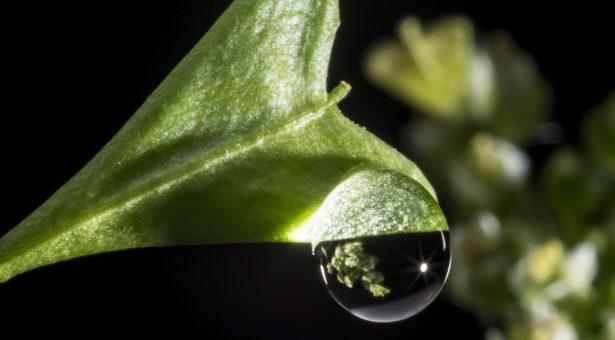
Credit: John Innes Centre
Researchers have shed fresh light on the evolution and function of the shapes we see in nature – using as a model the heart shaped fruits of the Capsella genus.
The natural world is full of diverse shapes from organs to whole organisms that are fitted by evolution to perform and reproduce optimally in their environment.
The Capsella seed pods with their distinctive heart-shaped shoulders offer an anatomical novelty and an excellent study system for understanding the diversity of shapes.
Earlier studies have shown that the expression of key regulatory genes is a primary driver in controlling shape evolution in organs. This new study carried out by John Innes Centre researchers adds another critical step in this pathway by revealing a modification of protein activity that is critical for organ-shape formation.
They show that the SUMO-protease HEARTBREAK (HTB) from Capsella rubella controls the activity of the key regulator of fruit development INDEHISCENT via a process called de-SUMOylation.
Only via this de-SUMOylation – a kind of molecular trimming activity – is a pathway activated which allows biosynthesis of the plant hormone auxin which in turn facilitates anisotropic cell expansion to form the heart-shaped Capsella fruit.
Professor Lars Østergaard a programme leader at the John Innes Centre and corresponding author of the paper explains the significance: “We know that the diversity in shape we observe in nature frequently is caused by changes in the position and timing of key regulatory genes: that is how a lot of variation occurs.
“What we have found is that there is this post translational effect, beyond the gene expression. This protein modification is at the basis of this type of diversity of fruit shape – and goes a long way to explain the difference for example between the fruits of Capsella and those from the related model plant Arabidopsis. This is about a modification of protein activity at a different stage than we have seen before.”
Researchers used forward genetic screening – a technique to study a range of traits – which identified a mutant with compromised development of the heart-shaped fruit. The mutant was therefore named, heartbreak. They used time-lapse 3D imaging and molecular genetics to characterise the heartbreak phenotype at the cellular and molecular level.
First author Dr Yang Dong added: “We now have an entire pathway based on gene expression, hormone dynamics and post translational modification of proteins in such detail that we can test to what extent these kinds of pathways with these components are shared much wider across kingdoms and not just within the plant kingdom.”
One of the next steps for the researchers is to is to translate this fundamental discovery from the research plant Capsella to the related commercial crop oilseed rape.
The research answers a key question about how these shapes appear.
But why does nature come up with such an unusual shape as the heart-shaped pods of Capsella? What is the function behind this form? The reason is still debatable, explains Professor Østergaard.
“Previously we thought these shapes might be a good functional design for seed dispersal because the shape could allow the wind to catch the seed pod walls, but our assays comparing them with Arabidopsis and oilseed rape do not reveal any great advantage of the Capsella fruit in seed dispersal. So, we don’t think that can be a major factor.
“It is possible they could act like solar panels. In other words, maybe they function to capture sunlight and increase photosynthetic capacity. We know that the photosynthetic capacity of the seed pod walls can have a strong effect on seed development inside the pod and therefore on yields. So, by understanding this mechanism it does give us tools to perhaps be able to manipulate the seed pod walls in crops like oilseed rape.”
###
Media Contact
Adrian Galvin
[email protected]
Related Journal Article
http://dx.