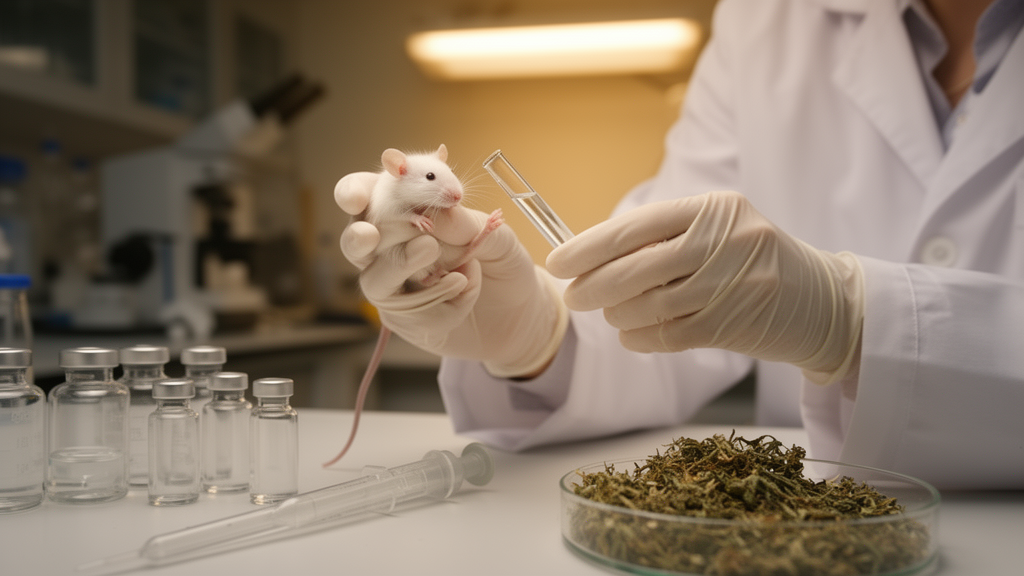
A systematic review of seventeen preclinical studies has found that both repurposed drugs and herbal medicines improved cognitive performance in an animal model designed to mimic Alzheimer’s disease in postmenopausal women, but the authors caution that the overall certainty of this evidence is extremely low.
The animal model at the heart of the review combines two interventions in female rats: surgical removal of the ovaries, which reproduces the estrogen loss of menopause, and chronic injection of d-galactose, a sugar that accumulates with aging and drives oxidative stress, neuronal damage, and learning deficits.
From 249 records identified, the screening process left seventeen full-text articles, all conducted in rats, with 79 percent using Wistar animals and the remainder Sprague-Dawley. All studies used only female animals, as required by the model. Publication dates ranged from 2012 to 2024, with most work appearing between 2020 and 2024. Sample sizes ranged from six to twenty rats per group, most commonly ten to fifteen, and d-galactose was typically injected intraperitoneally at 150 milligrams per kilogram for six to twelve weeks. Fifteen distinct agents were tested across the seventeen studies, divided into eight repurposed drugs and seven herbal extracts or compounds.
Among the repurposed drugs, escitalopram, a selective serotonin reuptake inhibitor, was given orally at 10 milligrams per kilogram per day for four weeks and improved performance in the Morris water maze and the novel object recognition test. Hippocampal analysis showed fewer necrotic pyramidal neurons, reduced inflammatory and oxidative markers including tumor necrosis factor-alpha and NADPH oxidase, activation of pro-survival PI3K/Akt/GSK-3beta and Raf-1/MEK/ERK pathways, suppression of the pro-apoptotic JNK/c-Jun pathway, and reduced beta-secretase activity, amyloid-beta 42 production, and tau phosphorylation. The drug also raised levels of synaptophysin, phosphorylated CREB, and brain-derived neurotrophic factor, proteins central to synaptic plasticity and memory.
Dimethyl fumarate, already approved for psoriasis and relapsing-remitting multiple sclerosis, enhanced learning and short- and long-term memory in Barnes maze, novel object recognition, and Y-maze testing when given orally at 45 milligrams per kilogram per day for eight weeks. These behavioral gains were accompanied by lower hippocampal levels of amyloid-beta 42, phosphorylated tau, apolipoprotein E, and BACE1, alongside activation of the AMPK/SIRT-1 pathway and antioxidant defenses. Telmisartan, an angiotensin receptor blocker dosed at 3 milligrams per kilogram per day for six weeks, improved spatial and non-spatial memory and boosted the protective angiotensin-converting enzyme 1/angiotensin (1-7)/Mas receptor arm. Dapagliflozin, an antidiabetic SGLT2 inhibitor, restored cognition in the Morris water maze at 1 milligram per kilogram per day, elevating the energy sensors AMP/ATP and LKB1/AMPK, autophagy markers including SIRT1, Beclin1, and LC3B, while lowering BACE1, phosphorylated tau, and phosphorylated mTOR.
Two anticancer agents also appeared in the review. Lapatinib ditosylate, a HER-2 and epidermal growth factor receptor tyrosine kinase inhibitor, improved Morris water maze and novel object recognition outcomes at 100 milligrams per kilogram per day across two studies by the same team, though lower doses of 30 and 50 milligrams per kilogram showed no behavioral benefit. The treatment reduced amyloid-beta 1-42, phosphorylated tau, neuroinflammation, and excitotoxicity markers while engaging pro-survival PI3K/Akt signaling. Pazopanib, given intraperitoneally for six weeks, improved water maze indices and restored hippocampal histopathology by reducing amyloid and tau pathology and suppressing the RIPK1/RIPK3/MLKL necroptosis pathway. Simvastatin, dosed at 5 milligrams per kilogram per day during the final four weeks of d-galactose exposure, improved shuttle box and Y-maze performance and increased fecal short-chain fatty acids while reducing inflammatory cytokines and hippocampal amyloid deposits, pointing to a gut-brain axis mechanism.
On the herbal side, ginsenoside Rg1, a phytoestrogenic triterpenoid saponin from Panax ginseng, improved spatial acquisition and retention at moderate and high doses of 10 and 20 milligrams per kilogram per day, with memory gains correlated with reduced hippocampal amyloid-beta 1-42, increased ADAM10-positive neurons, decreased BACE1 expression, and lower caspase 3 activity. Resveratrol, a polyphenol from grapes, prevented memory decline at 40 and 80 milligrams per kilogram, with the highest dose lowering thiobarbituric acid reactive substances and raising superoxide dismutase and glutathione peroxidase, protecting hippocampal mitochondria, and notably producing less uterine immune reaction than estradiol, an observation relevant to the safety concerns that limit estrogen replacement therapy. Rosmarinic acid from Salvia officinalis improved cognition and locomotor activity over sixty days while reducing lipid peroxidation, cyclooxygenase-2 expression, and amyloid deposition.
Tea polyphenols from Camellia sinensis were the only herbal agent tested in two studies. At 300 milligrams per kilogram, they outperformed lower doses in preserving memory, inhibited microglial activation across the CA1, CA3, and dentate gyrus subregions of the hippocampus, downregulated Toll-like receptor 4 and downstream inflammatory signaling, reduced interleukin-1 beta, interleukin-6, and tumor necrosis factor-alpha, and improved intestinal flora diversity, linking gut microbial balance to brain inflammation. A second study found that 300 milligrams per kilogram improved spatial memory while increasing glucose transporter expression, tau O-GlcNAc glycosylation, and mitochondrial morphology, and lowering phosphorylated tau and amyloid-beta 1-42. Scoparone, a coumarin from Artemisia capillaris, drove microglia toward the anti-inflammatory M2 subtype and prevented amyloid aggregation and neuronal degeneration. Alcoholic extract of Erigeron bonariensis at 100 and 200 milligrams per kilogram matched the memory-enhancing effects of donepezil, and extra-virgin avocado oil at all tested doses preserved spatial and non-spatial memory while reducing methylglyoxal, malondialdehyde, and neuronal loss in the CA1 and CA3 regions.
The review’s central caveat lies in its quality assessment. Using the SYRCLE risk of bias tool, the authors judged the overall risk across included studies to be unclear, driven by poor reporting of allocation concealment, random housing, blinding, and random outcome assessment. Allocation concealment was unclear in every study, and only one reported observer blinding. The GRADE evaluation accordingly rated the certainty of evidence as very low, citing small numbers of trials per agent, unclear bias risk, and incomplete methodological reporting. Each drug or extract was tested in only one or two studies, dosing regimens and d-galactose protocols varied widely, and behavioral tests differed across laboratories, making direct comparison difficult. The authors conclude that escitalopram, telmisartan, dimethyl fumarate, and dapagliflozin rank among the most promising repurposed candidates, while ginsenoside Rg1 and resveratrol show the most consistent herbal evidence, but they emphasize that rigorously designed preclinical studies with larger samples and transparent reporting are needed before any clinical translation in postmenopausal patients can be considered.
Subject of Research: Preclinical evidence for repurposed drugs and herbal medicines against cognitive deficit in a postmenopausal Alzheimer's disease animal model
Article Title: Role of repurposed drugs and herbal medicines to improve cognitive deficit in postmenopausal Alzheimer's disease: a systematic review of preclinical evidence
Article References: Saeed, M. M., El-Fayoumi, S. H., & Balata, G. F. (2026). Role of repurposed drugs and herbal medicines to improve cognitive deficit in postmenopausal Alzheimer's disease: a systematic review of preclinical evidence. Future Journal of Pharmaceutical Sciences, 12(1), Article 89. https://doi.org/10.1186/s43094-026-01005-7
Image Credits: AI Generated
DOI: 10.1186/s43094-026-01005-7
Keywords: Alzheimer's disease, postmenopausal, systematic review, drug repurposing, herbal medicines, ovariectomized rats, d-galactose, escitalopram, resveratrol, ginsenoside Rg1, cognitive deficit, preclinical evidence
News Source: Diana Fleming. (October 29, 2026). Repurposed Drugs and Herbal Compounds Show Early Promise Against Postmenopausal Alzheimer’s in Rat Studies. Scienmag.