


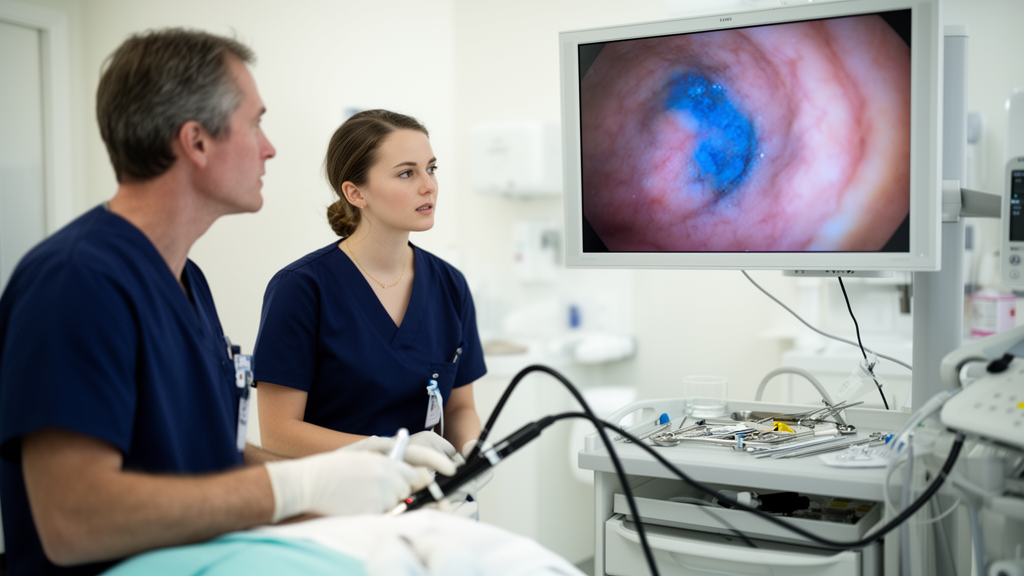
The first UK-wide analysis of bowel cancer surveillance for people with inflammatory bowel disease has found that the way these checks are delivered varies widely, and that certain factors are associated with detecting more polyps, the small growths that may become cancer.
Researchers led by the University of Edinburgh analysed data from the National Endoscopy Database, covering approximately 65 per cent of UK endoscopy units. The dataset included almost 16,000 procedures carried out in 2024 by 4,669 endoscopists, making it the largest study of its kind globally.
The study found that fewer than one in five endoscopists performed IBD surveillance checks at least monthly, yet this small group was responsible for 57 per cent of all procedures. People with IBD affecting the large bowel, such as Crohn’s disease or ulcerative colitis, have a higher risk of bowel cancer, and regular camera checks known as endoscopies can find early changes. These checks are usually scheduled alongside other hospital procedures, which can make consistent care harder to plan.
According to the analysis, checks performed by professionals with regular experience, allowing more time for the procedure, and the use of a special dye to improve visibility were each associated with finding more polyps, some of which may be precancerous. The study provides the first national evidence linking polyp detection with the experience of the person doing the test, the time allowed and the use of dye.
Dr Shahida Din, the study’s principal investigator from the University of Edinburgh’s Institute of Genetics and Cancer, said: “IBD cancer checks are important, but unlike organised bowel cancer screening, they do not have the same protected capacity. A small proportion of endoscopists perform most of these checks, and regular experience, more time and use of dye were associated with finding more polyps.”
She added that further research should establish whether more consistent pathways and dedicated time improve detection of precancerous changes and, ultimately, patient outcomes. Experts say the findings provide a starting point for measuring and improving care for people with IBD, and support further investigation into whether more consistent pathways and protected time could lead to better outcomes.
The study team notes an important limitation: the database did not include laboratory results for removed polyps, so the researchers cannot determine whether the observed differences led to fewer cancers. Further research is needed to find out which changes improve cancer prevention.
Better evidence could ultimately help people with IBD receive more consistent care and improve the chances of finding important changes early, the researchers say. The study is published in the Journal of Crohn’s and Colitis, and the UK-wide collaboration involved clinicians and researchers from NHS organisations and universities across all four nations of the UK.
Subject of Research: Quality of endoscopic bowel cancer surveillance for people with inflammatory bowel disease in the UK
Article Title: Improve IBD bowel checks for early cancer detection, study finds
Article References: Improve IBD bowel checks for early cancer detection, study finds. Original publication (Bibliographic details unavailable.)
Image Credits: AI Generated
DOI: Not provided
Keywords: inflammatory bowel disease, bowel cancer, endoscopy, polyp detection, National Endoscopy Database, University of Edinburgh, Crohn's disease, ulcerative colitis, cancer screening, surveillance quality, Improve, bowel
News Source: Nathaniel Bowman. (October 28, 2026). Regular experience, time and dye linked to better IBD cancer checks in UK study. Scienmag.



