


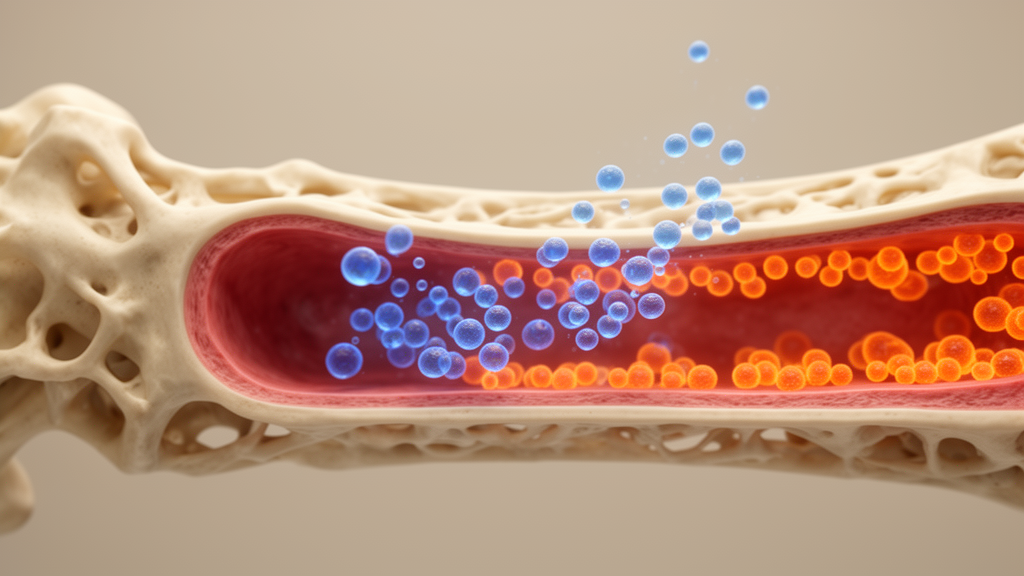
Stem cells transplanted into a bone marrow that is actively rebuilding itself after injury go on to outperform cells transplanted under conventional conditions, according to a mouse study published in Clinical and Experimental Medicine. The researchers report that hematopoietic stem cells, or HSCs, which engrafted during a window of intense blood regeneration contributed a greater share of blood and immune cells over the long term than HSCs that engrafted after myeloablative conditioning, the standard preparative treatment that wipes out a recipient’s existing marrow.
The study addressed a well-known feature of hematopoietic cell transplantation, a curative therapy for many hematologic malignancies and for selected non-malignant hematologic, immunologic and genetic disorders. In the weeks after a transplant, reconstitution of the blood system is driven mainly by progenitor cells with limited long-term repopulating capacity, while the true stem cell compartment is rebuilt more slowly. The team hypothesized that this period of active regeneration might itself create a favorable environment for subsequently transplanted HSCs, rather than being merely a transitional phase.
To test the idea, the researchers carried out sequential transplantation experiments in mice, using bone marrow cells marked with different CD45 allotypes so that the descendants of each donor population could be distinguished. They then tracked long-term donor contribution both in immature bone marrow cell populations and in peripheral blood, allowing them to compare the performance of stem cells that engrafted at different stages of the recipient’s recovery. The comparison showed that HSCs engrafted during active hematopoietic regeneration achieved superior long-term reconstitution, contributing a greater proportion of hematopoietic and immune cells than HSCs engrafted after myeloablative conditioning.
The authors conclude that an actively regenerating hematopoietic environment not only permits the engraftment of transplanted HSCs but also enhances their long-term function in producing blood and immune cells. They emphasize that the timing and environmental context of engraftment are strongly associated with long-term stem cell performance, although the mechanisms responsible for this effect remain to be determined. The work is a preprint-style, peer-reviewed accepted manuscript shared early with a permanent DOI, and it is subject to further edits before the final version of record appears.
Because the findings come from mouse transplantation experiments, their clinical implications are not yet established, and the study did not test any new treatment protocol in patients. The researchers note, however, that the results have direct clinical potential, since they suggest that the state of the recipient’s marrow at the moment of engraftment could influence how well a transplant performs years later. If the underlying mechanisms can be identified, the observation may eventually inform how transplantation strategies are designed, but any such application would require further research. For now, the study adds a mouse-model demonstration that the regenerating hematopoietic niche is more than a passive backdrop: it appears to shape the long-term capabilities of the stem cells that pass through it.
Subject of Research: How an actively regenerating hematopoietic environment affects the long-term function of transplanted hematopoietic stem cells in mice
Article Title: An actively regenerating hematopoietic environment enhances the function of transplanted stem cells
Article References: Faltusová, K., Humlová, Z., Báječný, M., Heizer, T., Chen, C.-L., Páral, P., & Nečas, E. (2026). An actively regenerating hematopoietic environment enhances the function of transplanted stem cells. Clinical and Experimental Medicine. https://doi.org/10.1007/s10238-026-02362-6
Image Credits: AI Generated
DOI: 10.1007/s10238-026-02362-6
Keywords: hematopoietic stem cells, bone marrow transplantation, hematopoietic regeneration, myeloablative conditioning, engraftment, CD45 allotypes, mice, long-term reconstitution, blood and immune cells, Clinical and Experimental Medicine, actively, regenerating
News Source: Ophelia Keating. (October 29, 2026). Regenerating Bone Marrow Gives Transplanted Stem Cells a Lasting Boost in Mice. Scienmag.



