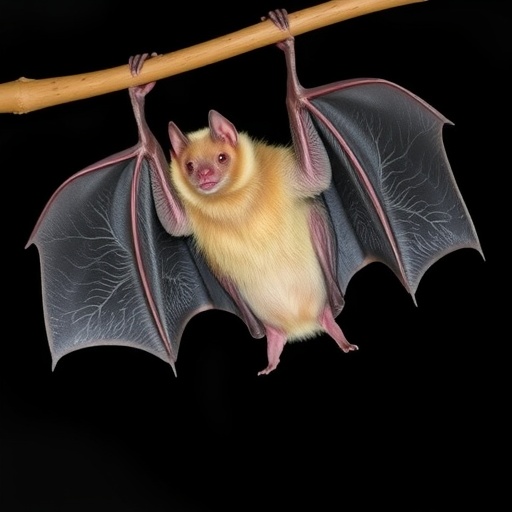
In a groundbreaking study published in Front Zool, researchers have unveiled a revolutionary approach to fine-grained image classification of bats, a group often overlooked despite their ecological significance. The study, titled “Fine-grained image classification on bats using VGG16-CBAM: a practical example with 7 horseshoe bats taxa (CHIROPTERA: Rhinolophidae: Rhinolophus) from Southern China,” demonstrates how advanced machine learning techniques can be leveraged to enhance our understanding of biodiversity through visual identification. The authors, Cao, Z., Wang, K., Wen, J., and their team, aim to address the complex task of species identification in bats, which are known for their morphological similarities and the limitations of traditional field identification methods.
The research emphasizes the critical role of fine-grained classification, which refers to the ability to differentiate between species that appear visually similar. This can be especially tricky in species like horseshoe bats, members of the Rhinolophidae family, where small morphological differences can dictate classification outcomes. Traditional techniques often require extensive training for field workers and can result in misidentifications, leading to significant consequences in conservation strategies. The introduction of a robust machine learning model to tackle these challenges represents a paradigm shift that could revolutionize how researchers and conservationists engage with bat populations.
Utilizing the VGG16-CBAM architecture for image classification, the study integrates the Convolutional Block Attention Module (CBAM) to enhance feature extraction. VGG16 is a well-known deep learning model originally designed for image recognition tasks but the incorporation of CBAM allows for improved attention mechanisms that focus on the most relevant features for identifying different bat species. This sophisticated technique enables the model to learn from a diverse dataset, elevating it beyond traditional methods by allowing it to discern intricate details that may not be easily recognizable to the human eye.
The researchers compiled a significant dataset of images from seven distinct species of horseshoe bats, ensuring a rich variety for their training process. By utilizing a comprehensive collection of images that represent different angles, lighting conditions, and even bat postures, the model could learn more generalized features necessary for robust classification. This generous dataset is crucial not only for training but also for validating the performance of the model across different taxa and environmental conditions.
The training process involved multiple epochs, where the model’s performance was continuously monitored. Metrics such as accuracy, precision, recall, and F1 score were employed to evaluate how well the model was learning and adapting to the complexity of bat identification. The nuanced approach of employing tailored hyperparameters optimization paved the way for the model to reach high accuracy levels in recognizing the subtle differences between species, even those often conflated in ecological studies.
As a case study, the research presents the classification outcomes for the seven horseshoe bat species. Results showed remarkable accuracy rates, validating the effectiveness of the VGG16-CBAM framework. The implications of such findings are vast; effective species classification can lead to more informed conservation efforts, better habitat monitoring, and clearer insights into the impact of environmental changes on these bat populations. The ability to distinguish between closely related species becomes paramount, especially in regions where biodiversity is threatened by habitat destruction and climate change.
Moreover, the study addresses the broader implications of machine learning in the field of conservation biology. As ecosystems face increasing pressures from anthropogenic activities, rapid identification of species can drive timely conservation actions. The application of VGG16-CBAM could be extended to other taxa, highlighting a tool that can adapt across various biodiversity monitoring initiatives. The future of conservation could very well hinge on the adoption of such technologies, enhancing not only the speed of assessments but also their accuracy.
In summary, the advancements presented in this study are not merely technical; they form a foundation upon which future ecological research can build. By successfully implementing deep learning techniques, researchers are paving the way for automated systems that can classify and monitor species in real-time, thus protecting our planet’s rich biodiversity. Such approaches could be paired with mobile applications for researchers and conservationists in the field, ensuring that valuable data is captured efficiently and effectively.
As technology continues to evolve, so too does the potential for innovative solutions to conservation challenges. The ongoing development and refinement of machine learning models like VGG16-CBAM will likely see expanded use in ecology. Given the urgency of biodiversity loss, the implications of such technological advancements could be monumental, providing the scientific community with tools not just for classification, but for comprehensive ecosystem management.
Looking forward, it will be essential for researchers to collaborate with tech developers to refine these models continuously. Integrating machine learning with other data sources, such as acoustic monitoring or genetic data, can enable even richer insights into bat populations. This multidimensional approach will not only facilitate more accurate species identification but also illuminate broader ecological patterns and trends.
Finally, as this research illustrates, the intersection of technology and ecology is ripe with opportunity. By embracing these advancements, researchers can unlock new avenues for discovery and action in the quest to conserve our planet’s irreplaceable biodiversity.
Subject of Research: Fine-grained image classification of horseshoe bats
Article Title: Fine-grained image classification on bats using VGG16-CBAM: a practical example with 7 horseshoe bats taxa (CHIROPTERA: Rhinolophidae: Rhinolophus) from Southern China.
Article References:
Cao, Z., Wang, K., Wen, J. et al. Fine-grained image classification on bats using VGG16-CBAM: a practical example with 7 horseshoe bats taxa (CHIROPTERA: Rhinolophidae: Rhinolophus) from Southern China.
Front Zool 21, 10 (2024). https://doi.org/10.1186/s12983-024-00531-5
Image Credits: AI Generated
DOI: 10.1186/s12983-024-00531-5
Keywords: image classification, machine learning, biodiversity, conservation, horseshoe bats
Tags: advanced machine learning applicationsbat species identificationconservation strategies for batsecological significance of batsfine-grained image classificationmachine learning in biodiversitymorphological similarities in batsRhinolophidae family batsSouthern China bat taxaspecies identification challengesVGG16-CBAM modelvisual identification techniques