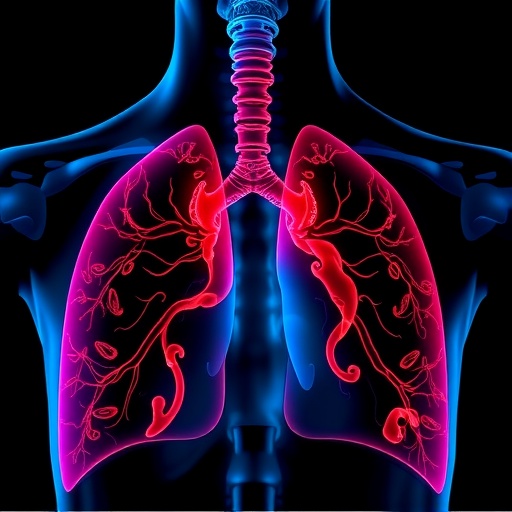
In a groundbreaking study published in the Journal of the American College of Surgeons, researchers at the University of Cincinnati College of Medicine have unveiled new insights into the impact of smoking on lung cancer surgery outcomes. This extensive observational study delved into the complex relationship between smoking status and post-operative morbidity and mortality among patients undergoing lung cancer resections. By analyzing data from over 85,000 patients recorded in the Society of Thoracic Surgeons General Thoracic Surgery Database between 2018 and 2023, the team sought to challenge longstanding surgical paradigms and offer nuanced, patient-specific treatment approaches.
Lung cancer continues to represent a significant public health challenge worldwide, with cigarette smoking recognized as its primary etiological factor. Traditionally, the clinical consensus has emphasized the necessity for patients to cease smoking at least one month prior to surgery, predicated on the belief that continued smoking augments the risk of postoperative complications and mortality. However, this recent study disrupts the dogma, revealing that while patients who smoke right up to surgery endure a higher incidence of pulmonary complications, their short-term mortality risk remains comparable to that of former smokers who stopped prior to the operation.
Dr. Robert Van Haren, the study’s corresponding author and associate professor of clinical surgery at the University of Cincinnati, underscores the complexity of this issue. He explains that although smoking indisputably elevates the likelihood of complications such as pneumonia and respiratory failure after lung resection, it does not necessarily translate into higher perioperative death rates. This distinction is critical for clinical decision-making, as an outright disqualification of active smokers from surgical intervention could deprive them of potentially life-saving treatment.
The researchers observed that current smokers tended to be younger and presented with fewer comorbidities than their counterparts who had quit smoking. Despite this, the occurrence of pulmonary complications was markedly higher in the active smoking group—34.6% compared to 30.5% among those who quit. Interestingly, mortality rates remained at a steady 1% across both cohorts, suggesting that surgery can be safely pursued even in patients unable or unwilling to cease smoking.
This study’s results advocate for a more individualized surgical strategy where the decision to operate considers a constellation of patient-specific factors beyond smoking status alone. Variables such as age, functional status—whether a patient is ambulatory or wheelchair-bound—and the technical feasibility of minimally invasive approaches like thoracoscopic or robot-assisted surgery bear significantly on surgical outcomes. The advent of robotic surgery, enabling smaller incisions and enhanced precision, has notably improved recovery trajectories and reduced complications like postoperative pneumonia, thereby broadening the spectrum of patients who may safely undergo lung resections.
Importantly, Dr. Van Haren cautions that the observed associations do not establish causation but rather highlight the multifaceted nature of surgical risk. He emphasizes the imperative to integrate smoking status into a comprehensive risk assessment framework rather than applying it as a categorical exclusion criterion. Such a paradigm shift could mitigate healthcare disparities by ensuring equitable access to curative lung cancer surgery while maintaining vigilant perioperative care for higher-risk individuals.
Another significant aspect of the study lies in its extensive scope and methodological rigor, capturing a diverse and large patient population through the Society of Thoracic Surgeons General Thoracic Surgery Database. This comprehensive data source, encompassing detailed patient demographics, comorbidities, operative variables, and outcomes, facilitated robust statistical analyses. Statistical controls accounted for confounding factors, enabling the isolation of smoking status impact. These methodological strengths reinforce the reliability of the findings and their applicability in real-world surgical settings.
The research team, led by recent medical school graduate Dr. Hannah Kim, collaborated with a multidisciplinary group including cardiothoracic fellows, biostatisticians, and surgeons, illustrating the collaborative nature essential for modern clinical investigations. Their integrative approach combined clinical expertise with advanced data analytics, enhancing the study’s depth and translational potential.
As the medical community continues to grapple with optimizing lung cancer treatment in the context of tobacco use, these findings provide a crucial evidence base supporting flexible, patient-centered surgical planning. By balancing the inherent risks of smoking with the proven survival benefits of surgical lung cancer resection, physicians can better tailor therapies to individual patient profiles, thereby improving both oncologic and functional outcomes.
Overall, the implications of this study extend beyond lung cancer surgery, prompting broader reflection on how rigid clinical guidelines may be reformed through data-driven personalization. Especially given the advent of minimally invasive surgical technologies and enhanced perioperative care protocols, the binary smoker versus non-smoker paradigm appears increasingly insufficient to guide treatment decisions. Instead, a nuanced appreciation of risk factors, bolstered by empirical data, stands to revolutionize surgical oncology practice.
This paradigm shift is poised to benefit patients who historically might have been deemed poor surgical candidates solely due to persistent smoking. The capacity to safely operate on these individuals without increasing their risk of mortality challenges entrenched biases and opens new avenues for life-extending interventions. Continued research will be essential to refine risk stratification tools and to delineate optimal perioperative management strategies for smokers undergoing thoracic surgery.
In closing, while smoking cessation remains an unequivocal priority for health promotion and cancer prevention, this important work clarifies that surgical opportunities for lung cancer should not be summarily denied to those who struggle to quit. The University of Cincinnati investigators have thus contributed significant insight into balancing the complexities of smoking, surgical risk, and patient care in the evolving landscape of thoracic oncology.
Subject of Research: People
Article Title: Impact of Smoking Status on Morbidity and Mortality after Lung Cancer Resection: An Analysis of the Society of Thoracic Surgeons General Thoracic Surgery Database
News Publication Date: 28-Apr-2026
Web References: Journal of the American College of Surgeons
Image Credits: Photo courtesy of the University of Cincinnati.
Keywords: Clinical medicine, Lung cancer surgery, Smoking, Pulmonary complications, Thoracic surgery, Robot-assisted surgery, Postoperative mortality, Surgical risk, Personalized medicine
Tags: impact of smoking on lung surgery outcomeslung cancer patient treatment approacheslung cancer surgery eligibilityobservational study on lung cancerpostoperative morbidity in lung cancerpulmonary complications in smokersshort-term mortality post lung surgerysmoking and lung cancer resection riskssmoking cessation before surgerysmoking status and surgical outcomesSociety of Thoracic Surgeons database analysisUniversity of Cincinnati lung cancer research