• HOME
  • NEWS
  • EXPLORE
    • CAREER
      • Companies
      • Jobs
    • EVENTS
    • iGEM
      • News
      • Team
    • PHOTOS
    • VIDEO
    • WIKI
  • BLOG
  • COMMUNITY
    • FACEBOOK
    • INSTAGRAM
    • TWITTER
Tuesday, May 26, 2026
BIOENGINEER.ORG
No Result
View All Result
  • Login
  • HOME
  • NEWS
  • EXPLORE
    • CAREER
      • Companies
      • Jobs
        • Lecturer
        • PhD Studentship
        • Postdoc
        • Research Assistant
    • EVENTS
    • iGEM
      • News
      • Team
    • PHOTOS
    • VIDEO
    • WIKI
  • BLOG
  • COMMUNITY
    • FACEBOOK
    • INSTAGRAM
    • TWITTER
  • HOME
  • NEWS
  • EXPLORE
    • CAREER
      • Companies
      • Jobs
        • Lecturer
        • PhD Studentship
        • Postdoc
        • Research Assistant
    • EVENTS
    • iGEM
      • News
      • Team
    • PHOTOS
    • VIDEO
    • WIKI
  • BLOG
  • COMMUNITY
    • FACEBOOK
    • INSTAGRAM
    • TWITTER
No Result
View All Result
Bioengineer.org
No Result
View All Result
Home NEWS Science News Biology

Reef pest feasts on ‘sea sawdust’

by
July 17, 2024
in Biology
Reading Time: 2 mins read
0
Image 1
Share on FacebookShare on TwitterShare on LinkedinShare on RedditShare on Telegram

Researchers have uncovered an under-the-sea phenomenon where coral-destroying crown-of-thorns starfish larvae have been feasting on blue-green algae bacteria known as ‘sea sawdust’.

The team of marine scientists from The University of Queensland and Southern Cross University found crown-of-thorns starfish (COTS) larvae grow and thrive when raised on an exclusive diet of Trichodesmium – a bacteria that often floats on the ocean’s surface in large slicks.
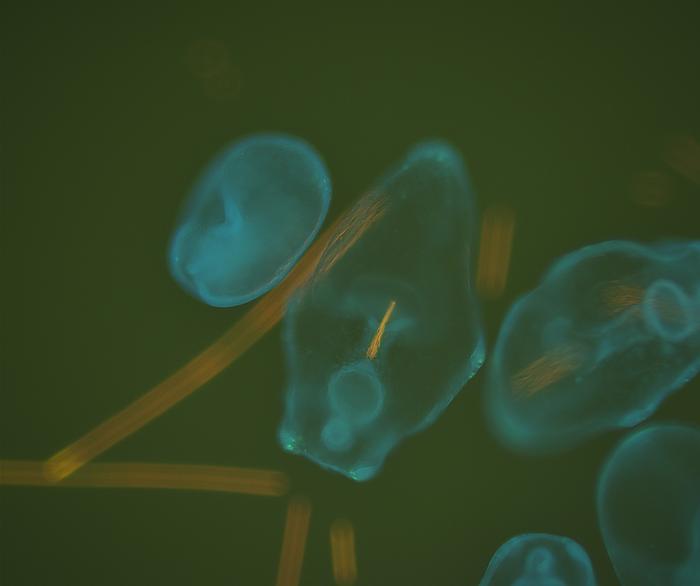
Image 1

Credit: Benjamin Mos

Researchers have uncovered an under-the-sea phenomenon where coral-destroying crown-of-thorns starfish larvae have been feasting on blue-green algae bacteria known as ‘sea sawdust’.

The team of marine scientists from The University of Queensland and Southern Cross University found crown-of-thorns starfish (COTS) larvae grow and thrive when raised on an exclusive diet of Trichodesmium – a bacteria that often floats on the ocean’s surface in large slicks.

UQ’s Dr Benjamin Mos from the School of Environment said scientists had thought almost nothing touched this threadlike bacteria because of its toxicity and poor nutritional content.

“Until now, not much has been known about sea sawdust as a food source, so we were certainly surprised to say the least,” Dr Mos said.

“Blue-green algae blooms can extend hundreds to thousands of kilometres across the ocean and often float on the surface in large rafts like sawdust – hence the name.

“It plays a crucial role in marine ecosystems by making nitrogen from the atmosphere available to other sea life, but now we know it is also a food source.

“By knowing how sea sawdust helps COTS thrive, we can potentially change the way we combat this very damaging coral predator.”

By tracing atoms from bacteria to COTS larvae, researchers found the larvae digested nitrogen from sea sawdust, with the nitrogen moving into their tissues for sustenance.

“With sea sawdust blooms on the rise in recent years, our findings suggest this could help explain the increase in COTS populations, which have devastated our coral reefs for decades,” Dr Mos said.

These findings build on earlier research that suggests human activities, such as fertiliser use, sewage treatment, and stormwater runoff, may be responsible for the increase in blue-green algae blooms.

“It’s important we understand the flow-on effect of how human impacts in one ecosystem might flow on to other seemingly unrelated ecosystems,” Dr Mos said.

Professor Symon Dworjanyn from Southern Cross University’s National Marine Science Centre said further work was needed to investigate the potential connection between sea sawdust blooms and the number of coral-eating COTS.

“If we can figure out how to reduce the impact of COTS, we might give coral reefs a little more time,” Professor Dworjanyn said.

“We don’t yet know if sea sawdust blooms result in more adult COTS on coral reefs, so this research needs more work.

“However, our findings could be an important part of cracking that puzzle.”

This research is published in Science Advances.


Journal

Science Advances

Share12Tweet8Share2ShareShareShare2

Related Posts

Tracing 700 Million Years of Blood Cell Evolution — Biology

Tracing 700 Million Years of Blood Cell Evolution

May 25, 2026
How Wasp Societies Conquer Intense Leadership Conflicts — Biology

How Wasp Societies Conquer Intense Leadership Conflicts

May 25, 2026

Tiny Blue Octopus from the Galápagos Islands: Small Enough to Fit in the Palm of Your Hand

May 25, 2026

Rising Sightings of Blue and Fin Whales in the South East Atlantic

May 23, 2026

POPULAR NEWS

  • ESMO 2025: mRNA COVID Vaccines Enhance Efficacy of Cancer Immunotherapy

    316 shares
    Share 126 Tweet 79
  • New Study Reveals Plants Can Detect the Sound of Rain

    734 shares
    Share 293 Tweet 183
  • Common Food Preservatives Associated with Elevated Blood Pressure and Increased Heart Disease Risk

    56 shares
    Share 22 Tweet 14
  • Research Indicates Potential Connection Between Prenatal Medication Exposure and Elevated Autism Risk

    847 shares
    Share 339 Tweet 212

About

We bring you the latest biotechnology news from best research centers and universities around the world. Check our website.

Follow us

Recent News

Cuproptosis Disrupts Mitochondria, Arrests Oocyte Meiosis

GPSM1 Limits CD73+CD103+ Tregs Driving Obesity Damage

HDAC4 PROTAC Boosts Lung Cancer Ferroptosis, Sensitizes Radiation

Subscribe to Blog via Email

Enter your email address to subscribe to this blog and receive notifications of new posts by email.

Join 82 other subscribers
  • Contact Us

Bioengineer.org © Copyright 2023 All Rights Reserved.

Welcome Back!

Login to your account below

Forgotten Password?

Retrieve your password

Please enter your username or email address to reset your password.

Log In
No Result
View All Result
  • Homepages
    • Home Page 1
    • Home Page 2
  • News
  • National
  • Business
  • Health
  • Lifestyle
  • Science

Bioengineer.org © Copyright 2023 All Rights Reserved.