• HOME
  • NEWS
  • EXPLORE
    • CAREER
      • Companies
      • Jobs
    • EVENTS
    • iGEM
      • News
      • Team
    • PHOTOS
    • VIDEO
    • WIKI
  • BLOG
  • COMMUNITY
    • FACEBOOK
    • INSTAGRAM
    • TWITTER
Monday, December 15, 2025
BIOENGINEER.ORG
No Result
View All Result
  • Login
  • HOME
  • NEWS
  • EXPLORE
    • CAREER
      • Companies
      • Jobs
        • Lecturer
        • PhD Studentship
        • Postdoc
        • Research Assistant
    • EVENTS
    • iGEM
      • News
      • Team
    • PHOTOS
    • VIDEO
    • WIKI
  • BLOG
  • COMMUNITY
    • FACEBOOK
    • INSTAGRAM
    • TWITTER
  • HOME
  • NEWS
  • EXPLORE
    • CAREER
      • Companies
      • Jobs
        • Lecturer
        • PhD Studentship
        • Postdoc
        • Research Assistant
    • EVENTS
    • iGEM
      • News
      • Team
    • PHOTOS
    • VIDEO
    • WIKI
  • BLOG
  • COMMUNITY
    • FACEBOOK
    • INSTAGRAM
    • TWITTER
No Result
View All Result
Bioengineer.org
No Result
View All Result
Home NEWS Science News Chemistry

Recycled concrete could be a sustainable way to keep rubble out of landfi

Bioengineer by Bioengineer
November 30, 2020
in Chemistry
Reading Time: 2 mins read
0
IMAGE
Share on FacebookShare on TwitterShare on LinkedinShare on RedditShare on Telegram

Can even outperform traditional construction, says researcher
IMAGE

Credit: UBC Okanagan

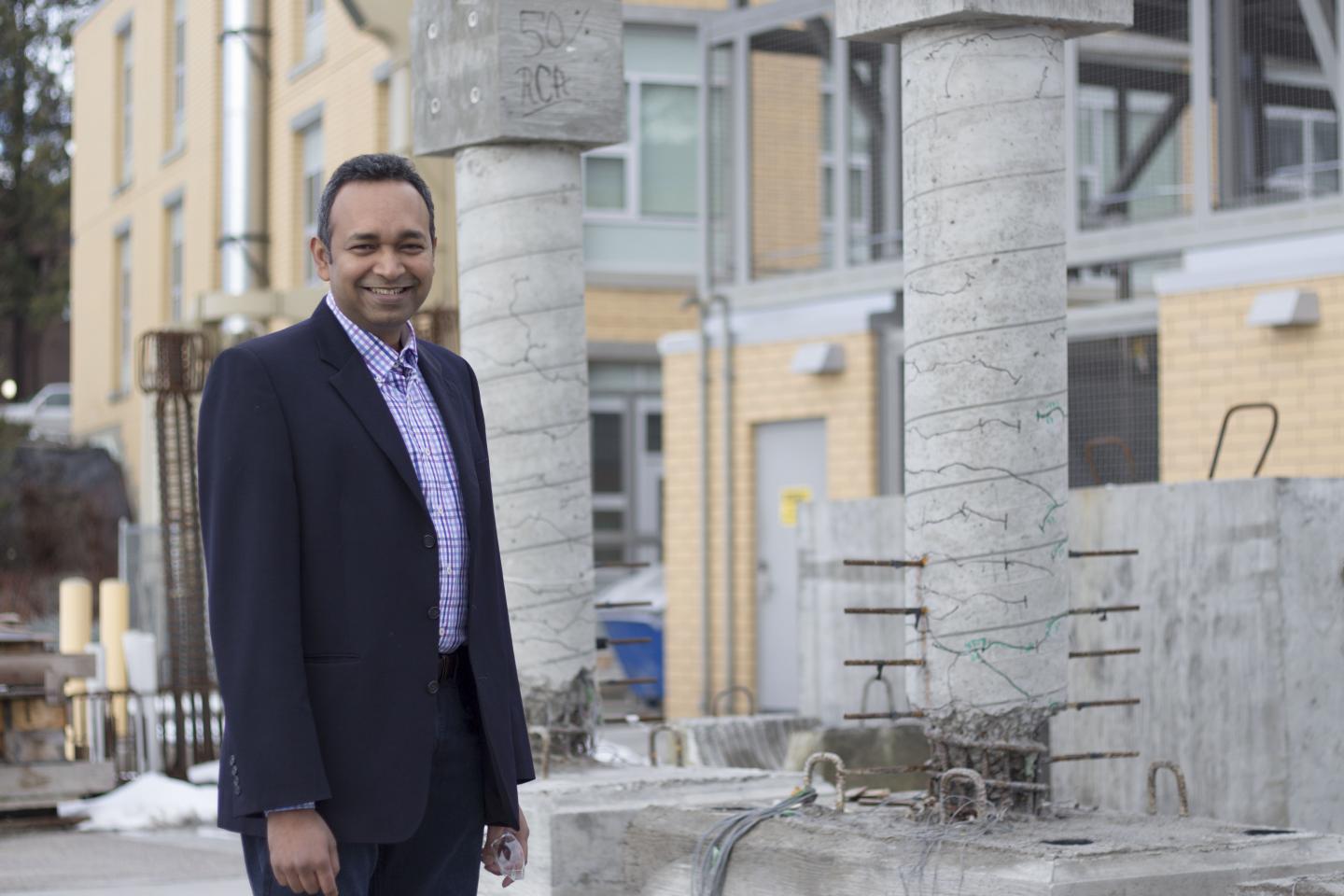
Results of a new five-year study of recycled concrete show that it performs as well, and in several cases even better, than conventional concrete.

Researchers at UBC Okanagan’s School of Engineering conducted side-by-side comparisons of recycled and conventional concrete within two common applications–a building foundation and a municipal sidewalk. They found that the recycled concrete had comparable strength and durability after five years of being in service.

“We live in a world where we are constantly in search of sustainable solutions that remove waste from our landfills,” says Shahria Alam, co-director of UBC’s Green Construction Research and Training Centre and the lead investigator of the study. “A number of countries around the world have already standardized the use of recycled concrete in structural applications, and we hope our findings will help Canada follow suit.”

Waste materials from construction and demolition contribute up to 40 per cent of the world’s waste, according to Alam, and in Canada, that waste amounts to nine million tonnes per year.

The researchers tested the compressive strength and durability of recycled concrete compared with conventional concrete.

Concrete is typically composed of fine or coarse aggregate that is bonded together with an adhesive paste. The recycled concrete replaces the natural aggregate for producing new concrete.

“The composition of the recycled concrete gives that product additional flexibility and adaptability,” says Alam. “Typically, recycled concrete can be used in retaining walls, roads and sidewalks, but we are seeing a shift towards its increased use in structures.”

Within the findings, the researchers discovered that the long-term performance of recycled concrete adequately compared to its conventional form, and experienced no issues over the five years of the study. In fact, the recycled concrete had a higher rate of compressive strength after 28 days of curing while maintaining a greater or equal strength during the period of the research.

The researchers suggest the recycled concrete can be a 100 per cent substitute for non-structural applications.

“As innovations continue in the composition of recycled concrete, we can envision a time in the future where recycle concrete can be a substitute within more structural applications as well.”

###

Media Contact
Nathan Skolski
[email protected]

Original Source

https://news.ok.ubc.ca/2020/11/30/new-ubco-research-suggests-recycled-concrete-could-be-a-sustainable-way-to-keep-rubble-out-of-landfills/

Related Journal Article

http://dx.doi.org/10.1016/j.conbuildmat.2020.119979

Tags: Civil EngineeringIndustrial Engineering/ChemistryMaterialsTechnology/Engineering/Computer ScienceUrbanization
Share12Tweet8Share2ShareShareShare2

Related Posts

Microenvironment Shapes Gold-Catalysed CO2 Electroreduction

Microenvironment Shapes Gold-Catalysed CO2 Electroreduction

December 11, 2025
Photoswitchable Olefins Enable Controlled Polymerization

Photoswitchable Olefins Enable Controlled Polymerization

December 11, 2025

Cation Hydration Entropy Controls Chloride Ion Diffusion

December 10, 2025

Iridium Catalysis Enables Piperidine Synthesis from Pyridines

December 3, 2025
Please login to join discussion

POPULAR NEWS

  • Scientists Uncover Chameleon’s Telephone-Cord-Like Optic Nerves, A Feature Missed by Aristotle and Newton

    Scientists Uncover Chameleon’s Telephone-Cord-Like Optic Nerves, A Feature Missed by Aristotle and Newton

    122 shares
    Share 49 Tweet 31
  • Nurses’ Views on Online Learning: Effects on Performance

    69 shares
    Share 28 Tweet 17
  • NSF funds machine-learning research at UNO and UNL to study energy requirements of walking in older adults

    70 shares
    Share 28 Tweet 18
  • MoCK2 Kinase Shapes Mitochondrial Dynamics in Rice Fungal Pathogen

    71 shares
    Share 28 Tweet 18

About

We bring you the latest biotechnology news from best research centers and universities around the world. Check our website.

Follow us

Recent News

Enhancing Recommendations with Genetic Algorithm Hybrid Model

Tackling Unplanned Hospitalizations in Long-Term Care

Assessing Caregiver Readiness for Pediatric Aspiration Emergencies

Subscribe to Blog via Email

Enter your email address to subscribe to this blog and receive notifications of new posts by email.

Join 69 other subscribers
  • Contact Us

Bioengineer.org © Copyright 2023 All Rights Reserved.

Welcome Back!

Login to your account below

Forgotten Password?

Retrieve your password

Please enter your username or email address to reset your password.

Log In
No Result
View All Result
  • Homepages
    • Home Page 1
    • Home Page 2
  • News
  • National
  • Business
  • Health
  • Lifestyle
  • Science

Bioengineer.org © Copyright 2023 All Rights Reserved.