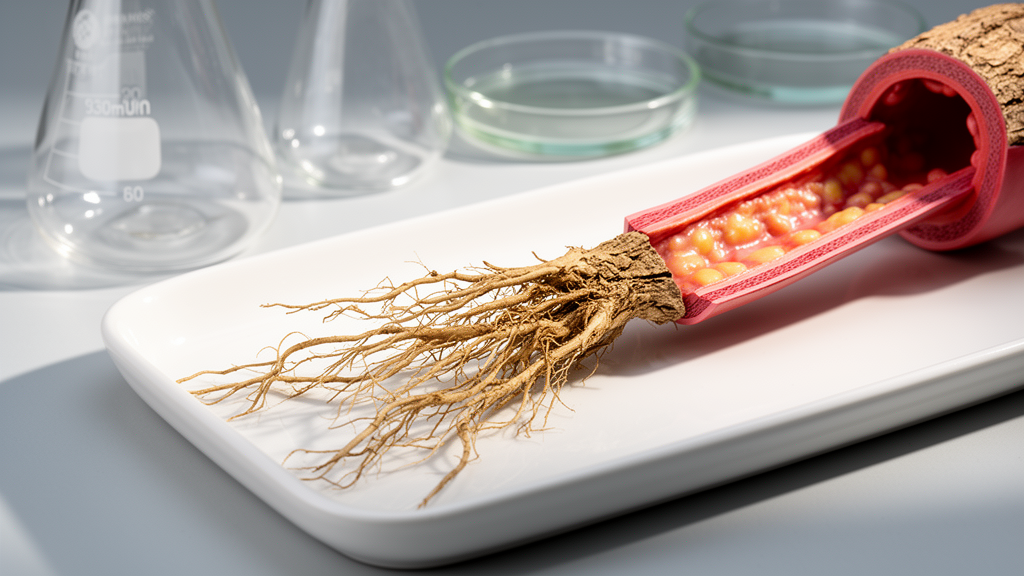
Recent findings published on July 10, 2026, in Laboratory Animal Research demonstrate that raw Achyranthes bidentata root exerts significantly stronger anti-atherosclerotic effects in ApoE-/- mice compared to its salt-processed counterpart. While traditional Chinese medicine practitioners often employ salt-processing techniques to enhance the kidney-tonifying properties of various herbs, this research suggests that such modifications do not necessarily translate to improved cardiovascular benefits. By evaluating these distinct forms in a mouse model of atherosclerosis—a chronic condition characterized by the progressive buildup of plaques in arterial walls—the study provides critical, evidence-based insights into the pharmacological efficacy of raw versus processed herbal materials. The study underscores the necessity of distinguishing between different clinical applications of medicinal plants to ensure optimal therapeutic outcomes for vascular health.
Atherosclerosis stands as a primary underlying pathology for a significant portion of cardiovascular and cerebrovascular diseases globally. The disease process is deeply complex, involving endothelial cell injury, lipid dysregulation, and persistent inflammation. Vascular endothelial progenitor cells (EPCs) play a pivotal role in the maintenance of vascular stability and the repair of arterial walls. When these progenitor cells are depleted or functionally impaired, the body’s innate regenerative capacity is compromised, which significantly accelerates the progression of atherosclerotic lesions. The study highlights that the mobilization of these progenitor cells from bone marrow to peripheral blood is a vital process in protecting the vascular endothelium. Therefore, pharmacological strategies targeting the protection of endothelial cells and the promotion of EPC activity have emerged as essential areas of clinical investigation.
The root of the Achyranthes bidentata plant, frequently utilized in traditional Chinese medicine for its purported blood-stasis-reducing and meridians-dredging effects, contains a sophisticated profile of chemical constituents, including triterpene saponins, sterones, and flavonoids. Conventionally, practitioners cut raw root segments, soak them in brine, and heat them to prepare the salt-processed variety. Traditional theory posits that this salting process amplifies the plant’s efficacy in tonifying the liver and kidney. However, until this systematic evaluation, there had been limited rigorous scientific verification regarding whether salt-processing also influences the herb’s ability to prevent or reverse atherosclerotic damage. This study sought to close that gap by comparing the anti-atherosclerotic potential of the raw and salt-processed preparations in a controlled laboratory setting.
To investigate these effects, the research team utilized thirty-six male ApoE-/- mice placed on a high-fat diet for 12 weeks to induce atherosclerotic plaque development. The experimental groups were categorized according to their treatment: high doses (2.4 g/kg/d) or low doses (1.2 g/kg/d) of either raw Achyranthes (RC) or salt-processed Achyranthes (SRC). Additional groups included a positive control treated with atorvastatin calcium and a model group receiving only saline. The study design followed strict body surface area normalization protocols, ensuring that the doses administered to the mice were scientifically proportional to established human clinical ranges. Researchers maintained the subjects in controlled environmental conditions, ensuring consistent 12-hour light and dark cycles and ad libitum access to food and water throughout the 12-week study duration.
Utilizing Ultra-Performance Liquid Chromatography-Mass Spectrometry (UPLC-MS), the investigators mapped the chemical fingerprints of both RC and SRC. The analysis successfully identified 491 distinct compounds in the raw root and 501 in the salt-processed version. Of these, 337 components were common to both preparations. Among the most abundant constituents were compounds such as ecdysterone, oleanolic acid, and isovanillic acid. These marker components are widely recognized for their roles in anti-inflammatory, anti-osteoporosis, and anti-oxidative stress activities. By comparing the mass spectra, the researchers were able to quantify the chemical richness of each formulation, providing a robust baseline to connect specific bioactive molecules with the subsequent observed improvements in lipid profiles, arterial plaque volume, and cardiovascular function.
Body weight measurements remained consistent across the model and treatment groups throughout the study, indicating no adverse systemic impact from either herbal preparation. However, significant differences emerged in the serum lipid profiles of the subjects. Compared to the untreated model mice, which showed severe lipid dysregulation, subjects treated with both doses of RC and SRC demonstrated meaningful increases in high-density lipoprotein (HDL) levels. Notably, high doses of raw Achyranthes proved particularly potent at reducing total cholesterol levels. While both preparations demonstrated some lipid-modulating benefits, the consistent improvement in HDL across all treated groups suggests that Achyranthes extracts may play a role in optimizing the transport of cholesterol and reducing the burden of atherosclerotic progression in this murine model.
Histopathological evaluations revealed the most striking differences in therapeutic efficacy between the raw and processed roots. Microscopic examination of aortic tissue, supported by Oil Red O staining to identify lipid deposition, demonstrated that raw Achyranthes (RC-H) significantly reduced the count and total volume of atherosclerotic plaques compared to the control model group. Untreated mice showed clear signs of severe structural damage, including thickened arterial intima, necrotic cores within plaques, and ruptured elastic fibers. These morphological improvements illustrate the potential for Achyranthes as a structural protective agent against the physical hallmarks of vascular damage in atherosclerosis.
Complementing the histopathology, complete blood count tests provided insights into the systemic inflammatory response. The model group of mice exhibited significantly elevated percentages of granulocytes and monocytes, alongside reduced lymphocyte counts—a common profile of immune dysfunction in the atherosclerotic state. Treatment with a high dose of raw Achyranthes successfully reversed these trends, leading to a marked decrease in inflammatory granulocyte and monocyte percentages and a rise in lymphocyte levels. Low doses of raw root also effectively reduced monocyte proportions, while salt-processed varieties showed some success in modulating lymphocyte and monocyte markers. These results support the notion that the raw root treatment may mitigate atherosclerosis by balancing the distribution of immune cells within the peripheral circulation.
Cardiac function, monitored via high-resolution echocardiography, offered further evidence of the therapeutic impact of these extracts. The model mice showed compromised heart rates and decreased interventricular septum fractional thickening (IVS) compared to healthy controls. While both raw and salt-processed versions showed some positive trends, high-dose salt-processed Achyranthes (SRC-H) uniquely resulted in significantly increased IVS and reduced ventricular wall thickness, suggesting that salt-processing might selectively benefit myocardial structural parameters. This specific observation highlights a potential divergence in herbal activity: while raw root excels at systemic vascular protection and plaque reduction, the processing method may subtly shift the therapeutic profile toward cardiac structural stabilization.
The researchers also investigated the molecular mechanism centered on the SDF-1/CXCR4 signaling axis. The SDF-1 protein and its receptor, CXCR4, are critical for the homing of progenitor cells to damaged vascular sites, facilitating the repair of the arterial endothelium. The study found that raw root treatment significantly increased the levels of SDF-1, SCF-1, and CXCR4 expression within the mouse aorta. By enhancing the abundance and recruitment of these regenerative cells, the raw root extract effectively promotes vascular repair and stabilizes endothelial function, providing a strong mechanism for its superior anti-atherosclerotic activity.
To further delineate these pharmacological findings, the team performed a gray relational analysis to correlate the identified chemical peaks with observed efficacy indicators. Multiple peaks, including peak 1, showed strong correlations with serum total cholesterol, triglyceride levels, and both bone marrow and serum levels of SDF-1. Specifically, peak 1, identified as D-(+)-pyroglutamic acid, stood out for its strong association with serum cholesterol levels and pro-stem cell homing signals. While this analysis provides an important conceptual link between specific biochemical constituents and the physiological outcomes, the study authors emphasize that these results remain correlative. The complex, multi-component nature of herbal extracts means that therapeutic success is likely a synergetic result of many compounds rather than the activity of a single molecule.
A comprehensive weighted evaluation score was established to rank the clinical efficacy of the four treatment groups. Factors included lipid markers (TC, TG, HDL, LDL), plaque areas, cardiac metrics, and complete blood cell counts. The raw high-dose group (RC-H) achieved the highest score among all treatment conditions, firmly establishing it as the most effective protocol in this specific study. High-dose salt-processed root followed in efficacy, while low doses of both versions were ranked as having only average efficacy. These quantitative assessments support the primary conclusion that salt-processing, while potentially altering specific secondary cardiac benefits, does not provide an across-the-board improvement in anti-atherosclerotic efficacy and may, in some high-dose applications, be less effective than the raw preparation.
Several study limitations deserve acknowledgment. The researchers utilized relatively small sample sizes for plaque quantification, which, while consistent with preliminary studies, requires caution when interpreting moderate effect sizes. Furthermore, the exact identities of some UPLC-MS peaks used in the correlation analysis require further verification through rigorous purification and independent functional testing. The markers used to define endothelial progenitor cells (Ly6+/CD117+, Ly6+/FLK+) are also evolving, and more definitive phenotypic standards may be necessary in future research. Additionally, while the SDF-1/CXCR4 pathway was successfully implicated, the potential roles of other mechanisms, such as specific lipid metabolic pathways or alternative anti-inflammatory cascades, remain to be explored in future investigations.
The study concludes that raw Achyranthes bidentata root is a potent anti-atherosclerotic agent, showing superior efficacy compared to salt-processed forms in mitigating plaque development in mice. This activity is largely mediated through the modulation of the SDF-1/CXCR4 axis and the subsequent promotion of vascular endothelial repair. By providing this scientific rationale, the work supports the traditional clinical use of the raw herb for managing atherosclerosis. However, the unexpected findings regarding the salt-processing method highlight the importance of investigating how processing steps specifically alter the therapeutic profiles of traditional medicines. Moving forward, large-scale, function-specific evaluations and clinical trials will be essential to validate these findings and confirm the clinical utility of raw Achyranthes in the treatment of human cardiovascular disease.
Subject of Research: Pharmacological efficacy of Achyranthes bidentata in atherosclerosis management
Article Title: A comparative study on the pharmacological effects of Achyranthes root against atherosclerosis in ApoE−/− mice based on the spectrum-effect relationship
Article References: Zou, X., Su, J., Gao, B., Lei, S., Li, X., & Li, B. (2026). A comparative study on the pharmacological effects of Achyranthes root against atherosclerosis in ApoE−/− mice based on the spectrum-effect relationship. Laboratory Animal Research, 42(1), Article 26. https://doi.org/10.1186/s42826-026-00288-4
Image Credits: AI Generated
DOI: 10.1186/s42826-026-00288-4
Keywords: Achyranthes bidentata, atherosclerosis, ApoE-/- mice, raw versus salt-processed, vascular endothelial repair, SDF-1/CXCR4 signaling axis, endothelial progenitor cells, cardiovascular disease, UPLC-MS chemical analysis, lipid metabolism, herbal pharmacology, plaque reduction, traditional Chinese medicine, molecular signaling, preclinical research, vascular protection
News Source: Drew Townsend. (November 18, 2026). Raw Achyranthes Root Outperforms Salt-Processed Version Against Atherosclerosis in Mice. Scienmag.