

• HOME
  • NEWS
  • EXPLORE
    • CAREER
      • Companies
      • Jobs
    • EVENTS
    • iGEM
      • News
      • Team
    • PHOTOS
    • VIDEO
    • WIKI
  • BLOG
  • COMMUNITY
    • FACEBOOK
    • INSTAGRAM
    • TWITTER
Saturday, October 31, 2026
BIOENGINEER.ORG
No Result
View All Result
  • Login
  • HOME
  • NEWS
  • EXPLORE
    • CAREER
      • Companies
      • Jobs
        • Lecturer
        • PhD Studentship
        • Postdoc
        • Research Assistant
    • EVENTS
    • iGEM
      • News
      • Team
    • PHOTOS
    • VIDEO
    • WIKI
  • BLOG
  • COMMUNITY
    • FACEBOOK
    • INSTAGRAM
    • TWITTER
No Result
View All Result
Bioengineer.org
No Result
View All Result
Home NEWS Science News Biology

Rat study maps gene and protein shifts in brown fat during cold acclimatization

by
October 28, 2026
in Biology
Reading Time: 2 mins read
0
Rat study maps gene and protein shifts in brown fat during cold acclimatization

Rat study maps gene and protein shifts in brown fat during cold acclimatization

Share on FacebookShare on TwitterShare on LinkedinShare on RedditShare on Telegram

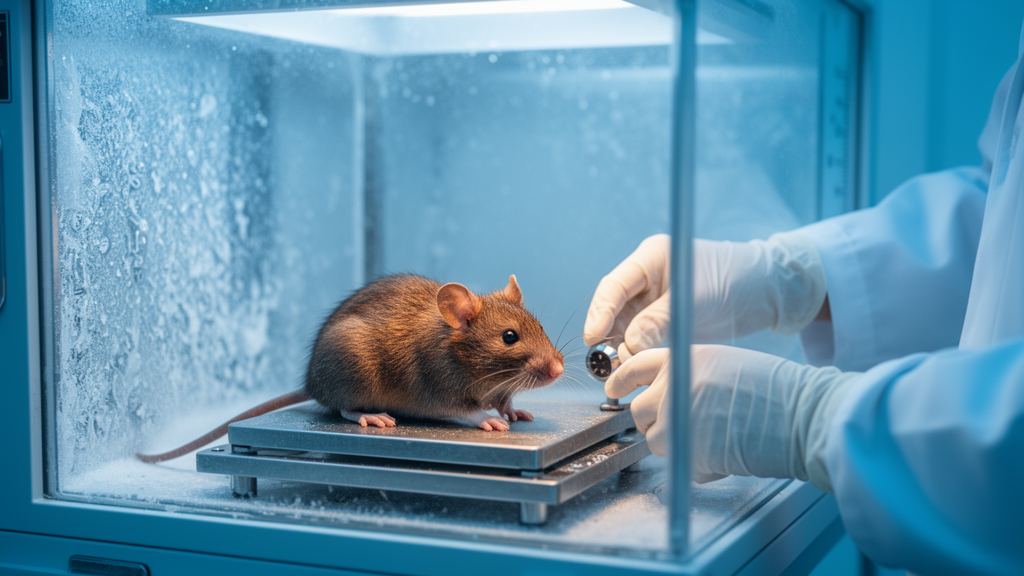
Researchers have combined transcriptome and proteome profiling of brown adipose tissue in rats exposed to intermittent cold, identifying thousands of molecular changes that accompany cold acclimatization. The study, published in BMC Genomics, set out to find potential biomarkers and therapeutic targets for cold adaptation by analyzing differentially expressed genes and proteins in brown fat alongside blood-based glucometabolic markers.

In the experiment, male Sprague-Dawley rats underwent intermittent cold exposure, after which blood and brown and white adipose tissue samples were collected at 21 days. High-throughput mRNA transcriptome sequencing and tandem mass tag (TMT) mass spectrometry were used to identify differentially expressed genes and proteins in brown adipose tissue. Transcriptome analysis revealed 2031 differentially expressed genes, of which 344 were upregulated and 1687 downregulated. Proteomic mass spectrometry identified 376 differentially expressed proteins, comprising 217 upregulated and 159 downregulated proteins. Integrated analysis of the two datasets uncovered 13 synergistically upregulated genes and 11 synergistically downregulated genes.

Functional enrichment analyses pointed to distinct biological themes on each side of the expression balance. Gene Ontology and KEGG pathway analyses indicated that the upregulated genes predominantly clustered in fatty acid metabolism processes and PPAR signaling pathways, while the downregulated genes were enriched in pathways governing adipocyte lipolysis regulation. This pattern suggests a coordinated reorganization of fat handling in brown adipose tissue as the animals acclimatize to repeated cold exposure, with lipid metabolism and signaling through PPAR emerging as central features of the response.

Protein–protein interaction (PPI) network analysis highlighted five molecules that may play pivotal roles in brown adipose tissue metabolism: Lpl, Plin1, Ckb, Fabp3, and Ldha. The authors conclude that the study reveals expression alterations in multiple genes within brown adipose tissue during rat cold adaptation, and that these genes may collectively regulate cold adaptation responses in physiological processes involving fat metabolism, conversion, and energy balance. As an animal study based on a single exposure paradigm and sampling time point, the findings describe molecular associations in rats rather than demonstrated clinical benefits, and the identified genes would require further validation as biomarkers or therapeutic targets.

Subject of Research: Transcriptomic and proteomic changes in brown adipose tissue of rats during cold acclimatization

Article Title: Integrated transcriptomic and proteomic analysis of gene expression changes in brown adipose tissue during cold acclimatization in rats

Article References: Yang, Y., Chen, S., Chen, L., Ma, W., Wang, Y., Wang, L., Li, K., Ran, J., & Shi, Q. (2026). Integrated transcriptomic and proteomic analysis of gene expression changes in brown adipose tissue during cold acclimatization in rats. BMC Genomics. https://doi.org/10.1186/s12864-026-13382-7

Image Credits: AI Generated

DOI: 10.1186/s12864-026-13382-7

Keywords: brown adipose tissue, cold acclimatization, transcriptomics, proteomics, rats, PPAR signaling, fatty acid metabolism, differentially expressed genes, TMT mass spectrometry, protein-protein interaction network, Integrated, transcriptomic

News Source: Juliet Wilcox. (October 28, 2026). Rat study maps gene and protein shifts in brown fat during cold acclimatization. Scienmag.


Tags: brown adipose tissuecold acclimatizationdifferentially expressed genesfatty acid metabolismintegratedPPAR signalingprotein-protein interaction networkProteomicsratsTMT mass spectrometrytranscriptomicTranscriptomics
Share12Tweet7Share2ShareShareShare1

Related Posts

Microbial Sources and Stress Shape the Hidden Endophytes of an Invasive Plant

Microbial Sources and Stress Shape the Hidden Endophytes of an Invasive Plant

October 30, 2026
Firebreaks Leave Lasting Scars in Grasslands While Wildfire Heals Fast

Firebreaks Leave Lasting Scars in Grasslands While Wildfire Heals Fast

October 30, 2026

Hidden Peptides in Non-Coding RNAs Reshape Cardiovascular Biology

October 30, 2026

Phage K Holin’s C-Terminal Region Shapes Antibacterial Activity, Study Finds

October 30, 2026

POPULAR NEWS

  • Microbial Sources and Stress Shape the Hidden Endophytes of an Invasive Plant

    Microbial Sources and Stress Shape the Hidden Endophytes of an Invasive Plant

    29 shares
    Share 12 Tweet 7
  • Firebreaks Leave Lasting Scars in Grasslands While Wildfire Heals Fast

    29 shares
    Share 12 Tweet 7
  • ZNF207 shields glutamine transporter ASCT2 from degradation to fuel liver cancer growth

    29 shares
    Share 12 Tweet 7
  • Systematic review maps sustainability tensions in offshore wind development

    29 shares
    Share 12 Tweet 7

About

We bring you the latest biotechnology news from best research centers and universities around the world. Check our website.

Follow us

Recent News

Microbial Sources and Stress Shape the Hidden Endophytes of an Invasive Plant

Firebreaks Leave Lasting Scars in Grasslands While Wildfire Heals Fast

ZNF207 shields glutamine transporter ASCT2 from degradation to fuel liver cancer growth

Subscribe to Blog via Email

Enter your email address to subscribe to this blog and receive notifications of new posts by email.

Join 86 other subscribers
  • Contact Us

Bioengineer.org © Copyright 2023 All Rights Reserved.

Welcome Back!

Login to your account below

Forgotten Password?

Retrieve your password

Please enter your username or email address to reset your password.

Log In
No Result
View All Result
  • Homepages
    • Home Page 1
    • Home Page 2
  • News
  • National
  • Business
  • Health
  • Lifestyle
  • Science

Bioengineer.org © Copyright 2023 All Rights Reserved.
