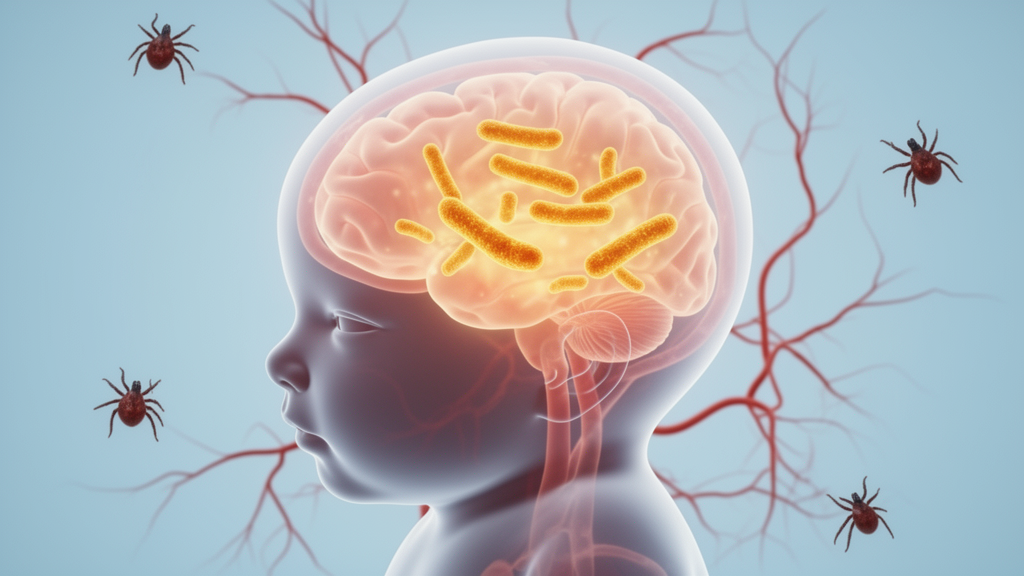
A rare and dangerous form of scrub typhus, an infection most people have never heard of, has been documented in three newborn babies in southwestern China, and the clinical picture that emerged was more alarming than anything the treating physicians might have expected from a disease typically associated with farmers, hikers, and rural laborers. In a case series published in BMC Infectious Diseases, a team from Kunming Children’s Hospital affiliated with Kunming Medical University describes three neonates from Yunnan Province, a region where scrub typhus is endemic, who developed fever between the fourteenth and twenty-eighth days of life and went on to show signs of severe, multisystem illness with striking neurological involvement. Two of the three infants died. The report is a sobering reminder that in endemic areas, this bacterial infection, caused by the intracellular pathogen Orientia tsutsugamushi, must be considered even in the youngest patients, even when the classic diagnostic clue is missing.
Scrub typhus is caused by Orientia tsutsugamushi, an obligate intracellular bacterium transmitted to humans through the bite of infected larval mites, commonly called chiggers. The disease is a major public health problem across the Asia-Pacific region, from Japan and Korea through Southeast Asia to northern Australia and the Indian subcontinent, with an estimated one million cases annually. Classically, infection produces a fever, headache, and a distinctive skin lesion known as an eschar, a dark, necrotic scab that forms at the site of the mite bite. The eschar is one of the most useful diagnostic signs in older children and adults. But in neonates, as the new report makes clear, the lesion may be entirely absent, stripping clinicians of the single most recognizable feature of the disease and leaving a nonspecific picture of fever and sepsis-like deterioration that can easily be mistaken for bacterial sepsis or meningitis.
The three infants described in the series all presented during the second to fourth week of life, an age when neonatal sepsis is a constant concern in any neonatal intensive care unit. Each of them showed involvement of multiple organ systems, and each displayed neurological manifestations, ranging in severity from encephalitic signs to seizures. Notably, none of the three had a typical eschar, which is precisely the feature that usually allows clinicians in endemic regions to suspect scrub typhus at the bedside. Without that sign, the infants’ illnesses looked like any number of other neonatal emergencies, and the correct diagnosis might have remained elusive without advanced molecular testing.
An intriguing epidemiological thread runs through all three cases. In retrospect, all three mothers reported having been diagnosed with scrub typhus during their pregnancies. However, the authors are careful to note that none of these maternal histories could be independently verified, because the original medical records and laboratory results from the mothers’ illnesses were unavailable. This distinction matters enormously for what the cases can and cannot tell us about how the babies were infected. A maternal history of scrub typhus during pregnancy raises the possibility of transplacental transmission of Orientia tsutsugamushi from mother to fetus, a route of infection that has been suggested in the literature but remains difficult to prove. The authors explicitly state that their data do not establish transplacental transmission, and they emphasize that postnatal acquisition, through mite bites after birth, cannot be excluded. In other words, the shared maternal histories are an important clue, but not a demonstration of congenital infection.
One of the three cases offers a particularly striking natural experiment. The affected infant was one member of a dichorionic diamniotic twin pair, meaning the twins developed from two separate fertilized eggs with separate placentas and separate amniotic sacs. While one twin fell gravely ill, the co-twin remained completely asymptomatic, and targeted genetic testing of both blood and cerebrospinal fluid from the healthy twin came back negative for Orientia tsutsugamushi. This discordance is fascinating from a transmission standpoint. If the infection had been acquired transplacentally, one might have expected both twins to be at risk, although separate placentas could in principle lead to separate outcomes. If the infection was acquired postnatally through a mite bite, discordance would be less surprising. The twin case therefore illustrates exactly why the authors resist drawing firm conclusions about the route of transmission from their small series.
The neurological dimension of these cases deserves particular attention. Two of the three infants had strong evidence of central nervous system involvement, while the third developed seizures in the context of severe systemic illness accompanied by major metabolic disturbances, a situation in which seizures can arise from metabolic derangement rather than direct infection of the brain. Central nervous system involvement in scrub typhus is recognized in older patients, where the organism can cause meningitis or encephalitis, but documenting it in neonates is exceptionally rare. The report suggests that when scrub typhus strikes newborns, the brain may be a frequent target, and that neurological signs in a febrile neonate from an endemic region should prompt consideration of this diagnosis alongside the usual suspects.
Establishing the diagnosis in these cases depended on next-generation sequencing, a family of molecular techniques that can detect the genetic material of pathogens in clinical samples without requiring the organism to be cultured or targeted with specific tests. In one patient, Orientia tsutsugamushi was detected using blood metagenomic next-generation sequencing, an unbiased approach that sequences all genetic material in a sample and identifies pathogens by matching the results against databases. In the other two patients, the diagnosis came from targeted next-generation sequencing of blood and, in some cases, cerebrospinal fluid. This technological angle is one of the most important practical lessons of the report. Routine investigations in neonatal sepsis, including blood cultures, are often unrevealing in scrub typhus because Orientia is an intracellular bacterium that is difficult to culture, and serological tests, the mainstay of diagnosis in adults, may be unreliable in the earliest days of infection. Molecular testing may establish an etiological diagnosis precisely when conventional methods come up empty.
The outcomes in the series were starkly divided. One infant recovered after treatment with azithromycin followed by doxycycline, the macrolide and tetracycline-class antibiotics that are the standard therapies for scrub typhus. The other two infants died after progressive multiorgan dysfunction. The survival of the treated infant underscores a point that infectious disease specialists have long emphasized for scrub typhus in general: the infection is treatable, and early appropriate antibiotic therapy can be lifesaving, but delays in diagnosis allow the organism to drive escalating inflammation, coagulopathy, liver injury, and organ failure. In neonates, where clinical deterioration can be rapid and nonspecific, the window for effective intervention may be especially narrow, which makes clinical suspicion and rapid diagnostic workup all the more critical.
The authors draw a clear set of practical conclusions for clinicians working in endemic areas. Neonatal scrub typhus can cause life-threatening multisystem disease and may involve the central nervous system. In regions where the disease circulates, it should be considered in any neonate with unexplained fever, sepsis-like illness, thrombocytopenia, which is a low platelet count, coagulopathy, liver injury, or neurological manifestations, even in the complete absence of an eschar. This expanded case definition is significant because it shifts scrub typhus from a diagnosis that depends on a visible skin lesion to one that depends on pattern recognition and laboratory confirmation. A retrospectively reported maternal history of scrub typhus during pregnancy, even when unverifiable, should be treated as an important epidemiological clue that lowers the threshold for molecular testing.
Beyond the immediate clinical lessons, the case series highlights gaps that future research will need to fill. The question of whether Orientia tsutsugamushi can cross the placenta and infect the fetus remains open, and well-documented twin pregnancies, prospective maternal cohorts in endemic regions, and systematic molecular testing of neonates with sepsis-like illness could all help resolve it. The report also illustrates the growing role of metagenomic and targeted sequencing in neonatal intensive care, where rapid, unbiased pathogen detection can make the difference between a correct diagnosis and a fatal blind spot. For now, the message from Yunnan is straightforward: in the mite-endemic belt that spans much of Asia, the youngest and most vulnerable patients can fall victim to scrub typhus, and the absence of the disease’s most famous sign should never be taken as reassurance.
Subject of Research: Neonatal scrub typhus with neurological manifestations caused by Orientia tsutsugamushi
Article Title: Neonatal scrub typhus with neurological manifestations: a case series from an endemic region
Article References: Neonatal scrub typhus with neurological manifestations: a case series from an endemic region. (n.d.). https://doi.org/10.1186/s12879-026-14578-8
Image Credits: AI Generated
DOI: 10.1186/s12879-026-14578-8
Keywords: scrub typhus, Orientia tsutsugamushi, neonates, central nervous system infection, next-generation sequencing, Yunnan Province, neonatal sepsis, eschar, transplacental transmission, doxycycline, azithromycin, case series
News Source: Ophelia Keating. (October 14, 2026). Rare Scrub Typhus Strikes Newborns’ Brains in Endemic China, Case Series Warns. Scienmag.