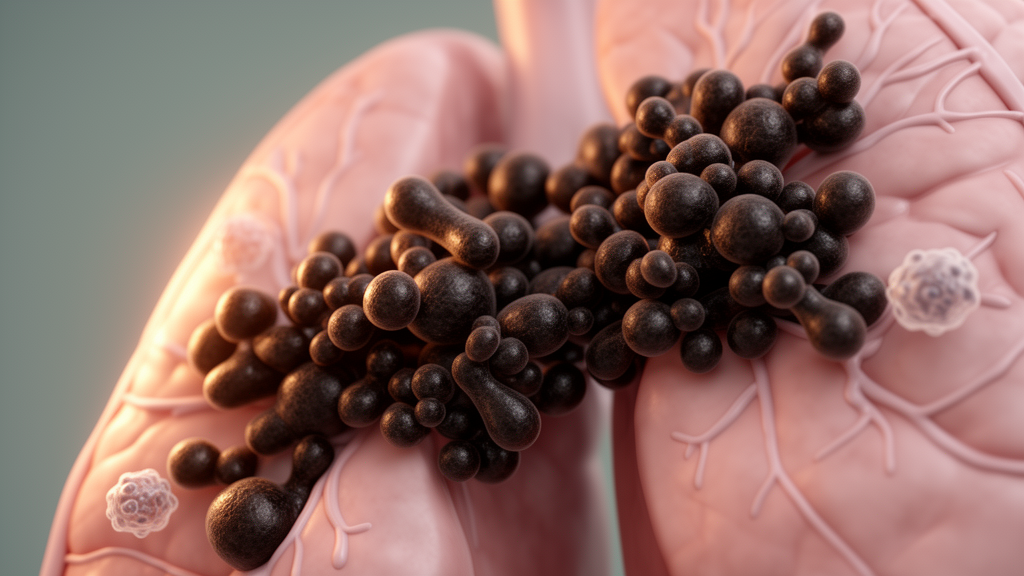
A 45-year-old man who arrived at a clinic in China complaining of three weeks of chest tightness and shortness of breath on exertion has become the centerpiece of an extraordinarily rare diagnosis that is reshaping how physicians think about unexplained lung nodules. After chest computed tomography revealed diffuse pulmonary nodules scattered through both lungs, his medical team embarked on a diagnostic odyssey that would ultimately implicate one of nature’s most obscure fungal pathogens: Exophiala oligosperma, a black yeast belonging to a group of dematiaceous fungi more commonly associated with contaminated water, soil, and decaying plant matter than with human lungs. The case, published as an open-access report in BMC Infectious Diseases by a team at Sir Run Run Shaw Hospital affiliated with Zhejiang University School of Medicine in Hangzhou, illustrates both the diagnostic pitfalls of pulmonary granulomatous disease and the growing power of metagenomic sequencing to unmask pathogens that conventional laboratory methods routinely miss.
The clinical puzzle began innocuously. Chest tightness and exertional dyspnea are nonspecific complaints, and the finding of diffuse pulmonary nodules on computed tomography opens a dauntingly broad differential diagnosis that spans sarcoidosis, tuberculosis, fungal infections, metastatic malignancy, and autoimmune vasculitis. Each possibility demands a different therapeutic pathway, and choosing wrongly can cost precious weeks. In the first round of testing, the clinicians performed bronchoscopy and collected bronchoalveolar lavage fluid, the saline washings that sample the cells and secretions lining the deep airways. Targeted next-generation sequencing, a technique that amplifies and sequences the DNA of a predefined panel of likely pathogens, detected Streptococcus pneumoniae, the bacterium best known as a cause of community-acquired pneumonia. On the face of it, the result seemed to offer a straightforward answer, and the patient was started on empirical antibacterial therapy directed against the pneumococcus.
The treatment failed. Follow-up chest imaging showed that the pulmonary lesions continued to progress despite the antibiotics, a red flag that the detected bacterium was more likely a bystander, a colonizer of the airways, or a reflection of the lavage fluid’s mixed microbial content than the true driver of disease. This distinction matters enormously in modern respiratory medicine. The human lung is not sterile in the way textbooks once assumed, and sequencing technologies are sensitive enough to detect trace amounts of DNA from organisms that play no pathogenic role. A positive molecular result, in other words, is a clue rather than a verdict, and the Hangzhou team treated it accordingly, escalating the workup rather than simply switching antibiotics in a blind rotation.
The decisive step came through transbronchial lung cryobiopsy, a technique in which a frozen probe is passed through a bronchoscope and briefly supercooled to adhere to lung tissue, allowing a larger and better-preserved specimen to be extracted than is possible with conventional forceps biopsy. Histopathological examination of the biopsy revealed granulomatous inflammation, the organized clusters of immune cells, including macrophages and multinucleated giant cells, that the body deploys when it cannot quickly eliminate a persistent irritant. Granulomas are the lung’s signature response to certain infectious agents, most famously Mycobacterium tuberculosis, but also to fungi, foreign material, and the idiopathic processes behind sarcoidosis. Yet here the special stains routinely used to visualize pathogens in tissue, including Periodic acid-Schiff staining for fungi and searches for mycobacterial DNA, came back negative, leaving the pathologists with an inflammatory pattern but no visible culprit.
Into this evidentiary gap stepped metagenomic next-generation sequencing, or mNGS, an unbiased approach that sequences all nucleic acid extracted from a clinical sample and then computationally maps the millions of resulting reads against databases of known genomes. Unlike targeted panels, mNGS makes no assumptions about which organisms might be present, which is precisely why it excels at detecting unexpected or fastidious pathogens. When the team applied mNGS to the patient’s bronchoalveolar lavage fluid, the analysis identified 88 sequencing reads assigned to Exophiala oligosperma, corresponding to a normalized abundance of 34 reads per ten million, a metric known as RPTM that helps distinguish genuine signal from background noise. The organism is a melanized fungus, its dark pigmentation derived from cell-wall melanin, and it belongs to a genus notorious for causing phaeohyphomycosis, a spectrum of infections that range from superficial skin colonization to deep, occasionally disseminated disease, particularly in immunocompromised hosts.
Pulmonary infection by Exophiala oligosperma is vanishingly rare, and the authors of the report describe their case as extremely uncommon in the medical literature. The fungus thrives in wet environments, having been isolated from shower drains, sink traps, and other biofilm-rich niches of the built environment, and human exposure is plausibly far more frequent than recognized disease. Why this particular patient developed granulomatous lung inflammation remains unresolved; the report does not establish an obvious immunodeficiency, and the interplay between host immunity and this opportunistic organism is an open question. What the case does establish is that when histology shows granulomas and special stains are negative, the pathogen may still be present in quantities too low for microscopy but detectable by the deep sequencing of lavage fluid.
Diagnosis in such cases is deliberately hedged. The authors classified the illness as probable pulmonary Exophiala oligosperma infection rather than proven infection, a distinction that reflects the standards of fungal disease diagnostics. Definite proof typically requires culture of the organism or demonstration of fungal elements invading tissue on histology, neither of which was achieved here. Instead, the diagnosis rested on the integration of four streams of evidence: the clinical presentation, the progressive nodular imaging findings, the granulomatous histopathology, and the molecular detection of the fungus in lavage fluid. This composite approach, the authors argue, is indispensable, because relying on histopathological sections alone frequently proves difficult and lacks adequate sensitivity. The caution embedded in the word probable is not academic timidity but an honest reflection of how molecular medicine is reshaping, and sometimes straining, traditional diagnostic categories.
The therapeutic response provided the final piece of corroborating evidence. The patient received nine weeks of antifungal therapy, and at the three-month follow-up after the drugs were discontinued, chest computed tomography demonstrated complete resolution of the pulmonary lesions. In infectious disease, the resolution of lesions after targeted therapy is itself a diagnostic test of sorts, a natural experiment in which removing the presumed cause removes the disease. A pneumococcal pneumonia would not have persisted through a course of appropriate antibiotics, and the failure of antibacterial treatment followed by the success of antifungal treatment brackets the causal role of the fungus with unusual clarity for a single case.
Beyond its clinical narrative, the report carries broader implications for the differential diagnosis of pulmonary granulomatous inflammation. Tuberculosis remains the dominant concern worldwide whenever granulomas appear in lung tissue, and the Hangzhou team appropriately excluded mycobacterial disease through dedicated testing, including assessment for Mycobacterium tuberculosis DNA. But as molecular diagnostics proliferate, clinicians are increasingly encountering fungi that were previously invisible to routine workflows. The Exophiala genus, and black yeasts generally, sit at the margins of most laboratories’ routine identification capabilities, and without mNGS this patient’s infection would almost certainly have gone unnamed, perhaps misclassified as sarcoidosis or another idiopathic granulomatous condition and treated with immunosuppression, a strategy that could have been actively harmful if a living pathogen were driving the inflammation.
The case also underscores a methodological lesson that is rippling through infectious disease practice: sequencing results must always be weighed against clinical context. The initial targeted panel’s detection of Streptococcus pneumoniae was technically accurate but clinically misleading, while the metagenomic detection of a rare fungus at modest read depth proved decisive only because it aligned with the histology, the imaging trajectory, and the treatment response. The authors, Xiaohong Wu, Fan Yang, Zhiyao Xu, and Wenjing Ruan, present their findings as valuable clinical evidence for the recognition and differential diagnosis of atypical fungal pulmonary diseases, and the phrase captures the report’s real contribution. For physicians confronting diffuse pulmonary nodules and granulomatous inflammation of uncertain cause, the message is that the answer may lie in organisms too rare, too slow-growing, or too fastidious for conventional detection, and that the combination of cryobiopsy histology and unbiased metagenomic sequencing of lavage fluid offers a route to diagnoses that were effectively unattainable a decade ago.
Subject of Research: Pulmonary granulomatous inflammation associated with the rare fungus Exophiala oligosperma, diagnosed using metagenomic next-generation sequencing
Article Title: Probable Exophiala oligosperma-associated pulmonary granulomatous inflammation: a case report
Article References: Wu, X., Yang, F., Xu, Z., & Ruan, W. (2026). Probable Exophiala oligosperma-associated pulmonary granulomatous inflammation: a case report. BMC Infectious Diseases. https://doi.org/10.1186/s12879-026-14470-5
Image Credits: AI Generated
DOI: 10.1186/s12879-026-14470-5
Keywords: Exophiala oligosperma, pulmonary granulomatous inflammation, metagenomic next-generation sequencing, bronchoalveolar lavage fluid, fungal infection, diffuse pulmonary nodules, transbronchial cryobiopsy, antifungal therapy, black yeast, BMC Infectious Diseases, case report, molecular diagnostics
News Source: Ophelia Keating. (October 9, 2026). Rare Black Yeast Fungus Linked to Lung Inflammation in Landmark Case Report. Scienmag.