• HOME
  • NEWS
  • EXPLORE
    • CAREER
      • Companies
      • Jobs
    • EVENTS
    • iGEM
      • News
      • Team
    • PHOTOS
    • VIDEO
    • WIKI
  • BLOG
  • COMMUNITY
    • FACEBOOK
    • INSTAGRAM
    • TWITTER
Saturday, November 14, 2026
BIOENGINEER.ORG
No Result
View All Result
  • Login
  • HOME
  • NEWS
  • EXPLORE
    • CAREER
      • Companies
      • Jobs
        • Lecturer
        • PhD Studentship
        • Postdoc
        • Research Assistant
    • EVENTS
    • iGEM
      • News
      • Team
    • PHOTOS
    • VIDEO
    • WIKI
  • BLOG
  • COMMUNITY
    • FACEBOOK
    • INSTAGRAM
    • TWITTER
No Result
View All Result
Bioengineer.org
No Result
View All Result
Home NEWS Science News Technology

Random Forest Models Outperform Radial Basis Networks for Dam Prediction

by
November 10, 2026
in Technology
Reading Time: 2 mins read
0
Random Forest Models Outperform Radial Basis Networks for Dam Prediction

Random Forest Models Outperform Radial Basis Networks for Dam Prediction

Share on FacebookShare on TwitterShare on LinkedinShare on RedditShare on Telegram

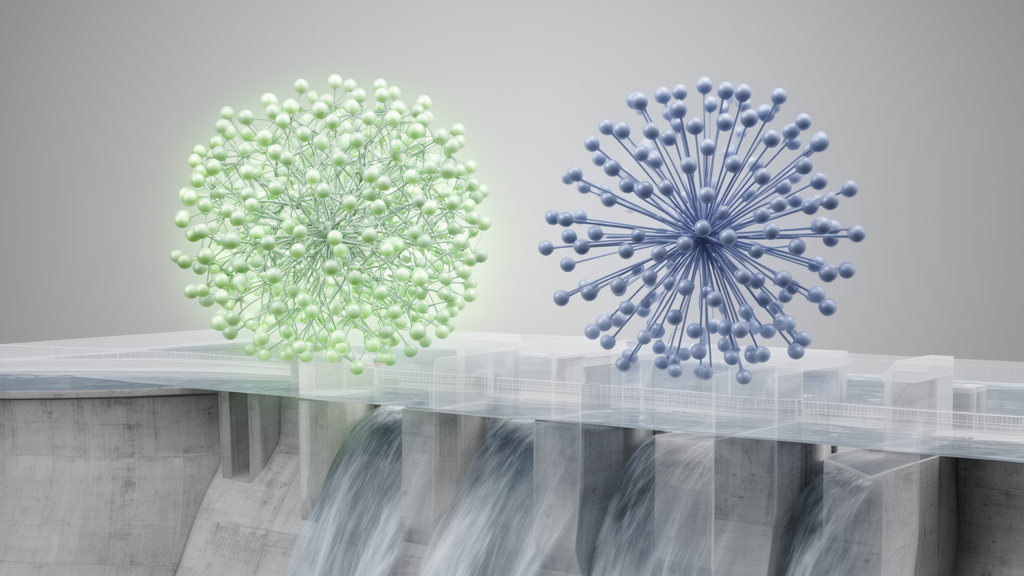
A study published in the journal AI in Civil Engineering evaluates the predictive capabilities of machine learning tools for monitoring the structural behavior of concrete arch dams. The research, led by A. M. Babadi, H. Mirzabozorg, and K. Baharan, utilizes the Karun-I dam as a specific case study to assess how different algorithms can forecast structural responses. The authors focus on established open-source machine learning frameworks, specifically CatBoost, XGBoost, LightGBM, and TensorFlow, which are categorized within the study as being based on Forest and Radial Basis Function Networks. The primary objective of this work is to determine which of these computational approaches offers the most accurate and efficient means of analyzing dam displacement and other structural indicators.

The results of the analysis demonstrate that Random Forest-based methods achieve superior prediction accuracy compared to Radial Basis Function Networks. In addition to accuracy, the study finds that these Forest-based models also offer greater computational efficiency.

A key component of the research involves feature importance evaluation, which identifies the specific environmental and operational factors that most significantly influence dam displacement. The analysis reveals that lake levels are the primary factor impacting the displacement of the Karun-I dam.

The research underscores the promising potential of machine learning in enhancing structural health monitoring for large dams. The study offers insights that contribute to the improvement of safety measures and operational efficiency in dam management.

The study is published as an open access article in Volume 4, article number 22 of the journal AI in Civil Engineering.

Subject of Research: Comparative evaluation of Random Forest and Radial Basis Function Networks for predicting concrete arch dam structural behavior

Article Title: Predictive modeling of concrete arch dam behavior: evaluating the efficacy of Random Forest and Radial Basis Function Networks

Article References: Babadi, A. M., Mirzabozorg, H., & Baharan, K. (2025). Predictive modeling of concrete arch dam behavior: evaluating the efficacy of Random Forest and Radial Basis Function Networks. AI in Civil Engineering, 4(1), Article 22. https://doi.org/10.1007/s43503-025-00071-9

Image Credits: AI Generated

DOI: 10.1007/s43503-025-00071-9

Keywords: concrete arch dam, machine learning, Random Forest, Radial Basis Function, structural health monitoring, Karun-I dam, civil engineering, predictive modeling, CatBoost, XGBoost, Predictive, modeling

News Source: Violet Maxwell. (November 10, 2026). Random Forest Models Outperform Radial Basis Networks for Dam Prediction. Scienmag.


Tags: CatBoostCivil Engineeringconcrete arch damKarun-I damMachine LearningModelingpredictivepredictive modelingradial basis functionRandom ForestStructural Health MonitoringXGBoost
Share12Tweet7Share2ShareShareShare1

Related Posts

Mapping COVID-19 Retweet Networks Reveals Structural Partisan Divides on Brazilian Social Media

Mapping COVID-19 Retweet Networks Reveals Structural Partisan Divides on Brazilian Social Media

November 14, 2026
Ensemble Feature Selection Achieves High Accuracy in Multiclass Thyroid Disease Classification

Ensemble Feature Selection Achieves High Accuracy in Multiclass Thyroid Disease Classification

November 14, 2026

Early Aortic Root Thrombus Resolves Conservatively in Two HeartMate 3 Cases

November 14, 2026

German Clean Power Reaches Record Output While Sector Coupling Faces Systemic Hurdles

November 14, 2026

POPULAR NEWS

  • Cleaved Fat Cadherin Intracellular Domain Enters the Nucleus to Regulate Gene Transcription

    Cleaved Fat Cadherin Intracellular Domain Enters the Nucleus to Regulate Gene Transcription

    29 shares
    Share 12 Tweet 7
  • Nigerian Nursing Students Show High Cancer Knowledge but Low Screening Uptake

    29 shares
    Share 12 Tweet 7
  • Ensemble Feature Selection Achieves High Accuracy in Multiclass Thyroid Disease Classification

    29 shares
    Share 12 Tweet 7
  • Central Adiposity Affects Children with Type 1 Diabetes Without Overweight or Obesity

    29 shares
    Share 12 Tweet 7

About

We bring you the latest biotechnology news from best research centers and universities around the world. Check our website.

Follow us

Recent News

Multi-Omics Genetic Analysis Identifies ADAMTS8 and IL6R as Aortic Aneurysm Targets

Mapping COVID-19 Retweet Networks Reveals Structural Partisan Divides on Brazilian Social Media

TROP2-Targeted ADCs Improve Progression-Free Survival in First-Line Triple-Negative Breast Cancer

Subscribe to Blog via Email

Enter your email address to subscribe to this blog and receive notifications of new posts by email.

Join 87 other subscribers
  • Contact Us

Bioengineer.org © Copyright 2023 All Rights Reserved.

Welcome Back!

Login to your account below

Forgotten Password?

Retrieve your password

Please enter your username or email address to reset your password.

Log In
No Result
View All Result
  • Homepages
    • Home Page 1
    • Home Page 2
  • News
  • National
  • Business
  • Health
  • Lifestyle
  • Science

Bioengineer.org © Copyright 2023 All Rights Reserved.