• HOME
  • NEWS
  • EXPLORE
    • CAREER
      • Companies
      • Jobs
    • EVENTS
    • iGEM
      • News
      • Team
    • PHOTOS
    • VIDEO
    • WIKI
  • BLOG
  • COMMUNITY
    • FACEBOOK
    • INSTAGRAM
    • TWITTER
Sunday, October 4, 2026
BIOENGINEER.ORG
No Result
View All Result
  • Login
  • HOME
  • NEWS
  • EXPLORE
    • CAREER
      • Companies
      • Jobs
        • Lecturer
        • PhD Studentship
        • Postdoc
        • Research Assistant
    • EVENTS
    • iGEM
      • News
      • Team
    • PHOTOS
    • VIDEO
    • WIKI
  • BLOG
  • COMMUNITY
    • FACEBOOK
    • INSTAGRAM
    • TWITTER
  • HOME
  • NEWS
  • EXPLORE
    • CAREER
      • Companies
      • Jobs
        • Lecturer
        • PhD Studentship
        • Postdoc
        • Research Assistant
    • EVENTS
    • iGEM
      • News
      • Team
    • PHOTOS
    • VIDEO
    • WIKI
  • BLOG
  • COMMUNITY
    • FACEBOOK
    • INSTAGRAM
    • TWITTER
No Result
View All Result
Bioengineer.org
No Result
View All Result
Home NEWS Science News Biology

R01 grant funds research examining small RNAs in metastatic breast cancer

Bioengineer by Bioengineer
October 1, 2019
in Biology
Reading Time: 2 mins read
0
IMAGE
Share on FacebookShare on TwitterShare on LinkedinShare on RedditShare on Telegram

IMAGE

Credit: University of Cincinnati

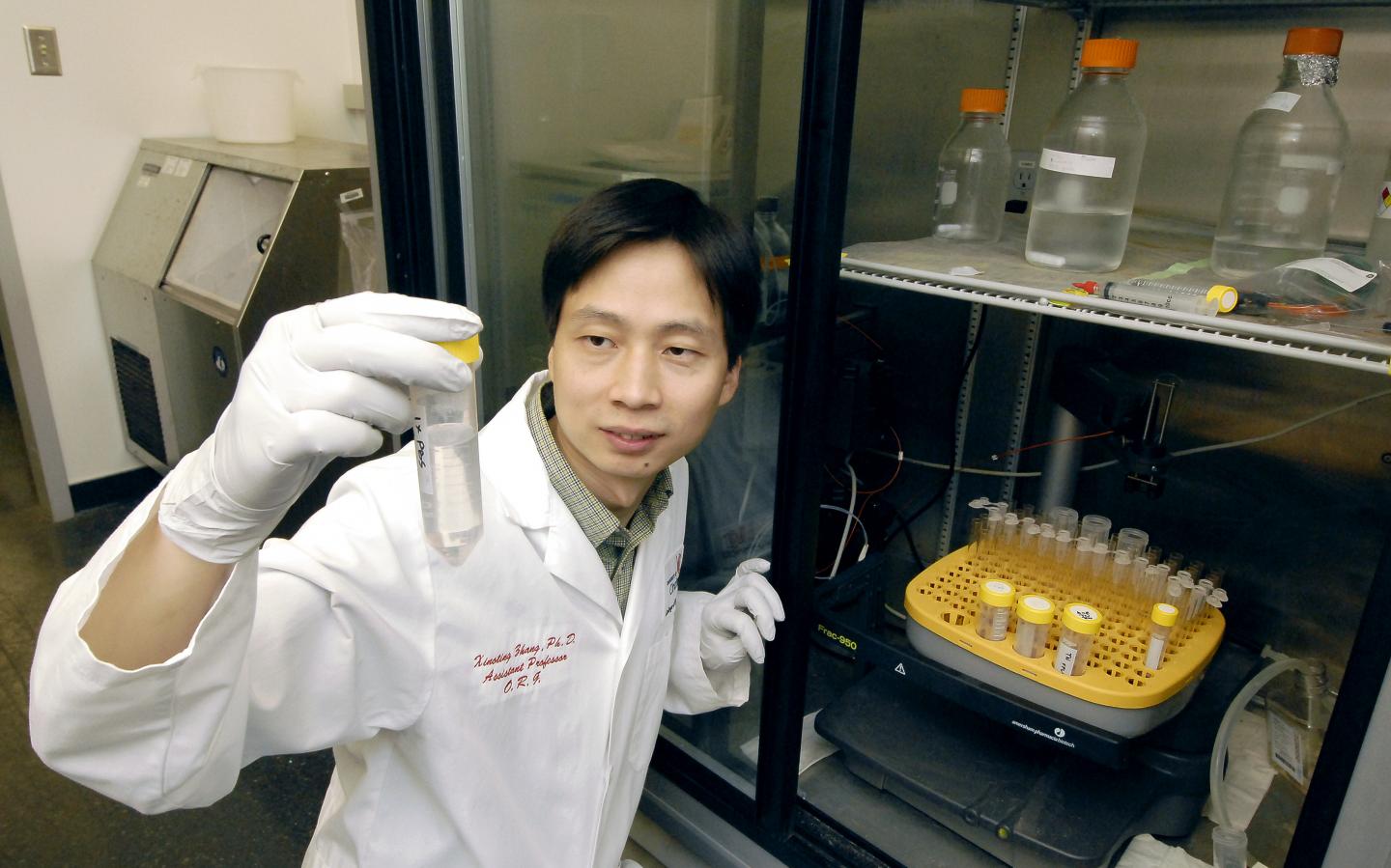
Xiaoting Zhang, PhD, associate professor of cancer biology at the University of Cincinnati College of Medicine, received federal funding, an R01 grant from the National Cancer Institute, to study certain genetic material, known as small RNAs, in breast cancer metastasis (or spread).

RNAs serve as messengers, carrying instructions from DNA for controlling the function and production of proteins; recently, small non-coding RNAs have been found to be potential key treatment targets in certain cancers.

This is the second research grant of this level Zhang has received from the National Cancer Institute. Zhang’s lab will use this funding to continue research examining molecular causes for treatment resistance and metastasis of ER-positive breast cancer, which makes up about 75% of breast cancers worldwide. ER-positive breast cancer means the cancer cells grow in response to the hormone estrogen. Zhang will look at the role of microRNAs in the production of a key breast cancer protein (MED1) and how it controls another type of small RNA called enhancer RNA in breast cancer. He will further use an RNA nanotechnology-based approach to target these small RNAs to combat breast cancer resistance and metastasis.

Zhang says he hopes that findings from this study will fill a knowledge gap in understanding small RNA function and how they impact the way cancer is treated and spreads. He adds that this could lead to a new and better treatment strategy for a patient population that doesn’t have many choices.

###

Media Contact
Katie Pence
[email protected]

Tags: BiologyBreast CancercancerCell BiologyGeneticsMedicine/HealthNanotechnology/MicromachinesTechnology/Engineering/Computer Science
Share14Tweet9Share3ShareShareShare2

Related Posts

Simple Sugar Dextrose Emerges as Best Carbon Source for Zero-Exchange Shrimp Hatcheries

Simple Sugar Dextrose Emerges as Best Carbon Source for Zero-Exchange Shrimp Hatcheries

October 4, 2026
New Algorithm Simulates Gene Frequency Histories Exactly, Even as Populations Change Size

New Algorithm Simulates Gene Frequency Histories Exactly, Even as Populations Change Size

October 4, 2026

Touch-Sensing Piezo Channels Found to Steer the Cells That Build Our Teeth

October 4, 2026

Rumen Fluke Parasite Reveals Its Molecular Playbook Across Life Stages

October 4, 2026
Please login to join discussion

POPULAR NEWS

  • Alloys That Shrink Their Own Grains: New PIX Mechanism Refines Metals With Heat Alone

    Alloys That Shrink Their Own Grains: New PIX Mechanism Refines Metals With Heat Alone

    29 shares
    Share 12 Tweet 7
  • Endurance Exercise Reshapes the Liver in Males and Females Through Distinct Molecular Routes

    29 shares
    Share 12 Tweet 7
  • Single Transcription Factor PU.1 Rapidly Converts Fibroblasts into Macrophage-Lineage Cells

    29 shares
    Share 12 Tweet 7
  • New Scale Measures How Ready Nurse Educators Really Are for the AI Era

    29 shares
    Share 12 Tweet 7

About

We bring you the latest biotechnology news from best research centers and universities around the world. Check our website.

Follow us

Recent News

Alloys That Shrink Their Own Grains: New PIX Mechanism Refines Metals With Heat Alone

Endurance Exercise Reshapes the Liver in Males and Females Through Distinct Molecular Routes

Single Transcription Factor PU.1 Rapidly Converts Fibroblasts into Macrophage-Lineage Cells

Subscribe to Blog via Email

Enter your email address to subscribe to this blog and receive notifications of new posts by email.

Join 85 other subscribers
  • Contact Us

Bioengineer.org © Copyright 2023 All Rights Reserved.

Welcome Back!

Login to your account below

Forgotten Password?

Retrieve your password

Please enter your username or email address to reset your password.

Log In
No Result
View All Result
  • Homepages
    • Home Page 1
    • Home Page 2
  • News
  • National
  • Business
  • Health
  • Lifestyle
  • Science

Bioengineer.org © Copyright 2023 All Rights Reserved.