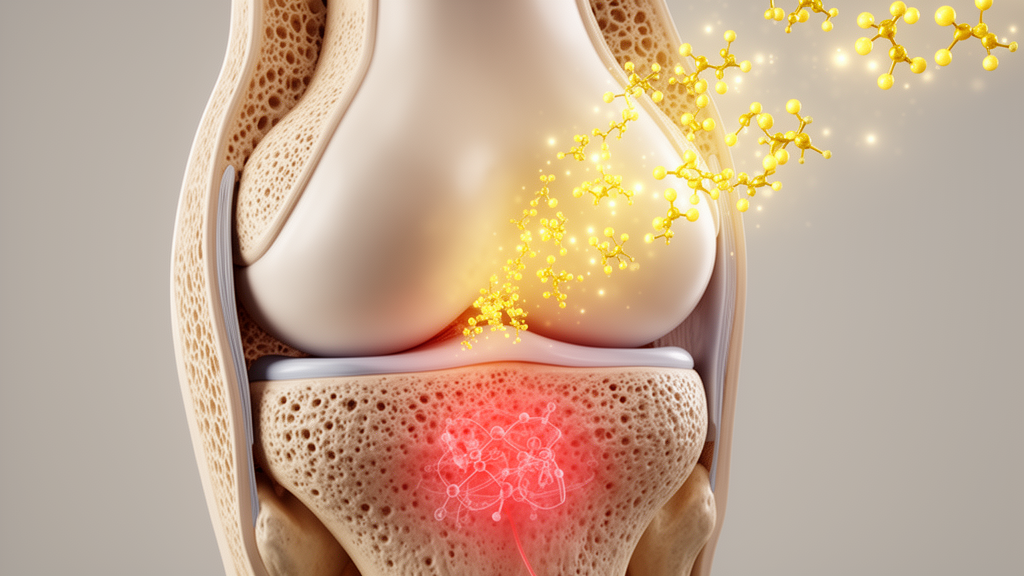
In a 28-day animal study, quercetin treatment alleviated clinical symptoms, improved bone microarchitecture and reduced inflammation in rats with collagen-induced arthritis, the study abstract reports. These changes occurred alongside substantial decreases in messenger RNA and protein expression of Wnt3A and β-catenin in the spleen and joints, although the available abstract does not establish that suppression of this pathway directly caused the bone improvements.
Researchers treated collagen-induced arthritis rats with quercetin or methotrexate for 28 days, while normal rats provided a baseline. The assessment covered arthritis scores, hind-paw volume, inflammatory cytokines, bone-related measures, joint damage and Wnt3A and β-catenin expression. Compared with normal rats, the arthritic animals had higher arthritis scores, greater hind-paw swelling and elevated levels of the pro-inflammatory cytokines TNF-α, IL-1β, IL-6 and IL-17A.
The collagen-induced arthritis group also showed reduced bone mineral density, bone volume fraction, trabecular thickness and trabecular number, together with severe joint damage. According to the abstract, quercetin intervention alleviated clinical symptoms, improved bone microarchitecture, restored cytokine balance and substantially downregulated Wnt3A and β-catenin at both the messenger RNA and protein levels in the spleen and joints. The reported improvements in bone microarchitecture were comparable to those achieved with methotrexate in the experiment. Quercetin also did not induce observable hepatorenal toxicity under the study’s testing conditions.
These findings are limited to the reported rat experiment and to the outcomes described in the available abstract, which was presented as a subscription preview rather than the full article. The parallel changes in pathway expression, inflammation and bone measures support a possible mechanistic association, but they do not prove a direct causal relationship. The results therefore provide a basis for further investigation and do not demonstrate that quercetin is safe or disease-modifying in people with rheumatoid arthritis.
Subject of Research: Quercetin effects on bone erosion, inflammation and Wnt3A/β-catenin expression in collagen-induced arthritis rats
Article Title: Quercetin ameliorates rheumatoid arthritis-associated bone erosion via inhibiting the Wnt3a/β-catenin signaling axis
Article References: Shen, T., Liang, R., Liang, M., Guo, Q., & Pang, Q. (2026). Quercetin ameliorates rheumatoid arthritis-associated bone erosion via inhibiting the Wnt3a/β-catenin signaling axis. Molecular Biology Reports, 53(1), Article 1575. https://doi.org/10.1007/s11033-026-12740-8
Image Credits: AI Generated
DOI: 10.1007/s11033-026-12740-8
Keywords: quercetin, collagen-induced arthritis, bone erosion, bone microarchitecture, Wnt3A, β-catenin, rheumatoid arthritis, inflammation, methotrexate, animal study, ameliorates, rheumatoid
News Source: Drew Townsend. (October 20, 2026). Quercetin improves bone measures in rats with collagen-induced arthritis alongside reduced Wnt3A and β-catenin expression. Scienmag.