• HOME
  • NEWS
  • EXPLORE
    • CAREER
      • Companies
      • Jobs
    • EVENTS
    • iGEM
      • News
      • Team
    • PHOTOS
    • VIDEO
    • WIKI
  • BLOG
  • COMMUNITY
    • FACEBOOK
    • INSTAGRAM
    • TWITTER
Thursday, October 29, 2026
BIOENGINEER.ORG
No Result
View All Result
  • Login
  • HOME
  • NEWS
  • EXPLORE
    • CAREER
      • Companies
      • Jobs
        • Lecturer
        • PhD Studentship
        • Postdoc
        • Research Assistant
    • EVENTS
    • iGEM
      • News
      • Team
    • PHOTOS
    • VIDEO
    • WIKI
  • BLOG
  • COMMUNITY
    • FACEBOOK
    • INSTAGRAM
    • TWITTER
No Result
View All Result
Bioengineer.org
No Result
View All Result
Home NEWS Science News Technology

Quartz–cristobalite phase mix delivers ultralow-loss LTCC for 28 GHz filters

by
October 29, 2026
in Technology
Reading Time: 2 mins read
0
Quartz–cristobalite phase mix delivers ultralow-loss LTCC for 28 GHz filters

Quartz–cristobalite phase mix delivers ultralow-loss LTCC for 28 GHz filters

Share on FacebookShare on TwitterShare on LinkedinShare on RedditShare on Telegram

Engineers designing millimeter-wave communication modules constantly battle signal loss, and a new study reports that controlling crystal phases inside a silica-based ceramic can push that loss to remarkably low levels. Researchers systematically investigated SiO₂-based glass/ceramic filler composites intended for low-temperature co-fired ceramics (LTCCs), materials valued for their dielectric performance and compatibility with low-temperature sintering processes used in mmWave modules.

The team varied sintering temperature and tracked how the crystalline phases evolved. As temperature increased, the structures changed from quartz to a mixed quartz–cristobalite phase and finally to cristobalite. The mixed-phase sample sintered at 900 °C proved the standout, showing the most stable dielectric-loss characteristics among the conditions studied.

That 900 °C sample achieved a dielectric constant of 4.5, an ultralow dielectric loss of 0.0006, and a high Q × f value of 20,400 GHz, which the authors report outperforms previously published glass-based LTCC materials. The researchers attribute these properties to suppression of ionic percolation during the crystallization of the mixed quartz and cristobalite phases, a mechanism they say clarifies how glass-phase transitions influence dielectric-loss behavior.

To demonstrate practical relevance, the team fabricated a multilayer-integrated mmWave RF filter chip operating near 28 GHz using the developed LTCC material. The device exhibited stable band-pass filtering characteristics near 28 GHz, with a low insertion loss of 0.9 dB and a figure of merit of 325.7, which the authors state outperforms previously reported LTCC-based RF filter materials.

The work, published as an open-access article in Advanced Composites and Hybrid Materials, addresses a gap the authors identify: despite the strong influence of glass-phase transformations on dielectric loss, systematic studies of the underlying mechanisms have remained limited. Their findings, they write, offer insight into designing low-permittivity LTCC systems through glass phase-engineered dielectric control. The article is being shared early as a peer-reviewed, accepted manuscript that is citable and carries a permanent DOI, subject to further edits before the final version of record.

Subject of Research: Phase engineering of SiO₂-based glass/ceramic low-temperature co-fired ceramics to suppress ionic percolation and reduce dielectric loss for millimeter-wave RF filters

Article Title: Suppressing ionic percolation in ultralow-loss SiO₂/glass composite low-temperature co-fired ceramics through quartz/cristobalite phase engineering for mmwave radio frequency filter applications

Article References: Choi, Y. G., Kim, H. T., Park, S. J., Lee, J., Kwon, N. Y., Kim, D.-Y., Lee, J.-Y., Park, S. J., Yeo, D. H., Heo, Y. W., Shin, H. S., & Chee, S.-S. (2026). Suppressing ionic percolation in ultralow-loss SiO₂/glass composite low-temperature co-fired ceramics through quartz/cristobalite phase engineering for mmwave radio frequency filter applications. Advanced Composites and Hybrid Materials. https://doi.org/10.1007/s42114-026-02141-7

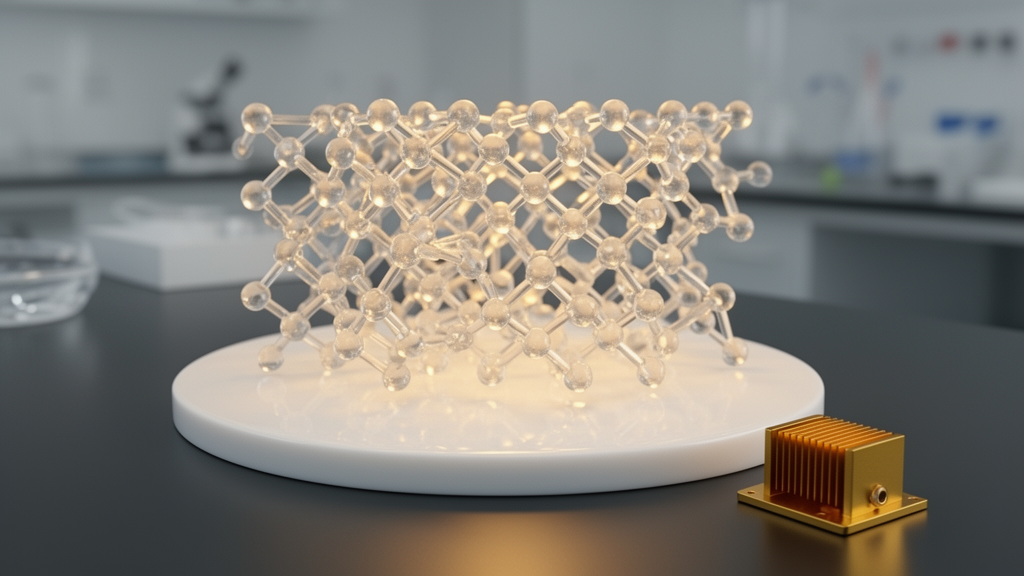
Image Credits: AI Generated

DOI: 10.1007/s42114-026-02141-7

Keywords: LTCC, dielectric loss, quartz, cristobalite, ionic percolation, millimeter-wave, RF filter, SiO2 glass composite, sintering, Q × f value, 28 GHz, phase engineering

News Source: Denise Maddox. (October 29, 2026). Quartz–cristobalite phase mix delivers ultralow-loss LTCC for 28 GHz filters. Scienmag.


Tags: 28 GHzcristobalitedielectric lossionic percolationLTCCMillimeter-wavephase engineeringQ × f valuequartzRF filtersinteringSiO2 glass composite
Share12Tweet7Share2ShareShareShare1

Related Posts

Plasma Cleaner Inserted Through TEM Port Strips Hydrocarbon Contamination in Three Hours

Plasma Cleaner Inserted Through TEM Port Strips Hydrocarbon Contamination in Three Hours

October 29, 2026
Air Flow Rate Controls Light-Fraction Yields in Oxidative Cracking of Fuel Oil

Air Flow Rate Controls Light-Fraction Yields in Oxidative Cracking of Fuel Oil

October 29, 2026

Choosing the Right Functional Reshapes Predictions for Two Organic Semiconductor Models

October 29, 2026

Machine learning ranks building damage after Nepal’s deadly 2015 Gorkha earthquake

October 29, 2026

POPULAR NEWS

  • Terbium-161 Shows Dose-Dependent Edge Over Lutetium-177 in Mouse Neuroendocrine Tumor Model

    Terbium-161 Shows Dose-Dependent Edge Over Lutetium-177 in Mouse Neuroendocrine Tumor Model

    29 shares
    Share 12 Tweet 7
  • Gas Drainage Lags Pressure Relief by 151.6 Metres in Deep Protective Seam Mining

    29 shares
    Share 12 Tweet 7
  • African Wild Lettuce Shows Anticancer Activity in Lab Studies, Review Finds

    29 shares
    Share 12 Tweet 7
  • SLC7A5 emerges as a central player in cancer amino acid metabolism

    29 shares
    Share 12 Tweet 7

About

We bring you the latest biotechnology news from best research centers and universities around the world. Check our website.

Follow us

Recent News

Positron emission mammography outperforms standard imaging in mapping newly diagnosed breast cancer

CRISPR-Edited Microalgae Boost Carotenoids but Hit Hard Limits on Carbon Capture

Poor Blood Sugar Control in Pregnancy Linked to Worse Postpartum Metabolic Health

Subscribe to Blog via Email

Enter your email address to subscribe to this blog and receive notifications of new posts by email.

Join 85 other subscribers
  • Contact Us

Bioengineer.org © Copyright 2023 All Rights Reserved.

Welcome Back!

Login to your account below

Forgotten Password?

Retrieve your password

Please enter your username or email address to reset your password.

Log In
No Result
View All Result
  • Homepages
    • Home Page 1
    • Home Page 2
  • News
  • National
  • Business
  • Health
  • Lifestyle
  • Science

Bioengineer.org © Copyright 2023 All Rights Reserved.