• HOME
  • NEWS
  • EXPLORE
    • CAREER
      • Companies
      • Jobs
    • EVENTS
    • iGEM
      • News
      • Team
    • PHOTOS
    • VIDEO
    • WIKI
  • BLOG
  • COMMUNITY
    • FACEBOOK
    • INSTAGRAM
    • TWITTER
Sunday, October 4, 2026
BIOENGINEER.ORG
No Result
View All Result
  • Login
  • HOME
  • NEWS
  • EXPLORE
    • CAREER
      • Companies
      • Jobs
        • Lecturer
        • PhD Studentship
        • Postdoc
        • Research Assistant
    • EVENTS
    • iGEM
      • News
      • Team
    • PHOTOS
    • VIDEO
    • WIKI
  • BLOG
  • COMMUNITY
    • FACEBOOK
    • INSTAGRAM
    • TWITTER
No Result
View All Result
Bioengineer.org
No Result
View All Result
Home NEWS Science News Biology

Quality and quantity of enrichments influence well-being of aquaculture fishes

Bioengineer by Bioengineer
April 16, 2021
in Biology
Reading Time: 3 mins read
0
IMAGE
Share on FacebookShare on TwitterShare on LinkedinShare on RedditShare on Telegram

IMAGE

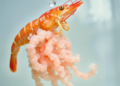
Credit: Pekka Hyvärinen/Luke

Collaborative research of the University of Jyvaskyla and Natural Research Institute Finland presents new evidence of the effects of enriched rearing on well-being of aquaculture fishes. The research demonstrates that stone enrichments that have been previously conditioned in lake water significantly improve survival of fish compared to clean stones. Also a higher number of stones has a similar positive effect. The results have practical implications for prevention of aquaculture diseases. The study was published in Antibiotics in March 2021.

The volume of aquaculture is continuously increasing. Parasitic diseases represent a significant threat to farmed fishes and ecological solutions to minimize use of medication are being sought.

Enriched rearing, where rearing tanks are equipped with different types of structures, has been shown to reduce the impact of diseases. However, the mechanisms underlying these effects are unknown.

“This study investigates the effect of quality and quantity of enrichments on survival of young brown trout and landlocked Atlantic salmon from a common disease of aquaculture fishes, the flavobacterial infection. Enriched tanks with just a handful of stones previously conditioned in lake water had a higher fish survival compared to tanks with clean stones or those without stones. In addition, a higher number of stones has a similar positive effect”, says Senior Lecturer Anssi Karvonen from the University of Jyväskyla.

“The results suggest that the conditioning forms a beneficial microbial community on the stones, which is capable in preventing harmful bacteria. We are currently conducting further investigations on the structure of the microbial communities”, says Karvonen.

“Disease prevention might be possible with precision use of enrichments”

The recently published research provides information on the dynamics between enrichments and diseases. When and how the enrichments are being applied can influence the outbreak and harmfulness of a disease.

The results have significance for the health of aquaculture fishes, as well as costs associated with the rearing.

“The results suggest that the use of certain type of enrichments just before the anticipated disease outbreak can reduce the impact of a disease and possibly minimize the need for medication. This type of precision enrichment could also decrease the workload and costs associated with the cleaning of the tanks. Enrichments are already being applied in production-scale rearing of salmonid fishes intended for stocking in collaboration with aquaculture companies. For example, tests of new and more user-friendly structures of enrichments for young Atlantic salmon are currently being run in facilities of Voimalohi Ltd”, says principal scientist Pekka Hyvärinen from the Natural Resources Institute Finland.

###

Link to the article in Antibiotics: https://doi.org/10.3390/antibiotics10030335

For further information:

Anssi Karvonen, University of Jyvaskyla, [email protected], Tel. +358 40 8053882

Lotta-Riina Sundberg, University of Jyvaskyla, [email protected], Tel. +358 40 8053931

Pekka Hyvärinen, Natural Resources Institute Finland, [email protected], Tel. +358 295327641

Media Contact
Anssi Karvonen
[email protected]

Original Source

https://www.jyu.fi/en/current/archive/2021/04/quality-and-quantity-of-enrichments-influence-well-being-of-aquaculture-fishes

Related Journal Article

http://dx.doi.org/10.3390/antibiotics10030335

Tags: Agricultural Production/EconomicsAgricultureBacteriologyBiologyFisheries/AquacultureMarine/Freshwater BiologyMicrobiology
Share12Tweet8Share2ShareShareShare2

Related Posts

Simple Sugar Dextrose Emerges as Best Carbon Source for Zero-Exchange Shrimp Hatcheries

Simple Sugar Dextrose Emerges as Best Carbon Source for Zero-Exchange Shrimp Hatcheries

October 4, 2026
New Algorithm Simulates Gene Frequency Histories Exactly, Even as Populations Change Size

New Algorithm Simulates Gene Frequency Histories Exactly, Even as Populations Change Size

October 4, 2026

Touch-Sensing Piezo Channels Found to Steer the Cells That Build Our Teeth

October 4, 2026

Rumen Fluke Parasite Reveals Its Molecular Playbook Across Life Stages

October 4, 2026
Please login to join discussion

POPULAR NEWS

  • Alloys That Shrink Their Own Grains: New PIX Mechanism Refines Metals With Heat Alone

    Alloys That Shrink Their Own Grains: New PIX Mechanism Refines Metals With Heat Alone

    29 shares
    Share 12 Tweet 7
  • Endurance Exercise Reshapes the Liver in Males and Females Through Distinct Molecular Routes

    29 shares
    Share 12 Tweet 7
  • Single Transcription Factor PU.1 Rapidly Converts Fibroblasts into Macrophage-Lineage Cells

    29 shares
    Share 12 Tweet 7
  • New Scale Measures How Ready Nurse Educators Really Are for the AI Era

    29 shares
    Share 12 Tweet 7

About

We bring you the latest biotechnology news from best research centers and universities around the world. Check our website.

Follow us

Recent News

Alloys That Shrink Their Own Grains: New PIX Mechanism Refines Metals With Heat Alone

Endurance Exercise Reshapes the Liver in Males and Females Through Distinct Molecular Routes

Single Transcription Factor PU.1 Rapidly Converts Fibroblasts into Macrophage-Lineage Cells

Subscribe to Blog via Email

Success! An email was just sent to confirm your subscription. Please find the email now and click 'Confirm' to start subscribing.

Join 85 other subscribers
  • Contact Us

Bioengineer.org © Copyright 2023 All Rights Reserved.

Welcome Back!

Login to your account below

Forgotten Password?

Retrieve your password

Please enter your username or email address to reset your password.

Log In
No Result
View All Result
  • Homepages
    • Home Page 1
    • Home Page 2
  • News
  • National
  • Business
  • Health
  • Lifestyle
  • Science

Bioengineer.org © Copyright 2023 All Rights Reserved.