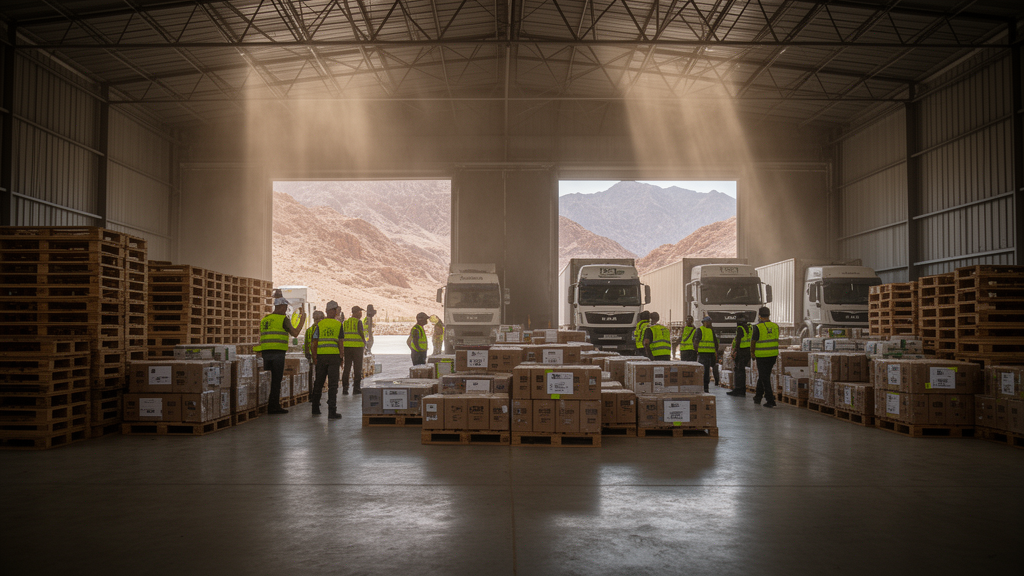
A qualitative study evaluating health supply chain management for vulnerable populations during emergencies and disasters in Iran has identified critical structural barriers, facilitating factors, and targeted improvement strategies. The research, published in the Journal of Health, Population and Nutrition, focused on understanding how health systems can maintain the delivery of essential medical and relief supplies during acute crisis events. By examining real-world emergency responses, the authors aimed to outline the systemic mechanisms required to build resilience and support affected groups.
To assess operational challenges, the investigators conducted a conventional content analysis based on twenty-nine semi-structured interviews. The participant sample included twenty-one professional experts alongside eight individuals directly affected by disasters, recruited through purposive sampling to ensure diverse and relevant operational experience. Transcripts were processed using MAXQDA 2020 software, and the researchers supported credibility and dependability through iterative review, participant feedback on interview summaries, and analysis by two researchers.
From the qualitative analysis, the research team generated one hundred and seventy codes. These findings were categorized into three main domains: facilitating factors, barriers, and improvement strategies. Across these primary categories, the results encompassed seventeen main themes and forty-seven subthemes that characterized the complex logistics environment of disaster response.
The investigation highlighted several decisive facilitating factors that supported emergency health supply logistics. Key assets included the operational capacity of the national health network, intersectoral collaboration, and domestic self-sufficiency in health supply production. Notably, the capacity for domestic manufacturing served as a strategic advantage, allowing authorities to maintain supply chain resilience under sanctions and external supply disruptions. Widespread public participation and an established culture of altruism and social solidarity also enhanced crisis responsiveness across communities.
Conversely, substantial operational obstacles impeded response efforts. Major identified barriers included managerial inefficiency, fragmented coordination, and non-standard warehousing practices. Supply efforts were further hindered by weak information and logistics infrastructures, as well as inappropriate consumption patterns among recipients. Crucially, public distrust toward formal distribution mechanisms severely limited the effective integration of community contributions and altruistic behaviors into standardized supply chain processes during emergencies.
To address these challenges, the researchers identified six operational strategies for systemic improvement. These measures include strengthening communication systems, establishing rapid needs assessment mechanisms, and implementing integrated management approaches across organizations. The remaining strategies focus on improving procurement and storage processes, enhancing public awareness regarding distribution, and developing institutional knowledge management systems to guide emergency supply chain preparedness.
The authors concluded that effective health supply chain management during disasters requires a coordinated, multisectoral, and evidence-informed approach. The findings point to the value of establishing stronger communication and information systems, clear management structures, and appropriate use of modern technologies such as Geographic Information Systems. However, the researchers emphasized that these implications must be interpreted strictly within the context of this qualitative study. The identified strategies represent proposed priorities for health logistics reform rather than interventions evaluated for efficacy by the investigation.
Subject of Research: Health supply chain management for vulnerable groups during disasters in Iran
Article Title: Challenges, opportunities, and strategies for health supply chain management for vulnerable groups during disasters in Iran: a qualitative study
Article References: Pashaei-Asl, Y., Babaie, J., Dowlati, M., Seyedin, H., Derakhshani, N., & Pashaei-Asl, R. (2026). Challenges, opportunities, and strategies for health supply chain management for vulnerable groups during disasters in Iran: a qualitative study. Journal of Health, Population and Nutrition. https://doi.org/10.1186/s41043-026-01509-1
Image Credits: AI Generated
DOI: 10.1186/s41043-026-01509-1
Keywords: Health supply chain management, Disaster response, Vulnerable groups, Iran, Qualitative content analysis, Emergency logistics, Domestic production, Public distrust, Altruism, Intersectoral collaboration, Needs assessment, Geographic Information Systems, Warehousing standards, Knowledge management, Sanctions resilience, National health network
News Source: Ophelia Keating. (November 18, 2026). Qualitative Study Identifies Key Supply Chain Barriers During Disasters in Iran. Scienmag.