• HOME
  • NEWS
  • EXPLORE
    • CAREER
      • Companies
      • Jobs
    • EVENTS
    • iGEM
      • News
      • Team
    • PHOTOS
    • VIDEO
    • WIKI
  • BLOG
  • COMMUNITY
    • FACEBOOK
    • INSTAGRAM
    • TWITTER
Wednesday, June 24, 2026
BIOENGINEER.ORG
No Result
View All Result
  • Login
  • HOME
  • NEWS
  • EXPLORE
    • CAREER
      • Companies
      • Jobs
        • Lecturer
        • PhD Studentship
        • Postdoc
        • Research Assistant
    • EVENTS
    • iGEM
      • News
      • Team
    • PHOTOS
    • VIDEO
    • WIKI
  • BLOG
  • COMMUNITY
    • FACEBOOK
    • INSTAGRAM
    • TWITTER
  • HOME
  • NEWS
  • EXPLORE
    • CAREER
      • Companies
      • Jobs
        • Lecturer
        • PhD Studentship
        • Postdoc
        • Research Assistant
    • EVENTS
    • iGEM
      • News
      • Team
    • PHOTOS
    • VIDEO
    • WIKI
  • BLOG
  • COMMUNITY
    • FACEBOOK
    • INSTAGRAM
    • TWITTER
No Result
View All Result
Bioengineer.org
No Result
View All Result
Home NEWS Science News Cancer

Putting the brakes on tumor stealth

Bioengineer by Bioengineer
December 6, 2018
in Cancer
Reading Time: 2 mins read
0
IMAGE
Share on FacebookShare on TwitterShare on LinkedinShare on RedditShare on Telegram

IMAGE

Credit: Monash University


New research undertaken at Monash University has shed new light on how some cancers are able to escape our immune system.

The findings have significant implications for the burgeoning field of cancer immunotherapy, an approach that is focused on harnessing the remarkable power of our own immune system to seek out and destroy cancer.

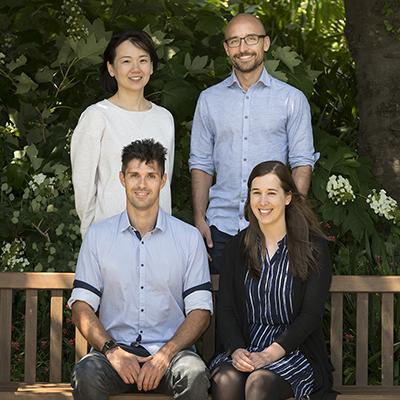
The research, led by Dr Rich Berry from the Monash Biomedicine Discovery Institute (BDI) and ARC Centre of Excellence in Advanced Molecular Imaging, was published today in the journal Structure.

“The immune system is complex and highly regulated, comprising a number of accelerators and brakes,” explained Dr Berry.

“While the accelerators activate the immune system, the brakes are critical to maintain the balance and prevent the immune system attacking the body’s own healthy tissues.”

However, many tumours exploit this mechanism by expressing markers on their surface that engage the brakes, in order to restrict the immune system.

“One method of immunotherapy, termed ‘checkpoint inhibition’ involves blocking the immune brakes in order to unleash the formidable power of the immune system on the tumour,” Dr Berry said.

So far, two such brakes, PD-1 and CTLA-4, have been effectively targeted in the clinic. However, despite some positive results, many patients do not respond to these treatments. Scientists are on the hunt for new immune brakes to target.

Using high intensity X-rays at the state-of-the-art Australian Synchrotron, the team from Monash determined the 3D structure of a new immune brake, termed CD96. The structure reveals the precise molecular details of how CD96 binds to tumours.

“This is really exciting because studies using mouse models indicate that blocking CD96 might be even more effective at controlling tumour spread than the currently available treatments,” Dr Berry said.

These studies could pave the way for future experiments aimed at further interrogating the role of CD96 in tumour control, and ultimately aid in the development of novel agents for the treatment of a range of cancers.

Read the full paper in Structure, titled Structural basis for CD96 immune receptor recognition of nectin-like protein-5 (CD155).

###

About the Monash Biomedicine Discovery Institute

Committed to making the discoveries that will relieve the future burden of disease, the newly established Monash Biomedicine Discovery Institute at Monash University brings together more than 120 internationally-renowned research teams. Our researchers are supported by world-class technology and infrastructure, and partner with industry, clinicians and researchers internationally to enhance lives through discovery.

Media Contact
Grace Williams
[email protected]
61-399-059-597

Related Journal Article

http://dx.doi.org/10.1016/j.str.2018.10.023

News source: https://scienmag.com/

Tags: BiochemistrycancerMedicine/HealthMolecular Biology
Share12Tweet8Share2ShareShareShare2

Related Posts

New Collaborative Study Explores Immunotherapy to Prevent Lung Cancer Recurrence

June 24, 2026

Comprehensive Microbiome Analysis Uncovers Reliable Colorectal Cancer Biomarkers

June 24, 2026

Scientists at CDI uncover how fat tissue may drive triple-negative breast cancer spread, opening doors to new treatments

June 24, 2026

Christoph Bock Awarded ERC Advanced Grant to Develop “Living Drugs” for Cancer Treatment

June 24, 2026
Please login to join discussion

POPULAR NEWS

  • Saying Goodbye to PGY-6: Pediatric Fellowship Realities

    103 shares
    Share 41 Tweet 26
  • Multi-Hospital Study Reveals Long Covid Burden Is Twice as High as Current Estimates

    92 shares
    Share 36 Tweet 23
  • Detection of EDCs in Breast Milk and Infant Urine Up to Six Months Highlights Early Exposure Risks

    77 shares
    Share 31 Tweet 19
  • New Drug Candidate Developed at McMaster Shows Potential for Treating Brain Cancer

    58 shares
    Share 23 Tweet 15

About

We bring you the latest biotechnology news from best research centers and universities around the world. Check our website.

Follow us

Recent News

Unfinished Care, Burnout, and Managerial Support in Nursing Homes

New Collaborative Study Explores Immunotherapy to Prevent Lung Cancer Recurrence

Yeast Enables Precise Megabase Human DNA Transfer

Subscribe to Blog via Email

Enter your email address to subscribe to this blog and receive notifications of new posts by email.

Join 82 other subscribers
  • Contact Us

Bioengineer.org © Copyright 2023 All Rights Reserved.

Welcome Back!

Login to your account below

Forgotten Password?

Retrieve your password

Please enter your username or email address to reset your password.

Log In
No Result
View All Result
  • Homepages
    • Home Page 1
    • Home Page 2
  • News
  • National
  • Business
  • Health
  • Lifestyle
  • Science

Bioengineer.org © Copyright 2023 All Rights Reserved.