Every year, the global pumpkin industry discards mountains of peels, seeds, pomace and rind—roughly a quarter to a third of the entire fruit—yet a new study suggests this overlooked waste stream could become a source of natural antibiotics, antioxidant compounds and industrial oil. Researchers in India have carried out one of the most comprehensive analyses to date of Cucurbita maxima, the humble pumpkin, showing that its discarded parts are packed with bioactive molecules capable of inhibiting some of medicine’s most troublesome bacteria.
The study, published in the journal Discover Plants, was led by Krishna Poonia of DAV (PG) College in Dehradun, together with colleagues from CCS Haryana Agricultural University, DNA Labs-A Centre for Applied Sciences, HNB Garhwal University and Maya Devi University. The team set out to close a persistent gap in the literature: while individual studies have examined pumpkin’s antimicrobial activity, its phytochemistry, or its oil content in isolation, few have integrated all three lines of evidence into a single evaluation of the fruit’s waste fractions.
The researchers procured fresh Cucurbita maxima fruits from a local market in Dehradun, in the northern Indian state of Uttarakhand, and had the plant material authenticated by the Botanical Survey of India. After separating the peels and seeds, surface sterilizing them with 70 percent ethanol and drying them, the team ground the material into powders and extracted it using three solvents—water, ethanol and acetone—chosen to capture compounds of differing polarity. Each extract then underwent qualitative phytochemical screening using standard colorimetric tests to detect classes of secondary metabolites.
The screening revealed a rich chemical inventory. Carbohydrates, alkaloids, phenolics, glycosides and quinones were confirmed across the extracts, while terpenoids and steroids appeared in selected samples. Proteins and emodins showed up primarily in the aqueous extracts, a sign that water is particularly effective at pulling out polar compounds. Notably, tannins were detected only in peel extracts, hinting that the outer skin harbors a defensive chemical arsenal of its own. Phlobatannins, coumarins and leucoanthocyanins, by contrast, were absent or fell below detectable limits. These metabolites matter because phenolics, flavonoids, alkaloids and terpenoids are widely associated with antioxidant, anti-inflammatory and antimicrobial effects.
To dig deeper into the peel’s chemistry, the team turned to gas chromatography–mass spectrometry, or GC–MS, a technique that separates volatile and semi-volatile compounds and identifies them by their fragmentation patterns. Using a triple quadrupole instrument with electron ionization at 70 electronvolts and helium as the carrier gas, the analysis identified a staggering 91 phytocompounds in the peel extract, of which 17 were classed as major constituents. Roughly 60 to 65 percent of the extract consisted of triterpenoids and sterols, a profile characteristic of the waxy cuticular matrix that coats plant surfaces.
The single most abundant compound was germanicol acetate, making up 26.62 percent of the extract, followed by 24-norursa-3,12-diene at 14.63 percent and the sterol chondrillasterol at 8.58 percent. A second major group of terpenoids and isoprenoids, accounting for about 10 to 12 percent, included phytol at 7.23 percent and neophytadiene at 2.77 percent—both widely reported for antioxidant and antimicrobial activity. Smaller fractions contained fatty acid esters such as ethyl linoleate, along with nutritionally notable minor constituents including squalene and tocopherol derivatives, compounds prized for their antioxidant and chemoprotective properties.
The functional payoff came from the antibacterial assays. Using the Kirby–Bauer disk diffusion method, the researchers tested crude extracts against four bacterial strains obtained from culture collections: Pseudomonas aeruginosa, Staphylococcus aureus, Escherichia coli and Klebsiella pneumoniae. Peel extracts consistently outperformed seed extracts. The standout result was the aqueous peel extract, which produced an inhibition zone of 16.0 plus or minus 0.4 millimeters against Pseudomonas aeruginosa—the largest observed in the study. Across all strains and extracts, inhibition zones ranged from 10 to 16 millimeters.
The pattern of susceptibility was revealing. Pseudomonas aeruginosa, a Gram-negative opportunistic pathogen notorious for its antibiotic resistance, proved the most vulnerable to the pumpkin extracts, while Escherichia coli and Klebsiella pneumoniae showed comparatively modest inhibition of 10 to 12 millimeters. The authors caution that Gram-negative outer membranes can restrict the penetration of many antimicrobial compounds, yet the strong response of P. aeruginosa shows that susceptibility was not dictated by Gram reaction alone. Solvent choice also mattered: water and ethanol generally recovered more active antibacterial constituents from the peel than other solvents, suggesting that polar or moderately polar compounds drive much of the inhibition.
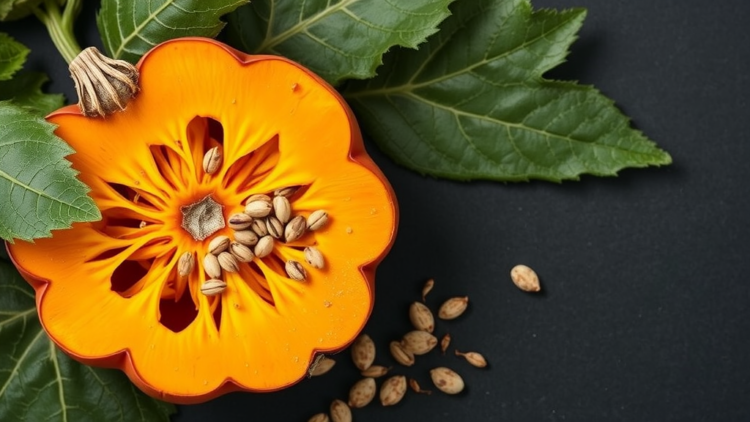
The seeds offered a different kind of value. Using Soxhlet extraction with n-hexane at around 60 degrees Celsius, the team recovered crude pumpkin seed oil at a yield of 18 percent by weight—a moderate lipid content that underscores the seeds’ potential for food, cosmetic and pharmaceutical applications. Pumpkin seed oil is already recognized for its nutritional and functional significance, and this yield demonstrates that even discarded seeds from processing waste contain commercially meaningful quantities of lipid material.
The broader implications reach into the growing field of waste valorization—the conversion of agricultural by-products into value-added products. With fruit and vegetable waste posing a mounting environmental and economic challenge, the study argues that pumpkin peels and seeds should be viewed not as refuse but as a low-cost feedstock for natural antimicrobials, antioxidants and oils. The authors caution that practical applications will require further work, including testing standardized extract concentrations, purifying individual compounds, determining minimum inhibitory concentrations and elucidating mechanisms of action. Still, the message is clear: the part of the pumpkin most people throw away may be among its most chemically valuable.
Subject of Research: Phytochemical profiling, antibacterial activity and oil recovery from pumpkin peel and seed waste
Article Title: Phytochemical profiling, antibacterial activity and valorization potential of Cucurbita maxima peel and seed waste
Article References: Phytochemical profiling, antibacterial activity and valorization potential of Cucurbita maxima peel and seed waste. (n.d.). https://doi.org/10.1007/s44372-026-00869-6
Image Credits: AI Generated
DOI: 10.1007/s44372-026-00869-6
Keywords: Cucurbita maxima, pumpkin waste, phytochemicals, antibacterial activity, GC-MS, germanicol acetate, pumpkin seed oil, waste valorization, Soxhlet extraction, antimicrobial, triterpenoids, food waste
Cite Scienmag News
APA MLA Chicago
Alan Morgan. (September 22, 2026). Pumpkin Peel and Seed Waste Yield Antibacterial Compounds and Valuable Oil. Scienmag. https://scienmag.com/pumpkin-peel-and-seed-waste-yield-antibacterial-compounds-and-valuable-oil/
Alan Morgan. “Pumpkin Peel and Seed Waste Yield Antibacterial Compounds and Valuable Oil.” Scienmag, 22 September 2026, https://scienmag.com/pumpkin-peel-and-seed-waste-yield-antibacterial-compounds-and-valuable-oil/. Accessed 22 September 2026.
Alan Morgan. “Pumpkin Peel and Seed Waste Yield Antibacterial Compounds and Valuable Oil.” Scienmag. September 22, 2026. https://scienmag.com/pumpkin-peel-and-seed-waste-yield-antibacterial-compounds-and-valuable-oil/
Copy citation Download RIS
Tags: antibacterial activityantibacterial activity of pumpkin waste extractsantimicrobialantioxidant properties of pumpkin rindbioactive compounds in pumpkin seeds and peelsbioactive molecules from Cucurbita maximaCucurbita maximafood wasteGC–MSgermanicol acetateindustrial oil from pumpkin wastemedicinal properties of pumpkin peel compoundsnatural preservatives from pumpkin wastephytochemical analysis of pumpkin wastephytochemicalspotential health benefits of pumpkin seed oilpumpkin seed oilpumpkin wastePumpkin waste as natural antibiotic sourcepumpkin waste valorization for industrial applicationsSoxhlet extractionsustainable utilization of pumpkin by-productstriterpenoidswaste valorization