• HOME
  • NEWS
  • EXPLORE
    • CAREER
      • Companies
      • Jobs
    • EVENTS
    • iGEM
      • News
      • Team
    • PHOTOS
    • VIDEO
    • WIKI
  • BLOG
  • COMMUNITY
    • FACEBOOK
    • INSTAGRAM
    • TWITTER
Thursday, May 21, 2026
BIOENGINEER.ORG
No Result
View All Result
  • Login
  • HOME
  • NEWS
  • EXPLORE
    • CAREER
      • Companies
      • Jobs
        • Lecturer
        • PhD Studentship
        • Postdoc
        • Research Assistant
    • EVENTS
    • iGEM
      • News
      • Team
    • PHOTOS
    • VIDEO
    • WIKI
  • BLOG
  • COMMUNITY
    • FACEBOOK
    • INSTAGRAM
    • TWITTER
  • HOME
  • NEWS
  • EXPLORE
    • CAREER
      • Companies
      • Jobs
        • Lecturer
        • PhD Studentship
        • Postdoc
        • Research Assistant
    • EVENTS
    • iGEM
      • News
      • Team
    • PHOTOS
    • VIDEO
    • WIKI
  • BLOG
  • COMMUNITY
    • FACEBOOK
    • INSTAGRAM
    • TWITTER
No Result
View All Result
Bioengineer.org
No Result
View All Result
Home NEWS Science News Biology

Pulling the plug on calcium pumps — potential new treatment strategy for pancreatic cancer

Bioengineer by Bioengineer
January 16, 2020
in Biology
Reading Time: 3 mins read
0
IMAGE
Share on FacebookShare on TwitterShare on LinkedinShare on RedditShare on Telegram

IMAGE

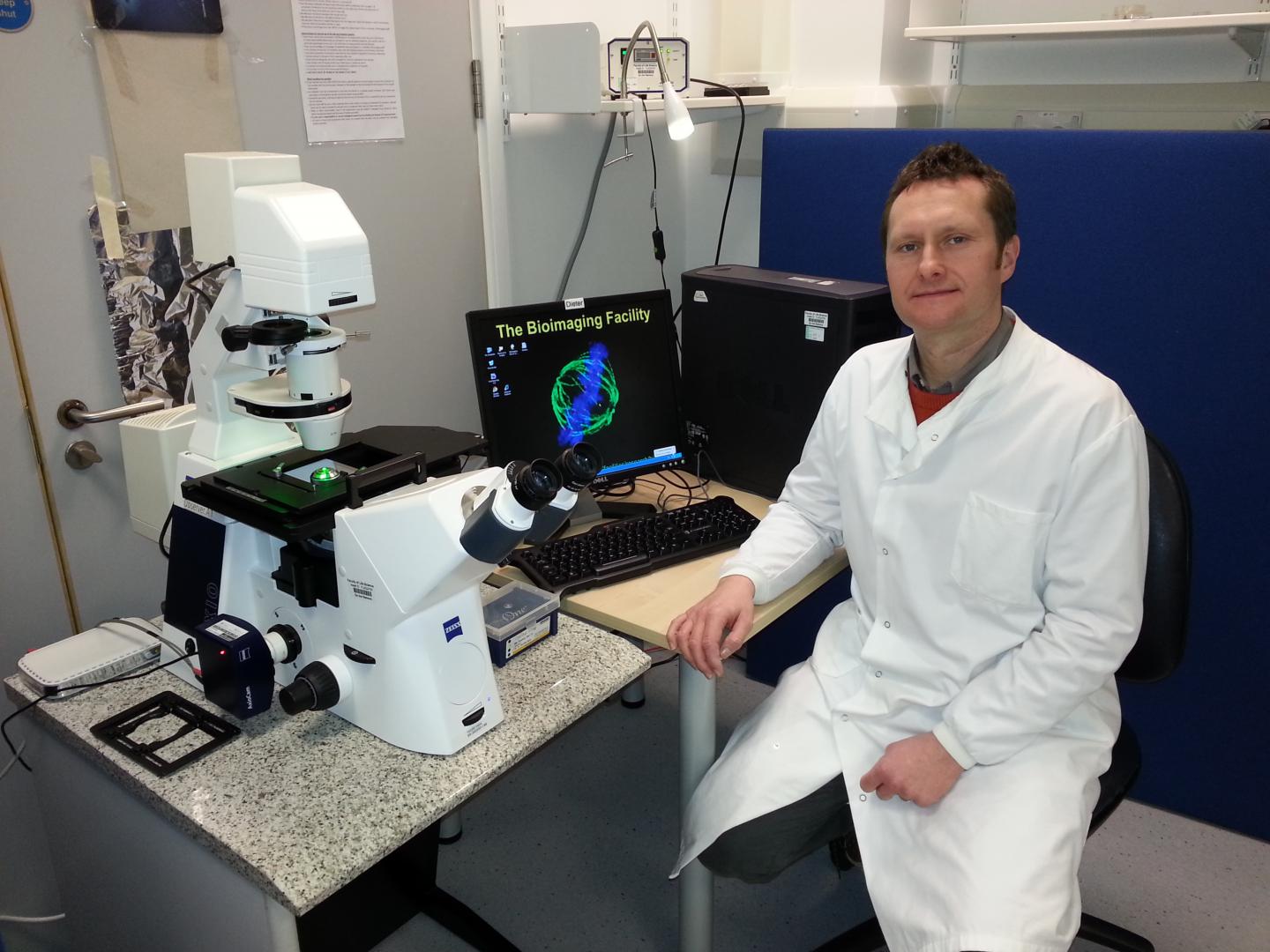
Credit: University of Manchester


UK scientists have identified a new way to kill pancreatic cancer cells by ‘pulling the plug’ on the energy generator that fuels calcium pumps on their cell surface. The study, published in the British Journal of Cancer, reports how switching off the cancer’s energy supply causes the pancreatic cancer cells to become ‘poisoned’ by an irreversible build-up of calcium.

Calcium inside cells is normally beneficial as it controls numerous cell functions. However, calcium levels are tightly controlled and normally kept at very low levels, as prolonged elevations in calcium lead to cell death. This tight control is achieved by calcium pumps on the cell surface that use chemical energy to pump calcium out of the cell. The researchers discovered that switching off the cancer cells’ energy supply causes these pumps to fail and calcium to rise, much like a damaged boat taking on water.

Dr Jason Bruce, from the Division of Cancer Sciences at the University of Manchester, who led the research, said: “Pancreatic cancer has some of the worst survival statistics and is notoriously resistant to standard treatments. Therefore, identifying potential weaknesses of pancreatic cancer cells that could be exploited to selectively kill them – essentially finding their ‘Achilles Heel’ – must remain a central research strategy if we are to tackle this devastating disease.”

The research, funded by the UK charity Pancreatic Cancer Research Fund, identified that pancreatic cancer cells have a unique way of extracting energy from sugar to fuel their calcium pumps. They use a specific enzyme, called PKM2, which the researchers found in high levels in tumours compared to surrounding healthy tissue of patients with pancreatic cancer. They also found that the amount of PKM2 in tumours correlated with poor patient survival, suggesting this could be targeted to treat pancreatic cancer.

The Manchester team then carried out experiments on pancreatic cancer cells in the laboratory to find out what would happen if they shut down PKM2 using two different approaches. The first approach targeted the machinery responsible for making PKM2 protein, which eventually leads to a dramatic reduction or “knock-down” of PKM2 within the cancer cells. The second approach used a naturally occurring PKM2 blocker, called shikonin, which stops PKM2 from working. Shikonin was originally extracted from the dried roots of the Arnebia plant, which has been used in traditional Chinese medicine.

Shikonin was very effective at killing pancreatic cancer cells within just a few hours of treatment. Treated cells had depleted energy levels, which in turn led to the failure of their calcium pumps and a toxic rise in calcium. Shikonin also prevented the cells from growing and migrating, which implies an impact on cancer spread.

The team now intends to look for drugs that are more specific for PKM2 and other drugs that target similar energy-producing enzymes, and aim to investigate whether this approach could be developed into a new treatment for pancreatic cancer.

“Although shikonin proved to be very effective in the laboratory, it may have additional side effects around the body making it less useful in patients. Therefore, we aim to design new drugs that selectively target this process to selectively kill pancreatic cancer cells, while leaving healthy cells that rely on alternative energy sources relatively intact.” explains Dr Bruce.

###

Media Contact
Joanne Kelly
[email protected]
07-980-267-756

Original Source

http://www.pcrf.org.uk/news.php/307/pulling-the-plug-on-calcium-pumps-potential-new-treatment-strategy-for-pancreatic-cancer?category=1

Related Journal Article

http://dx.doi.org/10.1038/s41416-019-0675-3

Tags: BiologycancerCell BiologyMedicine/Health
Share12Tweet8Share2ShareShareShare2

Related Posts

Early Delivery Improves Outcomes for Mothers and Babies in Hypertensive Pregnancies — Biology

Early Delivery Improves Outcomes for Mothers and Babies in Hypertensive Pregnancies

May 21, 2026
How Atlantic Herring Rewired Their Reproductive Strategy to Thrive in Changing Oceans — Biology

How Atlantic Herring Rewired Their Reproductive Strategy to Thrive in Changing Oceans

May 20, 2026

Study Finds Young Fraser River Chinook Salmon Swimming in Chemical Mixture

May 20, 2026

Thousands of UK Beekeepers Contribute Honey to Advance Environmental Science

May 20, 2026
Please login to join discussion

POPULAR NEWS

  • blank

    New Study Reveals Plants Can Detect the Sound of Rain

    733 shares
    Share 292 Tweet 183
  • ESMO 2025: mRNA COVID Vaccines Enhance Efficacy of Cancer Immunotherapy

    304 shares
    Share 122 Tweet 76
  • Research Indicates Potential Connection Between Prenatal Medication Exposure and Elevated Autism Risk

    846 shares
    Share 338 Tweet 212
  • Breastmilk Balances E. coli and Beneficial Bacteria in Infant Gut Microbiomes

    58 shares
    Share 23 Tweet 15

About

We bring you the latest biotechnology news from best research centers and universities around the world. Check our website.

Follow us

Recent News

Innovative Reusable Brick Walls Revolutionize Construction Industry

Nonlinear Atomic Tunneling Enhanced by Bright Squeezed Vacuum

Label-Free Super-Resolution Imaging of Live Cells

Subscribe to Blog via Email

Enter your email address to subscribe to this blog and receive notifications of new posts by email.

Join 82 other subscribers
  • Contact Us

Bioengineer.org © Copyright 2023 All Rights Reserved.

Welcome Back!

Login to your account below

Forgotten Password?

Retrieve your password

Please enter your username or email address to reset your password.

Log In
No Result
View All Result
  • Homepages
    • Home Page 1
    • Home Page 2
  • News
  • National
  • Business
  • Health
  • Lifestyle
  • Science

Bioengineer.org © Copyright 2023 All Rights Reserved.