


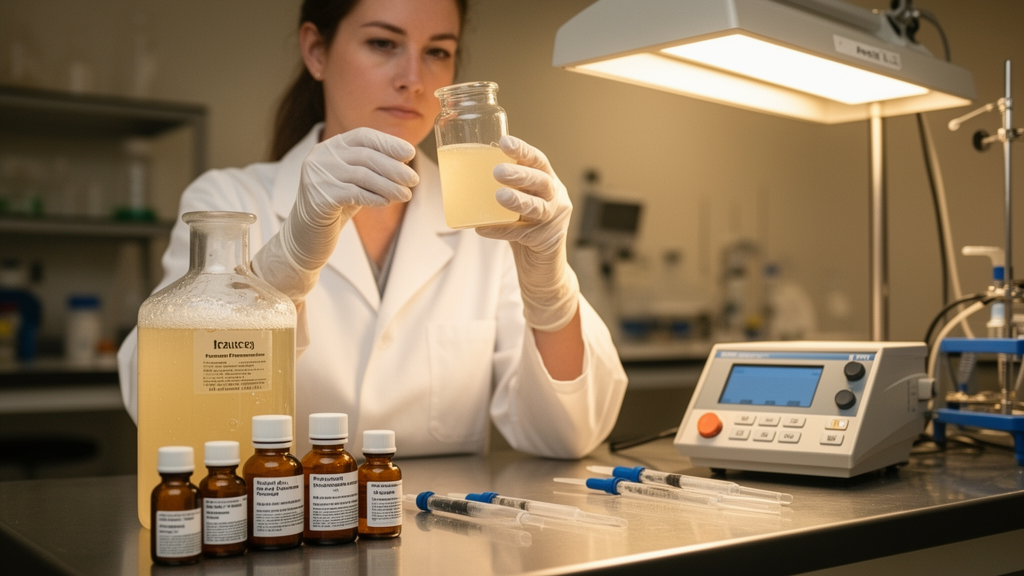
Two plant-derived stilbene compounds reduced methane production in rumen fermentation experiments, with pinostilbene outperforming its structurally related cousin pterostilbene, according to a study published in Animal Microbiome. At a dose of 200 mg per kg of substrate dry matter, pterostilbene cut methane production by 13 percent and pinostilbene by 19 percent, while the proportion of methane fell by 17 percent and 21 percent respectively.
Crucially, the researchers report that neither compound broadly suppressed fermentation. Total volatile fatty acid concentration was not decreased, and gaseous hydrogen was not significantly increased, suggesting that the antimethanogenic effect did not come at the cost of disrupting normal rumen function in the measured parameters.
The study compared pterostilbene (PTE) and pinostilbene (PIN) because, although plant-derived stilbenes are considered potential antimethanogenic compounds, it remained unclear whether structurally related stilbenes differ in their methane-mitigating effects and in the rumen microbial responses they trigger. The work was conducted as an in vitro comparison of the two compounds, examining both methane output and metagenomic signatures related to methanogenesis and hydrogen metabolism.
Molecular docking predictions indicated that both PTE and PIN could occupy the active site pocket of methyl-coenzyme M reductase. This computational result provided a mechanistic rationale for testing whether the compounds might interfere with the archaeal pathway that produces methane in the rumen.
Both treatments were associated with shifts in bacterial and archaeal communities and in the metagenomic functional potential related to methanogenesis. The two compounds, however, did not act identically. PTE showed mainly nominal decreases in several methanogenesis-associated functional features, whereas PIN produced broader and more pronounced changes across methanogenesis-related functions.
The differences extended beyond methanogenesis pathways. PIN was associated with more extensive changes in CAZyme and hydrogenase profiles and affected more metagenome-assembled genomes than PTE.
The authors conclude that PTE and PIN reduced ruminal methane production without broadly suppressing the measured fermentation, with PIN eliciting broader metagenomic responses. They frame these findings as supporting stilbenes as candidate antimethanogenic compounds, while stressing that the results warrant further biochemical and in vivo validation.
That caveat matters for interpretation. The findings come from controlled fermentation experiments with metagenomic analysis, not from feeding trials in live animals, so the reported reductions and microbial shifts describe what happened under the study conditions rather than confirmed outcomes in cattle. The authors themselves note that further biochemical and in vivo validation is needed before any practical application can be assessed.
Within those limits, the study adds a structured comparison to the search for rumen methane mitigants: two closely related stilbenes, tested at the same dose, produced different magnitudes of methane reduction and different depths of microbial response, with pinostilbene emerging as the more broadly active of the pair in this experiment.
Subject of Research: Effects of the stilbene compounds pterostilbene and pinostilbene on ruminal methane production and rumen microbial functions
Article Title: Stilbene compounds reduce ruminal methane production and are associated with shifts in methanogenesis-related microbial functions
Article References: Liu, Y., Zhang, Z., Zhang, X., Feng, X., Diao, Q., Bi, Y., Ma, T., & Tu, Y. (2026). Stilbene compounds reduce ruminal methane production and are associated with shifts in methanogenesis-related microbial functions. Animal Microbiome. https://doi.org/10.1186/s42523-026-00643-9
Image Credits: AI Generated
DOI: 10.1186/s42523-026-00643-9
Keywords: rumen, methane, stilbenes, pterostilbene, pinostilbene, methanogenesis, rumen microbiome, metagenomics, hydrogen metabolism, volatile fatty acids, in vitro fermentation, livestock emissions
News Source: Morgan Morrow. (October 29, 2026). Pterostilbene and pinostilbene cut ruminal methane in lab study. Scienmag.



