DNA–protein crosslinks (DPCs) are among the most complex and deleterious forms of DNA damage, and a new review in Nature Reviews Molecular Cell Biology synthesizes how cells remove them through dedicated proteolytic repair pathways. The review, authored by Sophie Dürauer and Julian Stingele and published on 30 October 2026, describes the origin and properties of the major classes of DPCs, the key enzymes involved in their repair, and how replication-coupled, transcription-coupled and global genome repair pathways converge on ubiquitylation of the crosslinked protein to license proteolysis by the proteasome or the specialized DPC protease SPRTN.
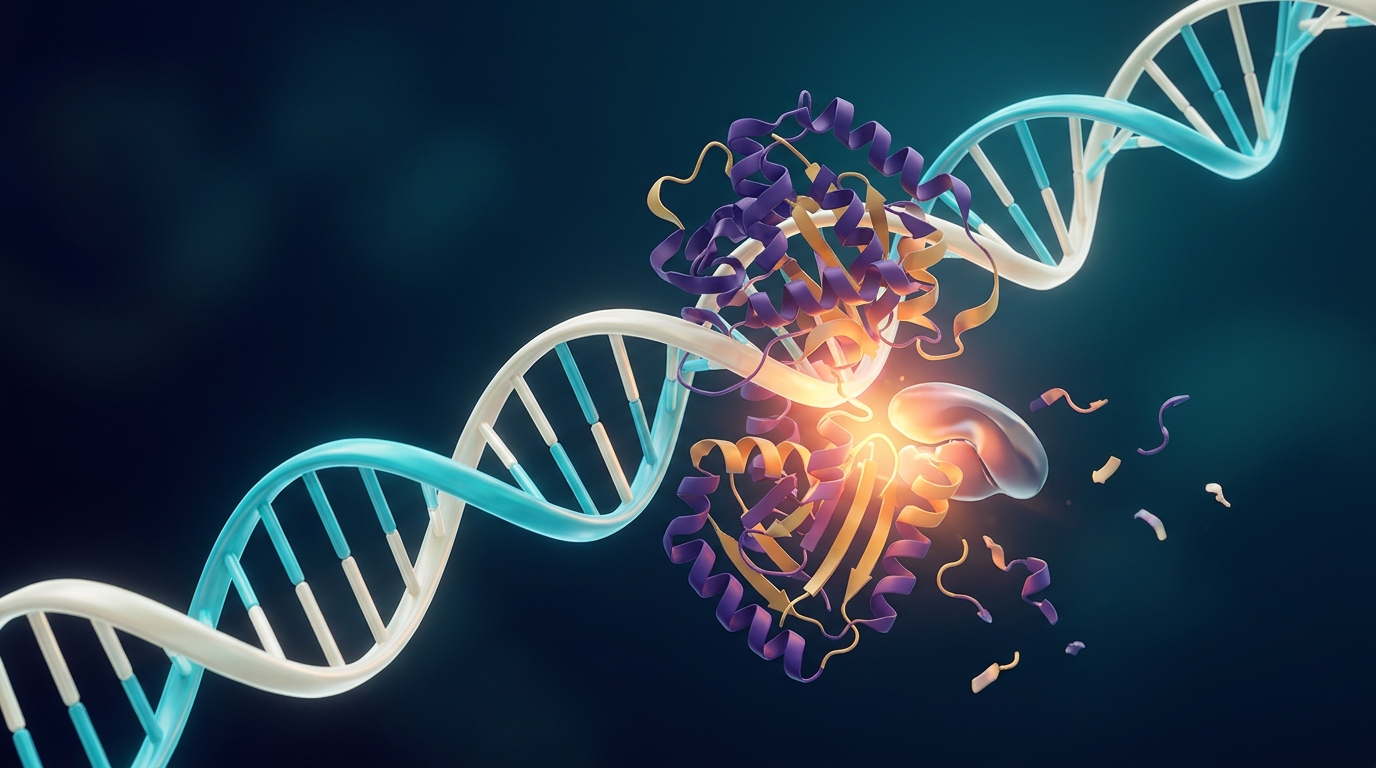
DPCs arise in two principal ways. Some form from the stabilization of covalent enzyme–DNA intermediates, such as topoisomerase cleavage complexes, which are normally transient but can become trapped on DNA. Others result from exposure to bifunctional crosslinking agents, which chemically tether proteins to DNA. The review emphasizes that DPCs differ substantially in protein identity, DNA context and chemical linkage, meaning that no single repair mechanism can handle every type of lesion.
Because of their bulky nature, DPCs obstruct essential chromatin processes such as DNA replication and transcription. When a replication fork or RNA polymerase encounters a crosslinked protein, it cannot simply bypass the obstacle as it might a small chemical modification. The review explains that timely removal of DPCs by dedicated repair pathways is therefore crucial for genome stability and cellular homeostasis, and that failure to clear these lesions has consequences that extend from genome instability to premature ageing and cancer predisposition.
Central to the repair process are two proteolytic machines. The proteasome, the cell’s general protein degradation machinery, can be recruited to sites of DPC damage, while SPRTN acts as a specialized protease devoted to crosslink repair. The review focuses on how these enzymes are regulated and deployed, and how recent advances have clarified the mechanisms by which they gain access to crosslinked proteins embedded in chromatin.
A key unifying theme is ubiquitylation. The review describes how the major DPC repair pathways—replication-coupled, transcription-coupled and global genome repair—converge on the attachment of ubiquitin to the crosslinked protein itself. This ubiquitin modification serves as a molecular license, permitting either the proteasome or SPRTN to degrade the crosslinked protein and thereby unblock the DNA. This convergence on a common regulatory step helps explain how cells coordinate repair across different chromatin contexts and cellular processes.
The review is organized around five figures that map the landscape of DPC biology. These cover the formation of enzymatic and non-enzymatic DNA–protein crosslinks, replication-coupled repair, transcription-coupled repair, global genome repair, and the disease pathology that results from defective repair of these lesions. Together they illustrate how the field has moved from identifying individual repair factors to understanding an integrated network of pathways that respond to DPCs wherever they arise in the genome.
The clinical significance of this repair network is underscored by the review’s discussion of disease. Defective DPC proteolysis contributes to genome instability, premature ageing and cancer predisposition, linking the molecular details of ubiquitin-dependent proteolysis to human pathology. Understanding precisely how the proteasome and SPRTN are regulated, and how their failure leads to disease, may inform future research into conditions associated with accumulated DNA–protein crosslinks.
By synthesizing recent advances across the major DPC repair pathways, the review provides a framework for understanding how cells distinguish between different classes of crosslinks and route them to the appropriate proteolytic machinery. It also highlights open questions about how these pathways are regulated in different chromatin environments and how their dysfunction contributes to disease, positioning proteolytic DPC repair as a central mechanism maintaining genome integrity.
Subject of Research: Proteolytic repair mechanisms for DNA–protein crosslinks
Article Title: Mechanisms and regulation of proteolytic DNA–protein crosslink repair
Article References: Dürauer, S., & Stingele, J. (2026). Mechanisms and regulation of proteolytic DNA–protein crosslink repair. Nature Reviews Molecular Cell Biology. https://doi.org/10.1038/s41580-026-01035-2
Image Credits: AI Generated
DOI: 10.1038/s41580-026-01035-2
Keywords: DNA–protein crosslinks, DPC repair, SPRTN, proteasome, ubiquitylation, genome stability, replication-coupled repair, transcription-coupled repair, global genome repair, cancer predisposition, premature ageing, Mechanisms
News Source: Drew Townsend. (November 3, 2026). Proteolytic repair of DNA–protein crosslinks. Scienmag.