


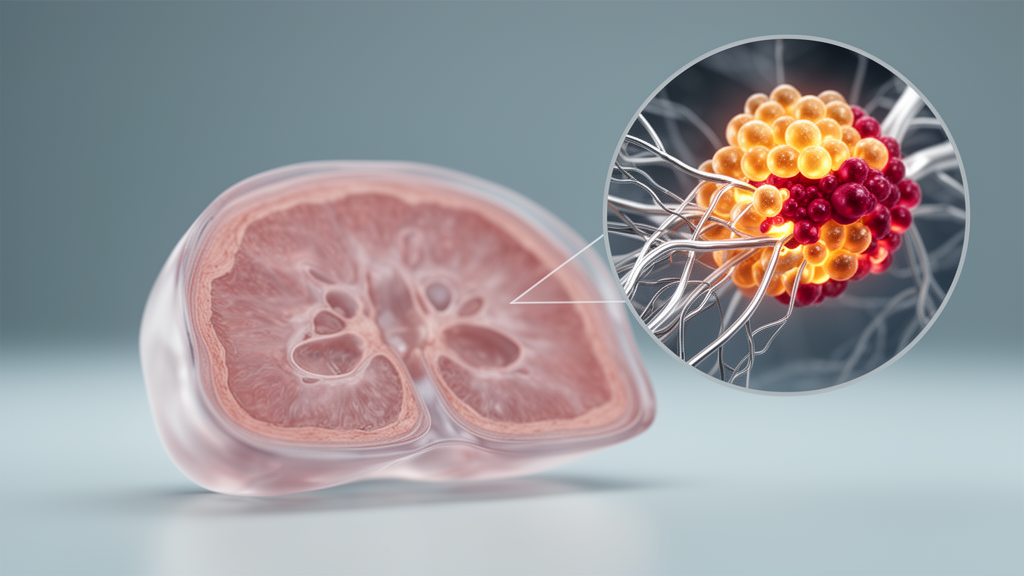
Men whose prostate biopsies show Gleason 6 cancer sometimes learn after surgery that their tumor was more aggressive than the biopsy suggested. A retrospective cohort study published in BMC Urology examined which preoperative clinical and pathological factors were associated with this so-called Gleason score upgrading after radical prostatectomy, and found that prostate-specific antigen density and the presence of perineural invasion were independently associated with the phenomenon.
The single-center analysis drew on 313 patients who underwent radical prostatectomy between January 2018 and September 2024. From this group, the researchers enrolled 124 men who had been diagnosed with Gleason 6 prostate cancer after a multicore biopsy of at least 12 cores and who received radical prostatectomy without any neoadjuvant treatment. Preoperative clinical and pathological variables were collected and analyzed, and optimal cut-off values were determined using receiver operating characteristic curve analysis.
Upgrading was observed in 53 of the 124 patients, while 71 showed no upgrading after surgery. The reported associations corresponded to p values of 0.019 for PSA, 0.001 for PSAD, and less than 0.001 for perineural invasion.
When the variables were tested together in multivariable analysis, elevated PSA density and perineural invasion remained independently associated with Gleason score upgrading. However, the discriminatory performance of PSA density alone was modest, with an area under the receiver operating characteristic curve of 0.680, indicating limited ability on its own to distinguish men whose tumors would be upgraded from those whose tumors would not. The authors concluded that PSA density may provide adjunctive information about the risk of pathological upgrading when interpreted together with other clinicopathological parameters rather than serving as a standalone predictor.
The study also evaluated the De-Ritis ratio, a derived laboratory measure, and found no statistically significant association between it and Gleason score upgrading, with a p value of 0.215. The researchers emphasized that their conclusions apply to this retrospective cohort of patients with biopsy Gleason 6 prostate cancer undergoing radical prostatectomy at a single center, and that the modest predictive performance of PSA density means it should complement, not replace, the broader clinical assessment of upgrading risk.
Subject of Research: Clinicopathological predictors of Gleason score upgrading after radical prostatectomy in men with biopsy Gleason 6 prostate cancer
Article Title: Predictors of upgrading in men diagnosed with gleason 6 prostate cancer a single-center retrospective cohort study
Article References: Öztürk, A., Ergi̇n, İ. E., Saygın, H., & Asdemi̇r, A. (2026). Predictors of upgrading in men diagnosed with gleason 6 prostate cancer a single-center retrospective cohort study. BMC Urology. https://doi.org/10.1186/s12894-026-02435-4
Image Credits: AI Generated
DOI: 10.1186/s12894-026-02435-4
Keywords: prostate cancer, Gleason score upgrading, radical prostatectomy, PSA density, perineural invasion, retrospective cohort, BMC Urology, biopsy, pathology, PSA, Predictors, upgrading
News Source: Nathaniel Bowman. (October 30, 2026). Prostate Cancer Study Links PSA Density and Nerve Invasion to Gleason Upgrading. Scienmag.



