• HOME
  • NEWS
  • EXPLORE
    • CAREER
      • Companies
      • Jobs
    • EVENTS
    • iGEM
      • News
      • Team
    • PHOTOS
    • VIDEO
    • WIKI
  • BLOG
  • COMMUNITY
    • FACEBOOK
    • INSTAGRAM
    • TWITTER
Monday, May 18, 2026
BIOENGINEER.ORG
No Result
View All Result
  • Login
  • HOME
  • NEWS
  • EXPLORE
    • CAREER
      • Companies
      • Jobs
        • Lecturer
        • PhD Studentship
        • Postdoc
        • Research Assistant
    • EVENTS
    • iGEM
      • News
      • Team
    • PHOTOS
    • VIDEO
    • WIKI
  • BLOG
  • COMMUNITY
    • FACEBOOK
    • INSTAGRAM
    • TWITTER
  • HOME
  • NEWS
  • EXPLORE
    • CAREER
      • Companies
      • Jobs
        • Lecturer
        • PhD Studentship
        • Postdoc
        • Research Assistant
    • EVENTS
    • iGEM
      • News
      • Team
    • PHOTOS
    • VIDEO
    • WIKI
  • BLOG
  • COMMUNITY
    • FACEBOOK
    • INSTAGRAM
    • TWITTER
No Result
View All Result
Bioengineer.org
No Result
View All Result
Home NEWS Science News Biology

Promising news from biomedicine: DNA origami more resilient than previously understood

Bioengineer by Bioengineer
May 30, 2018
in Biology
Reading Time: 2 mins read
0
Share on FacebookShare on TwitterShare on LinkedinShare on RedditShare on Telegram
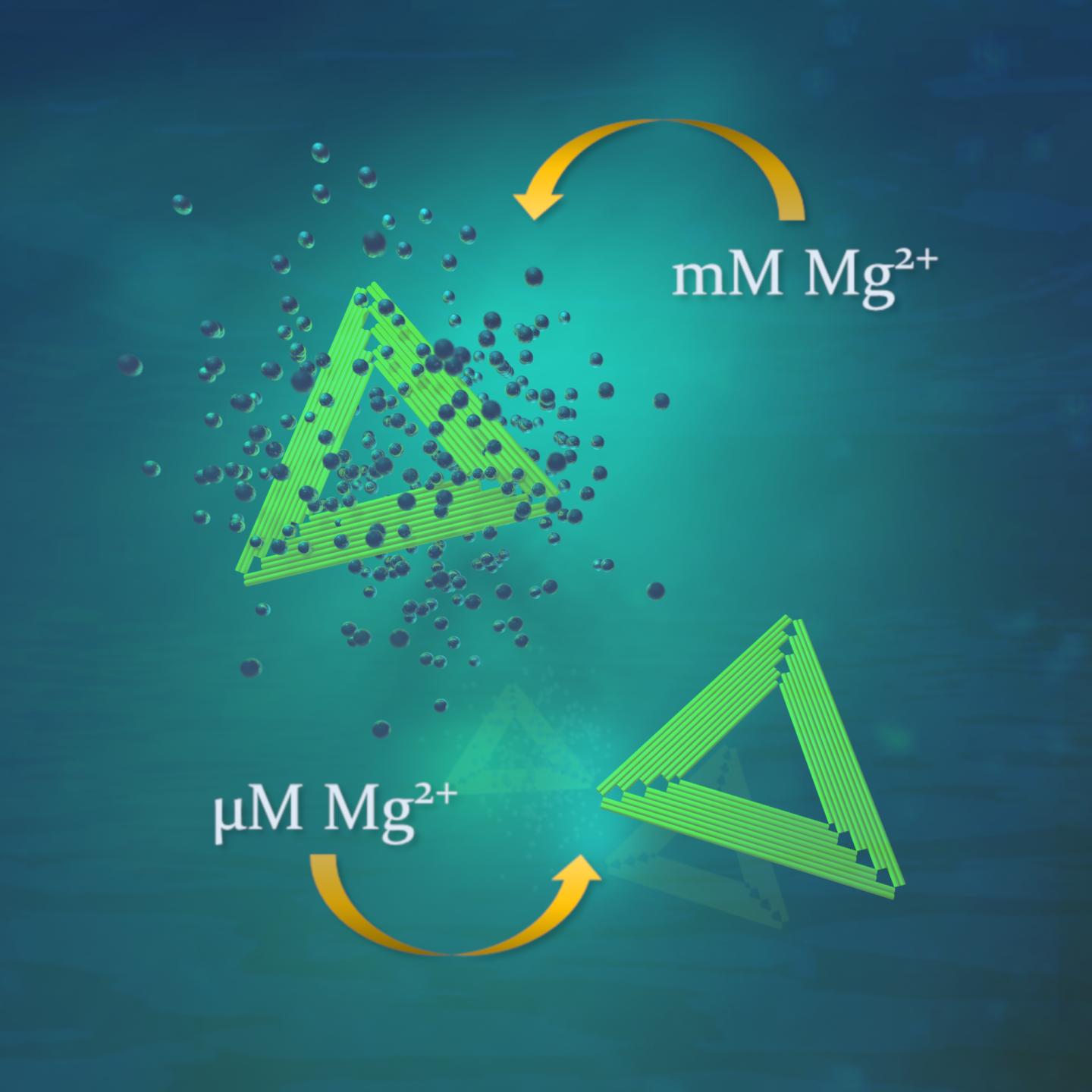
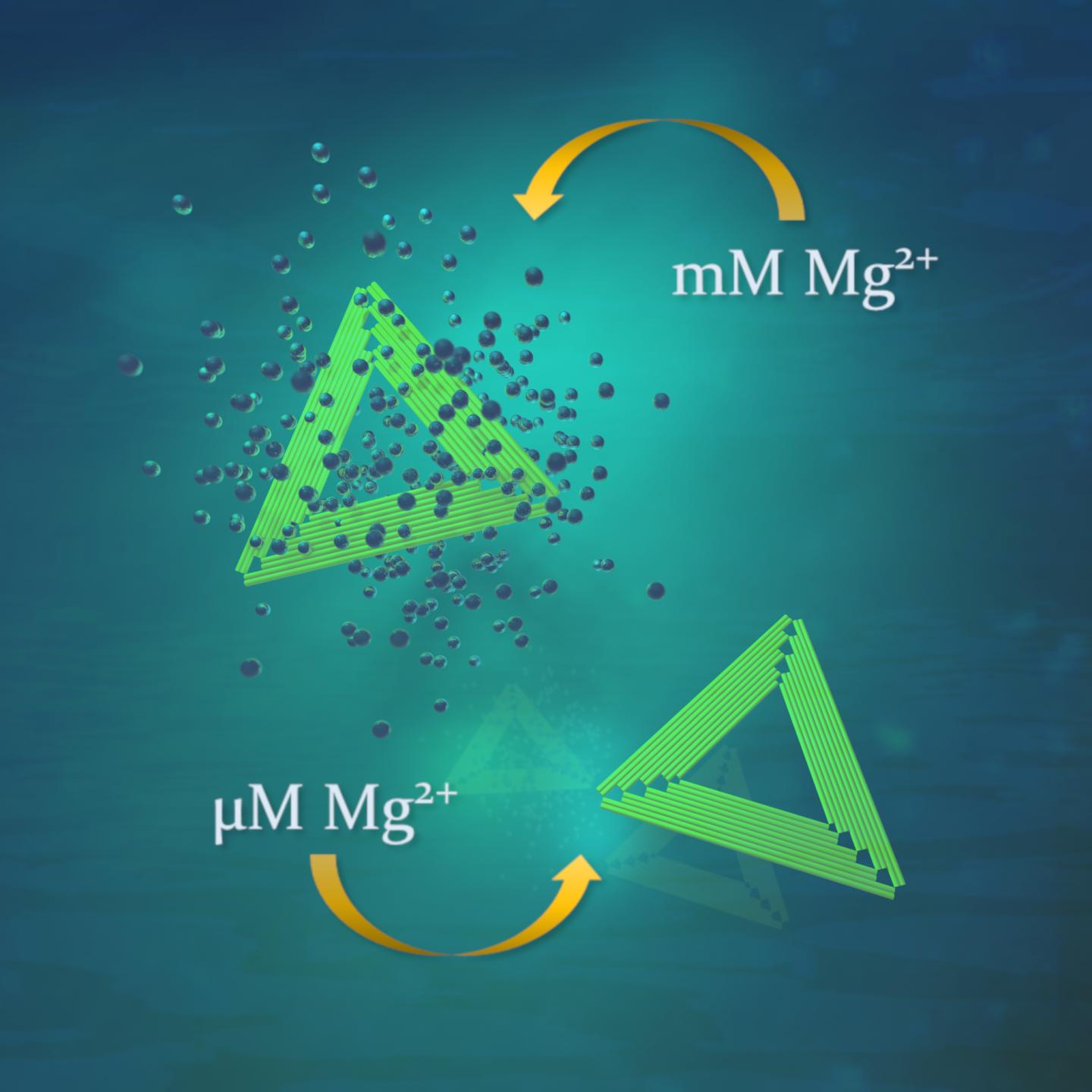
IMAGE

Credit: Boxuan Shen and Veikko Linko/Aalto University

The DNA origami technique is a widely used method for making complex, yet well-defined nanostructures, with applications in biophysics, molecular biology, as well as drug and enzyme delivery. A major challenge, however, has been in achieving long-lasting stability under the conditions required for these applications.

Until now, the technique has required high concentrations of magnesium well above those found in the human body.

"Conventional DNA origami assembly requires levels of magnesium easily 10-30 times as high as those in normal physiological conditions. With our method, we can go below one thousandth of the minimum magnesium concentration previously reported," says Adjunct Professor Veikko Linko from Aalto University, who co-led the study with Dr. Adrian Keller of Paderborn University.

Key to the gentle buffer exchange method developed by the researchers is removing free ions from the buffer solution efficiently but not all residual magnesium from the nanostructures. Previous research has identified low magnesium levels as one of the most critical parameters that reduce DNA origami stability in cell culture media.

"We found – quite surprisingly – that just Tris and pure water worked well with low-magnesium levels for all types of structures," explains Linko.

Tris is a common component of buffer solutions used, for example, in biochemistry applications. Findings show that phosphate-based buffers with a high enough concentration of sodium or potassium can also stabilize DNA origami.

The study investigated the stability of quasi-one-dimensional, two-dimensional and three-dimensional DNA origami objects. The nanostructures achieved using the technique showed strong structural integrity, maintained even for extended periods of time.

"We can store the structures in low-magnesium conditions for weeks and even months without seeing any structural defects. These findings might pave the way for a plethora of biomedical uses that were previously thought impossible, as for example fluorophores and many enzymes are sensitive to magnesium levels," envisions Linko.

The researchers further observed that the more tightly packed the helices in their DNA objects were, the more sensitive they were to the environment in low-magnesium conditions. This suggests that the stability of DNA origami can be enhanced through the optimization of the design procedure.

The results have been published in Angewandte Chemie International Edition and the article has been selected as a "Hot Paper".

###

Media Contact

Veikko Linko
[email protected]
358-456-739-997
@aaltouniversity

http://www.aalto.fi/en/

Original Source

http://www.aalto.fi/en/current/news/2018-05-29-005/ http://dx.doi.org/10.1002/acie.201802890

Share12Tweet8Share2ShareShareShare2

Related Posts

Uncovering C. elegans Immunity via Genetic Screens — Biology

Uncovering C. elegans Immunity via Genetic Screens

May 16, 2026
Single mother must adapt swiftly — the survival of her colony depends on it — Biology

Single mother must adapt swiftly — the survival of her colony depends on it

May 15, 2026

Why Are Nearly Everyone Right-Handed? It Might Be Linked to How We Learned to Walk

May 15, 2026

Excessive Neuronal Activity Initiates Severe Autoimmune Brain Disorder

May 15, 2026
Please login to join discussion

POPULAR NEWS

  • Research Indicates Potential Connection Between Prenatal Medication Exposure and Elevated Autism Risk

    844 shares
    Share 338 Tweet 211
  • New Study Reveals Plants Can Detect the Sound of Rain

    730 shares
    Share 291 Tweet 182
  • Salmonella Haem Blocks Macrophages, Boosts Infection

    62 shares
    Share 25 Tweet 16
  • Breastmilk Balances E. coli and Beneficial Bacteria in Infant Gut Microbiomes

    58 shares
    Share 23 Tweet 15

About

We bring you the latest biotechnology news from best research centers and universities around the world. Check our website.

Follow us

Recent News

AI Tool in Radiotherapy Advances Global Fight to Eradicate Cervical Cancer

Detecting Illicit Bitcoin Transactions with Temporal Graph Learning

New Study Reveals the Massive Economic Impact of Tuberculosis

Subscribe to Blog via Email

Enter your email address to subscribe to this blog and receive notifications of new posts by email.

Join 82 other subscribers
  • Contact Us

Bioengineer.org © Copyright 2023 All Rights Reserved.

Welcome Back!

Login to your account below

Forgotten Password?

Retrieve your password

Please enter your username or email address to reset your password.

Log In
No Result
View All Result
  • Homepages
    • Home Page 1
    • Home Page 2
  • News
  • National
  • Business
  • Health
  • Lifestyle
  • Science

Bioengineer.org © Copyright 2023 All Rights Reserved.