• HOME
  • NEWS
  • EXPLORE
    • CAREER
      • Companies
      • Jobs
    • EVENTS
    • iGEM
      • News
      • Team
    • PHOTOS
    • VIDEO
    • WIKI
  • BLOG
  • COMMUNITY
    • FACEBOOK
    • INSTAGRAM
    • TWITTER
Friday, June 26, 2026
BIOENGINEER.ORG
No Result
View All Result
  • Login
  • HOME
  • NEWS
  • EXPLORE
    • CAREER
      • Companies
      • Jobs
        • Lecturer
        • PhD Studentship
        • Postdoc
        • Research Assistant
    • EVENTS
    • iGEM
      • News
      • Team
    • PHOTOS
    • VIDEO
    • WIKI
  • BLOG
  • COMMUNITY
    • FACEBOOK
    • INSTAGRAM
    • TWITTER
  • HOME
  • NEWS
  • EXPLORE
    • CAREER
      • Companies
      • Jobs
        • Lecturer
        • PhD Studentship
        • Postdoc
        • Research Assistant
    • EVENTS
    • iGEM
      • News
      • Team
    • PHOTOS
    • VIDEO
    • WIKI
  • BLOG
  • COMMUNITY
    • FACEBOOK
    • INSTAGRAM
    • TWITTER
No Result
View All Result
Bioengineer.org
No Result
View All Result
Home NEWS Science News Biology

Promising breath-test for cancer

Bioengineer by Bioengineer
October 5, 2020
in Biology
Reading Time: 2 mins read
0
IMAGE
Share on FacebookShare on TwitterShare on LinkedinShare on RedditShare on Telegram

Potential for early warning of head, neck cancer
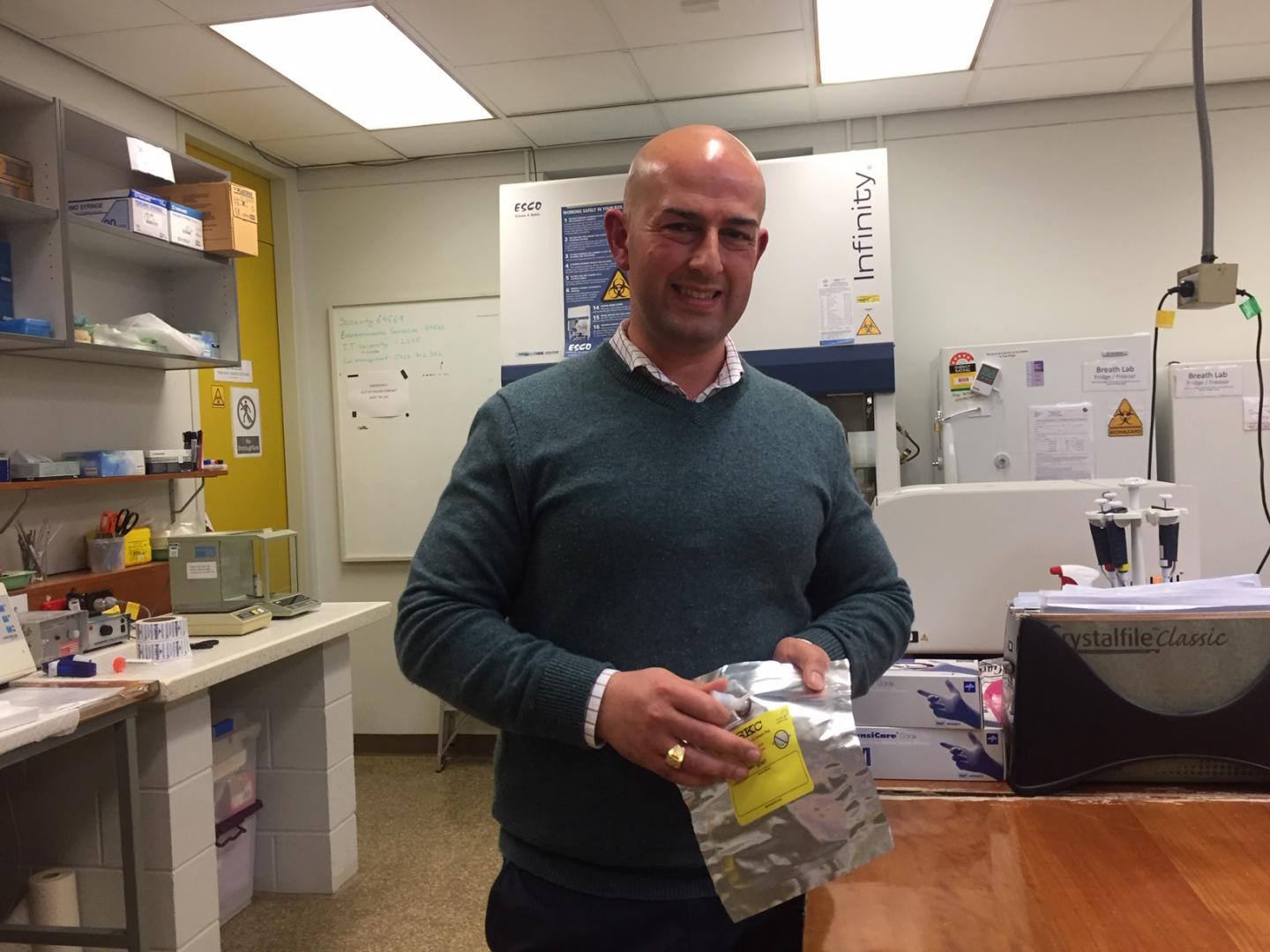
IMAGE

Credit: Flinders University

The global quest to use a person’s breath analysis for rapid, inexpensive and accurate early-stage testing for cancer and other diseases has taken a leap forward.

In a new paper in the British Journal of Cancer, Flinders University researchers have reported significant progress in developing a method to test exhaled breath profiles which accurately differentiate head and neck cancer from non-cancer patients.

The Australian researchers collected breath samples from 181 patients suspected of having early-stage head and neck squamous cell carcinoma (HNSCC) before any treatment began.

“We sought to determine the diagnostic accuracy of breath analysis as a non-invasive test for detecting head and neck cancer, which in time may result in a simple method to improve treatment outcomes and patient morbidity,” says lead researchers Dr Roger Yazbek and Associate Professor Eng Ooi.

Worldwide, head and neck cancer accounts for 6% of all cancers, killing more than 300,000 people per year globally. Tobacco, alcohol and poor oral hygiene are known major risk factors for this cancer.

A surge in human papilloma virus (HPV)-associated head and neck cancers is seeing these cancers affecting a much younger population, the researchers say.

Current therapies are effective at treating early-stage disease, however late-stage presentations are common, and often associated with poor prognosis and high treatment-related morbidity.

In the Australian study, a selected ion flow-tube mass spectrometer was used to analyse breath for volatile organic compounds. Using statistical modelling, the Flinders researchers were able to develop a breath test that could differentiate cancer and control (benign disease) patients, with an average sensitivity and specificity of 85%.

Diagnosis was confirmed by analysis of tissue biopsies.

“With these strong results, we hope to trial the method in primary care settings, such as GP clinics, to further develop its use in early-stage screening for HNSCC in the community,” says co-lead author Dr Nuwan Dharmawardana.

###

The article, Development of a non-invasive exhaled breath test for the diagnosis of head and neck cancer (September 2020) by Nuwan Dharmawardana, Thomas Goddard, Charmaine Woods, David I. Watson, Eng H. Ooi and Roger Yazbeck has been published in the
British Journal of Cancer DOI: 10.1038/s41416-020-01051-9

Media Contact
Roger Yazbek
[email protected]

Related Journal Article

http://dx.doi.org/10.1038/s41416-020-01051-9

Tags: cancerDiagnosticsHealth Care Systems/ServicesMedicine/HealthMolecular BiologyMortality/LongevityPublic HealthSmoking/Tobacco
Share12Tweet8Share2ShareShareShare2

Related Posts

Natural Hallucinogens: Evolution’s Ecological Tools, Not Mere Chemical Byproducts

June 25, 2026

This Famous Butterfly Revealed: Three Distinct Species Hidden in One

June 25, 2026

Scientists Attack Soybean Cyst Nematode by Starving Its Food Source

June 25, 2026

Decoding the Secret Code of a Crucial Immune Sensor

June 24, 2026
Please login to join discussion

POPULAR NEWS

  • Saying Goodbye to PGY-6: Pediatric Fellowship Realities

    103 shares
    Share 41 Tweet 26
  • Multi-Hospital Study Reveals Long Covid Burden Is Twice as High as Current Estimates

    92 shares
    Share 36 Tweet 23
  • Detection of EDCs in Breast Milk and Infant Urine Up to Six Months Highlights Early Exposure Risks

    77 shares
    Share 31 Tweet 19
  • New Drug Candidate Developed at McMaster Shows Potential for Treating Brain Cancer

    58 shares
    Share 23 Tweet 15

About

We bring you the latest biotechnology news from best research centers and universities around the world. Check our website.

Follow us

Recent News

Tracking Lanthanide-Labeled Microplastics in Plants

POSTECH Researchers Slash Cost of Reconstituted Cell-Free Systems by 95%

AI and Physics Collaborate to Design Advanced Hydrogen Storage Materials

Subscribe to Blog via Email

Success! An email was just sent to confirm your subscription. Please find the email now and click 'Confirm' to start subscribing.

Join 82 other subscribers
  • Contact Us

Bioengineer.org © Copyright 2023 All Rights Reserved.

Welcome Back!

Login to your account below

Forgotten Password?

Retrieve your password

Please enter your username or email address to reset your password.

Log In
No Result
View All Result
  • Homepages
    • Home Page 1
    • Home Page 2
  • News
  • National
  • Business
  • Health
  • Lifestyle
  • Science

Bioengineer.org © Copyright 2023 All Rights Reserved.