• HOME
  • NEWS
  • EXPLORE
    • CAREER
      • Companies
      • Jobs
    • EVENTS
    • iGEM
      • News
      • Team
    • PHOTOS
    • VIDEO
    • WIKI
  • BLOG
  • COMMUNITY
    • FACEBOOK
    • INSTAGRAM
    • TWITTER
Thursday, October 29, 2026
BIOENGINEER.ORG
No Result
View All Result
  • Login
  • HOME
  • NEWS
  • EXPLORE
    • CAREER
      • Companies
      • Jobs
        • Lecturer
        • PhD Studentship
        • Postdoc
        • Research Assistant
    • EVENTS
    • iGEM
      • News
      • Team
    • PHOTOS
    • VIDEO
    • WIKI
  • BLOG
  • COMMUNITY
    • FACEBOOK
    • INSTAGRAM
    • TWITTER
No Result
View All Result
Bioengineer.org
No Result
View All Result
Home NEWS Science News Biology

Prodigiosin Shields Stem Cells From Hypoxia Damage in Cell Study

by
October 29, 2026
in Biology
Reading Time: 2 mins read
0
Prodigiosin Shields Stem Cells From Hypoxia Damage in Cell Study

Prodigiosin Shields Stem Cells From Hypoxia Damage in Cell Study

Share on FacebookShare on TwitterShare on LinkedinShare on RedditShare on Telegram

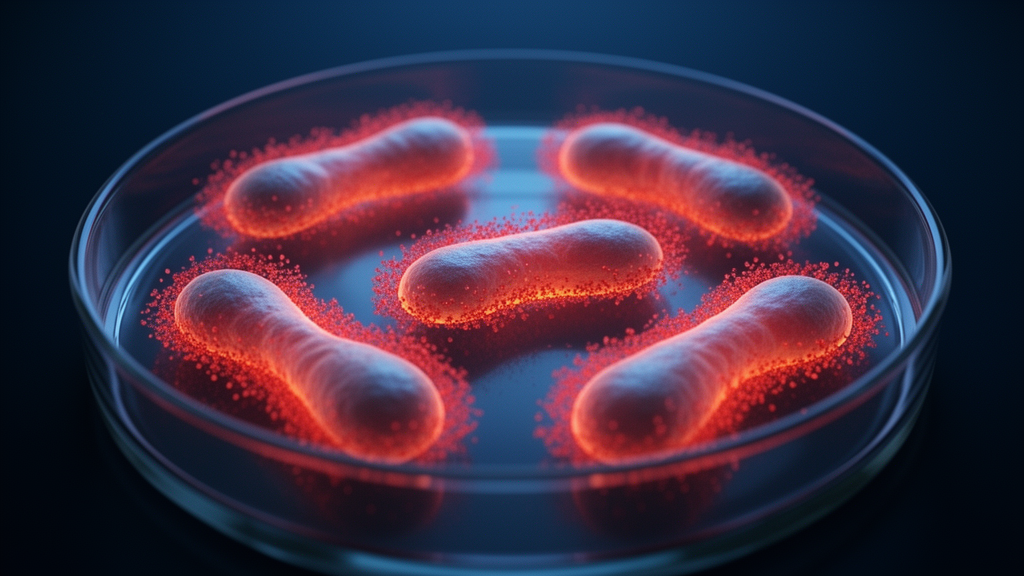
Bone marrow-derived mesenchymal stem cells (BMSCs) are a mainstay of regenerative medicine, but they often die quickly after transplantation because implanted tissue is starved of oxygen. A new cell-culture study reports that prodigiosin protected BMSCs from chemically induced hypoxic injury, apparently by acting on HIF-1α/YAP-associated signaling.

Researchers at Zhujiang Hospital, Southern Medical University, cultured BMSCs and confirmed their identity by flow cytometry. To mimic a hypoxic microenvironment, they exposed the cells to cobalt chloride (CoCl2, 100 micromolar for 24 hours), a standard chemical method for inducing hypoxia-like stress in vitro. This exposure reduced cell viability, increased apoptosis, promoted accumulation of reactive oxygen species (ROS), and raised HIF-1α expression.

The hypoxic stress also shifted the cells toward cell death at the protein level: the ratio of phosphorylated YAP to total YAP (p-YAP/YAP) decreased, while the pro-apoptotic proteins Bax and active caspase-3 increased. These markers were measured by Western blot, with apoptosis assessed by Annexin V/PI staining and DAPI staining, ROS by DHE fluorescence, and viability by CCK-8 assay.

When the cells were treated with prodigiosin at 20 nanomolar, the drug alleviated the CoCl2-induced cytotoxicity. Treated cells showed less ROS accumulation, reduced apoptosis, and a partial restoration of the p-YAP/YAP ratio, suggesting that prodigiosin’s protective effect may involve reactivating YAP signaling under hypoxic stress.

To probe the pathway further, the team used two independent interventions. They treated cells with verteporfin (0.5 micromolar), a YAP inhibitor, and in separate experiments knocked down HIF-1α using siRNA. Both interventions reduced hypoxia-induced apoptosis, which the authors interpret as evidence that HIF-1α/YAP-associated signaling participates in BMSC injury under hypoxic stress.

The findings, published in Frontiers in Systems Biology, are strictly preliminary with respect to therapy. The work was conducted entirely in cultured cells exposed to a chemical hypoxia mimic, not in living tissue or patients, and the abstract does not report tests of prodigiosin in animal models or transplantation settings. Statistical analysis used ANOVA or unpaired t-tests with a significance threshold of P < 0.05.

The authors frame the result as a step toward improving stem cell survival in hypoxic regenerative environments, where poor engraftment limits therapeutic efficacy.

For now, the reported result is a measurable protective effect in a cell model: less oxidative stress, fewer apoptotic cells, and partially restored YAP phosphorylation when prodigiosin was present during chemically induced hypoxia.

Subject of Research: Prodigiosin's protective effect on hypoxia-stressed bone marrow-derived mesenchymal stem cells in cell culture

Article Title: Prodigiosin protects bone marrow-derived mesenchymal stem cells from hypoxia-induced apoptosis by modulating HIF-1α/YAP-associated signaling

Article References: Liu, Y., Xu, H., Li, Z., & Zhu, L. (2026). Prodigiosin protects bone marrow-derived mesenchymal stem cells from hypoxia-induced apoptosis by modulating HIF-1α/YAP-associated signaling. Frontiers in Systems Biology, 6, Article 1947639. https://doi.org/10.3389/fsysb.2026.1947639

Image Credits: AI Generated

DOI: 10.3389/fsysb.2026.1947639

Keywords: prodigiosin, mesenchymal stem cells, hypoxia, apoptosis, HIF-1α, YAP, reactive oxygen species, cobalt chloride, verteporfin, regenerative medicine, cell culture, protects

News Source: Drew Townsend. (October 29, 2026). Prodigiosin Shields Stem Cells From Hypoxia Damage in Cell Study. Scienmag.


Tags: ApoptosisCell culturecobalt chlorideHIF-1αhypoxiamesenchymal stem cellsprodigiosinprotectsreactive oxygen speciesRegenerative MedicineverteporfinYAP
Share12Tweet7Share2ShareShareShare1

Related Posts

Genetic Study Links Panic Disorder Liability to Lower Blood Triglyceride Levels

Genetic Study Links Panic Disorder Liability to Lower Blood Triglyceride Levels

October 29, 2026
New Bayesian Model Extracts Shared Microbial Signals Across Heterogeneous Studies

New Bayesian Model Extracts Shared Microbial Signals Across Heterogeneous Studies

October 29, 2026

Heavy Grazing Reshapes Desert Steppe Soil Microbes, With Deepest Layers Hit Hardest

October 29, 2026

Porcine parvovirus 4 linked to wasting syndrome in Brazilian pigs

October 29, 2026

POPULAR NEWS

  • Simulations Show Greening Could Cool Japan's Fukuyama Station Square by Nearly 0.6°C

    Simulations Show Greening Could Cool Japan’s Fukuyama Station Square by Nearly 0.6°C

    29 shares
    Share 12 Tweet 7
  • Benign Tumor at a Lung Surgery Port Site Fooled Doctors Into Fearing Cancer Recurrence

    29 shares
    Share 12 Tweet 7
  • Genetic Study Links Panic Disorder Liability to Lower Blood Triglyceride Levels

    29 shares
    Share 12 Tweet 7
  • New Bayesian Model Extracts Shared Microbial Signals Across Heterogeneous Studies

    29 shares
    Share 12 Tweet 7

About

We bring you the latest biotechnology news from best research centers and universities around the world. Check our website.

Follow us

Recent News

Simulations Show Greening Could Cool Japan’s Fukuyama Station Square by Nearly 0.6°C

Benign Tumor at a Lung Surgery Port Site Fooled Doctors Into Fearing Cancer Recurrence

Genetic Study Links Panic Disorder Liability to Lower Blood Triglyceride Levels

Subscribe to Blog via Email

Enter your email address to subscribe to this blog and receive notifications of new posts by email.

Join 85 other subscribers
  • Contact Us

Bioengineer.org © Copyright 2023 All Rights Reserved.

Welcome Back!

Login to your account below

Forgotten Password?

Retrieve your password

Please enter your username or email address to reset your password.

Log In
No Result
View All Result
  • Homepages
    • Home Page 1
    • Home Page 2
  • News
  • National
  • Business
  • Health
  • Lifestyle
  • Science

Bioengineer.org © Copyright 2023 All Rights Reserved.