Hereditary hearing loss may be one step closer to genetic correction after researchers used prime editing to repair a common mutation in the GJB2 gene in cultured human cells. The study, published in Gene Therapy, focuses on c.235delC, a single-DNA-letter deletion that is the most prevalent pathogenic GJB2 variant in many East Asian populations. Rather than compensating for impaired hearing with devices, the researchers designed a molecular editing system intended to restore the gene’s original sequence and recover its function.
The GJB2 gene encodes connexin 26, a protein that forms gap junction channels between neighboring cells. These channels help maintain the ionic environment required for normal communication within the cochlea, the sensory organ responsible for hearing. When both copies of GJB2 carry damaging variants, connexin 26 production or activity can be disrupted, leading to congenital or early-onset sensorineural hearing loss. The c.235delC variant removes one cytosine from the gene and alters the downstream reading frame, producing a defective protein.
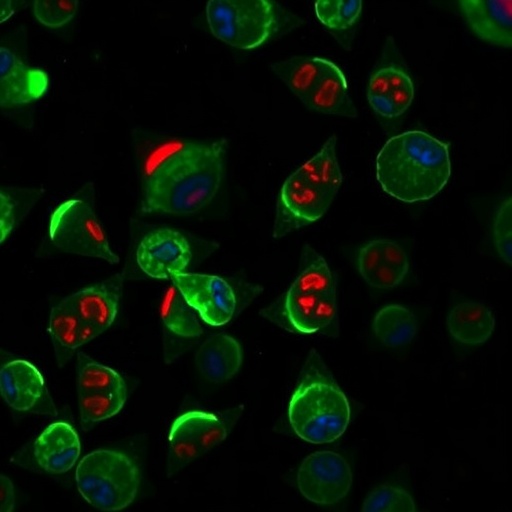
To study the mutation in a controlled setting, the team developed a cellular model called 293T-GJB2mut-EGFP. The model was engineered to carry the c.235delC alteration and incorporated an enhanced green fluorescent protein, or EGFP, reporter. This fluorescent signal provided a practical way to monitor whether editing restored the intended genetic configuration or the associated molecular output. Although 293T cells are not inner-ear cells, they offer a tractable platform for optimizing editing components before testing in more specialized models.
The investigators selected prime editing, a genome-editing method that can write a desired DNA sequence into a target site without requiring a double-strand break. The approach uses a prime editor protein, derived from a Cas9 nickase fused to a reverse transcriptase, together with a prime-editing guide RNA, or pegRNA. The pegRNA both directs the editor to the target DNA and carries a template containing the corrected sequence. After the target strand is nicked, the reverse transcriptase copies the repair template into the genome, allowing the cell’s own DNA-repair machinery to incorporate the correction.
A major part of the work involved optimizing the pegRNA architecture. The researchers tested the length of the primer-binding site, which anchors the editing complex to the nicked DNA, and the reverse-transcription template, which encodes the desired repair. The most effective basic design used a nine-nucleotide primer-binding site and a 16-nucleotide reverse-transcription template. With the PE2 editor, this configuration corrected the mutation in 37.15 percent of the tested cells, establishing a baseline for subsequent improvements.
The team also investigated whether modifying the 3′ end of the pegRNA could improve its stability or activity. Adding either a Csy4 recognition motif or an evopreQ1 motif produced editing efficiencies comparable to the unmodified optimized design, with correction rates near 37 percent. Further refinement came from introducing two synonymous changes into the editing template. These substitutions did not alter the encoded protein but were designed to improve editing performance and reduce the possibility of repeated recognition by the editing machinery. The resulting pegRNAMMD2 increased correction efficiency to 48.94 percent.
The researchers next compared seven prime-editor variants. Among them, PEmax displayed the highest intrinsic activity, reaching 49.14 percent correction under the conditions tested. PEmax is an engineered editor intended to improve expression, nuclear localization, and overall editing performance. The study then combined this editor with a PE3b nicking strategy. In this configuration, an additional single-guide RNA directs a nick to the opposite DNA strand, helping the cell resolve the edited intermediate. Positioning the nick at the +1 site produced the strongest result, raising correction efficiency to 58.05 percent.
Because prime editors are large proteins, delivering them with adeno-associated virus remains a major technical challenge. AAV vectors are widely studied for in vivo gene therapy because of their relatively favorable safety profile and ability to reach selected tissues, but their packaging capacity is limited. To address this constraint, the researchers developed a dual-AAV system in which PEmax was divided into two fragments and reassembled inside cells through split intein technology. The editor was bisected between amino acid residues 1153 and 1154, allowing the two halves to be packaged separately.
Split inteins are protein elements that can mediate trans-splicing: once the two protein fragments are produced in the same cell, the intein sequences promote their joining into a functional full-length protein. The newly tested split site was compared with a previously reported division between residues 1024 and 1025. Following optimization of the nicking guide, the 1153–1154 design achieved correction efficiency comparable to the earlier split configuration, with no statistically significant difference between the two systems. This result suggests that alternative cleavage points may provide additional flexibility when optimizing dual-AAV prime-editing vectors.
The study also examined potential unintended editing at the four highest-ranked predicted off-target sites. Deep sequencing detected no significant editing above background at these locations under the experimental conditions. The result is encouraging, but it does not establish complete genomic safety: off-target activity can depend on cell type, delivery dose, editor expression time, guide sequence, and the sensitivity of the detection method. The work was performed in vitro, and the optimized system will require validation in inner-ear models, animal studies, and eventually carefully designed clinical investigations before it could be considered for therapeutic use.
Together, the findings provide a detailed optimization path for correcting GJB2 c.235delC with prime editing. By combining pegRNA engineering, synonymous template changes, the PEmax editor, PE3b nicking, and a dual-AAV delivery strategy, the researchers achieved correction efficiencies approaching 60 percent in the cellular model. The results do not yet represent a treatment for hereditary deafness, but they demonstrate how genome editors and viral delivery systems can be tuned as an integrated platform. For patients carrying this common mutation, the study offers a molecular proof of concept for future gene therapies aimed not merely at improving hearing, but at repairing the genetic defect itself.
Subject of Research: Prime-editing correction of the hereditary hearing-loss-associated GJB2 c.235delC mutation in vitro.
Article Title: Precision correction of the GJB2 c.235delC mutation by prime editing in vitro.
Article References: Jin, J., Lv, X., Li, Y. et al. “Precision correction of the GJB2 c.235delC mutation by prime editing in vitro.” Gene Therapy (2026). https://doi.org/10.1038/s41434-026-00638-w
Image Credits: AI Generated
DOI: 10.1038/s41434-026-00638-w
Keywords: hereditary hearing loss, GJB2, c.235delC, prime editing, PEmax, PE3b, pegRNA, dual-AAV delivery, split intein, gene therapy
Tags: advances in precision genome editing techniquesC.235delC mutation in GJB2 geneconnexin 26 role in cochlear functiondevelopment of cellular models for hearing lossEast Asian population-specific GJB2 mutationsgene editing in human cultured cellshereditary hearing loss gene therapymolecular correction of pathogenic variantspotential for genetic restoration of hearingprime editing for GJB2 gene mutation correctiontargeted DNA repair in genetic deafnessuse of EGFP reporter in gene editing studies