In a groundbreaking study published in Nature Communications, researchers have unveiled new insights into the molecular orchestration of neural tube formation, a pivotal process in early embryonic development. The team, led by Wang, Alvarez, Tan, and colleagues, utilized advanced quantitative live imaging to dissect the role of the PRICKLE1 protein in junctional neural tube morphogenesis. Remarkably, their findings demonstrate that PRICKLE1 exerts its control over neural tube architecture independently of the widely studied Planar Cell Polarity (PCP) pathway, challenging long-held assumptions about developmental biology.
Neural tube formation is a critical event during embryogenesis that establishes the precursor to the central nervous system, including the brain and spinal cord. Errors in this process can result in severe congenital malformations such as spina bifida and anencephaly. Understanding the molecular mechanisms underlying neural tube morphogenesis, therefore, holds immense biomedical importance. Traditionally, PCP signaling has been regarded as an essential regulator of tissue polarity and directional cell behaviors that drive neural tube closure. However, the new data reveal a previously unappreciated function of PRICKLE1, a core PCP component, that transcends its canonical role.
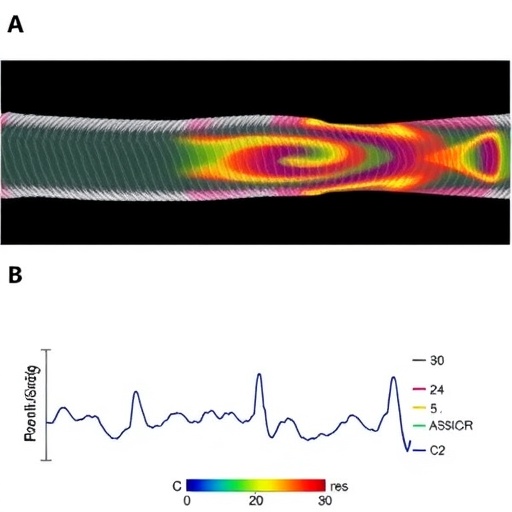
Utilizing state-of-the-art live-cell imaging techniques, the research team visualized neural tube formation in real-time within developing embryos. These quantitative imaging tools allowed for unprecedented resolution of cell junction dynamics and morphogenetic behavior at a single-cell and molecular level. Through meticulous temporal and spatial analysis, it was evident that PRICKLE1 localized predominantly at cell junctions, orchestrating the remodeling processes required for the neural tube’s precise shaping. This junctional localization is essential for morphogenesis but occurs without engaging the classical planar polarity signaling axis, presenting a paradigm shift in our understanding.
The researchers conducted a series of genetic manipulations, including targeted knockdowns and fluorescent tagging, to assess PRICKLE1’s functional contributions. Loss-of-function experiments confirmed that PRICKLE1 deficiency leads to profound disruptions in neural tube closure, manifested by aberrant cellular arrangements and failure to maintain cohesive epithelial structures. These phenotypes occur despite the integrity of PCP signaling pathways remaining intact, suggesting that PRICKLE1’s role operates via an independent molecular mechanism rooted in junctional remodeling rather than planar polarity signal transduction.
This discovery holds transformative implications for developmental neurobiology and congenital disease research. By decoupling PRICKLE1 functions from classical PCP pathways, the study paves the way for novel therapeutic approaches that could target specific junctional mechanisms to correct or prevent neural tube defects. Furthermore, the quantitative live imaging approach sets a new standard for investigating morphogenetic processes in vivo, enabling dynamic assessments that move beyond static snapshots of tissue architecture.
At the molecular level, PRICKLE1 was found to interact with a unique cohort of adherens junction components and cytoskeletal regulators, implicating it as a nexus point in the molecular machinery responsible for maintaining epithelial integrity during neural folding. These interactions underscore the multifunctionality of PRICKLE1 and highlight the complexity of tissue morphogenesis, where proteins traditionally linked to signaling can adopt structural roles critical for developmental remodeling.
The study also elaborates on how PRICKLE1’s junctional activity is finely tuned through intracellular localization and post-translational modifications, which modulate its participation in morphogenetic events. By dissecting these regulatory layers, the authors provide a comprehensive framework to understand how spatial and temporal control of protein function is achieved during embryonic development. This advances our fundamental knowledge of cell biology and suggests broader principles applicable to other morphogenetic systems.
Notably, the research addresses previously observed but poorly understood anomalies in PCP mutant phenotypes. By identifying PRICKLE1’s PCP-independent function, the study resolves inconsistencies wherein some neural tube defects occurred independently of conventional planar polarity disruptions. This nuanced understanding reconciles disparate experimental outcomes and opens new avenues for probing the molecular diversity underlying developmental disorders.
The methodological innovation demonstrated in this paper is equally significant. The implementation of sophisticated imaging modalities coupled with rigorous quantitative analysis allows for high-definition visualization of developmental processes in their native context. This dynamic imaging methodology can be adapted for various tissue types and developmental stages, enhancing the analytical toolkit available to developmental biologists worldwide.
Importantly, these findings encourage a reevaluation of the roles assigned to core PCP proteins, challenging the canonical dogma and promoting a more integrative view of morphogenetic regulation. The concept that a single protein can have multiple, context-dependent functions invites broader inquiries into the multifunctionality of developmental molecules, which may be essential for the robustness of embryogenesis.
The interdisciplinary team’s collaborative approach, combining expertise in cell biology, genetics, imaging technology, and computational analysis, was instrumental in achieving these insights. Their work exemplifies how converging methodologies can unravel the complexity of biological processes that have remained enigmatic despite decades of research.
The implications extend beyond developmental biology, touching on regenerative medicine and tissue engineering. Understanding how PRICKLE1 modulates epithelial junctions could inform strategies to engineer tissues with precise architectural properties or to stimulate regenerative processes in damaged neural tissue, thereby impacting translational research sectors.
Future studies will likely explore the molecular interactions governing PRICKLE1’s junctional functions in greater detail, including potential cross-talk with other signaling pathways and cytoskeletal networks. There is also an interest in how environmental factors and genetic variations influence PRICKLE1-mediated morphogenesis, which could illuminate susceptibility factors for neural tube defects in human populations.
Ultimately, this study with its meticulous quantitative live imaging approach and molecular dissection establishes a new conceptual framework for neural tube morphogenesis and highlights PRICKLE1 as a versatile regulator beyond the paradigm of planar cell polarity. It challenges the scientific community to rethink fundamental developmental mechanisms and offers promising directions for biomedical research aimed at congenital disorder prevention.
Subject of Research: Neural tube morphogenesis and the role of PRICKLE1 independent of Planar Cell Polarity mechanisms.
Article Title: Quantitative live imaging reveals PRICKLE1 controls junctional neural tube morphogenesis independent of Planar Cell Polarity.
Article References:
Wang, J.X., Alvarez, Y.D., Tan, S.Z. et al. Quantitative live imaging reveals PRICKLE1 controls junctional neural tube morphogenesis independent of Planar Cell Polarity. Nat Commun 17, 3654 (2026). https://doi.org/10.1038/s41467-026-71242-0
Image Credits: AI Generated
DOI: https://doi.org/10.1038/s41467-026-71242-0
Tags: congenital neural tube defectsembryonic central nervous system formationlive-cell imaging in developmental biologymolecular regulation of neural tube shapeneural tube closure molecular biologyneural tube congenital malformationsneural tube formation in embryogenesisneural tube morphogenesis mechanismsPlanar Cell Polarity independent pathwaysPRICKLE1 protein functionquantitative imaging of embryonic developmentrole of PRICKLE1 in development