• HOME
  • NEWS
  • EXPLORE
    • CAREER
      • Companies
      • Jobs
    • EVENTS
    • iGEM
      • News
      • Team
    • PHOTOS
    • VIDEO
    • WIKI
  • BLOG
  • COMMUNITY
    • FACEBOOK
    • INSTAGRAM
    • TWITTER
Wednesday, June 24, 2026
BIOENGINEER.ORG
No Result
View All Result
  • Login
  • HOME
  • NEWS
  • EXPLORE
    • CAREER
      • Companies
      • Jobs
        • Lecturer
        • PhD Studentship
        • Postdoc
        • Research Assistant
    • EVENTS
    • iGEM
      • News
      • Team
    • PHOTOS
    • VIDEO
    • WIKI
  • BLOG
  • COMMUNITY
    • FACEBOOK
    • INSTAGRAM
    • TWITTER
  • HOME
  • NEWS
  • EXPLORE
    • CAREER
      • Companies
      • Jobs
        • Lecturer
        • PhD Studentship
        • Postdoc
        • Research Assistant
    • EVENTS
    • iGEM
      • News
      • Team
    • PHOTOS
    • VIDEO
    • WIKI
  • BLOG
  • COMMUNITY
    • FACEBOOK
    • INSTAGRAM
    • TWITTER
No Result
View All Result
Bioengineer.org
No Result
View All Result
Home NEWS Science News Health

Preventing lung cancer’s unwelcome return

Bioengineer by Bioengineer
July 13, 2021
in Health
Reading Time: 2 mins read
0
IMAGE
Share on FacebookShare on TwitterShare on LinkedinShare on RedditShare on Telegram

IMAGE

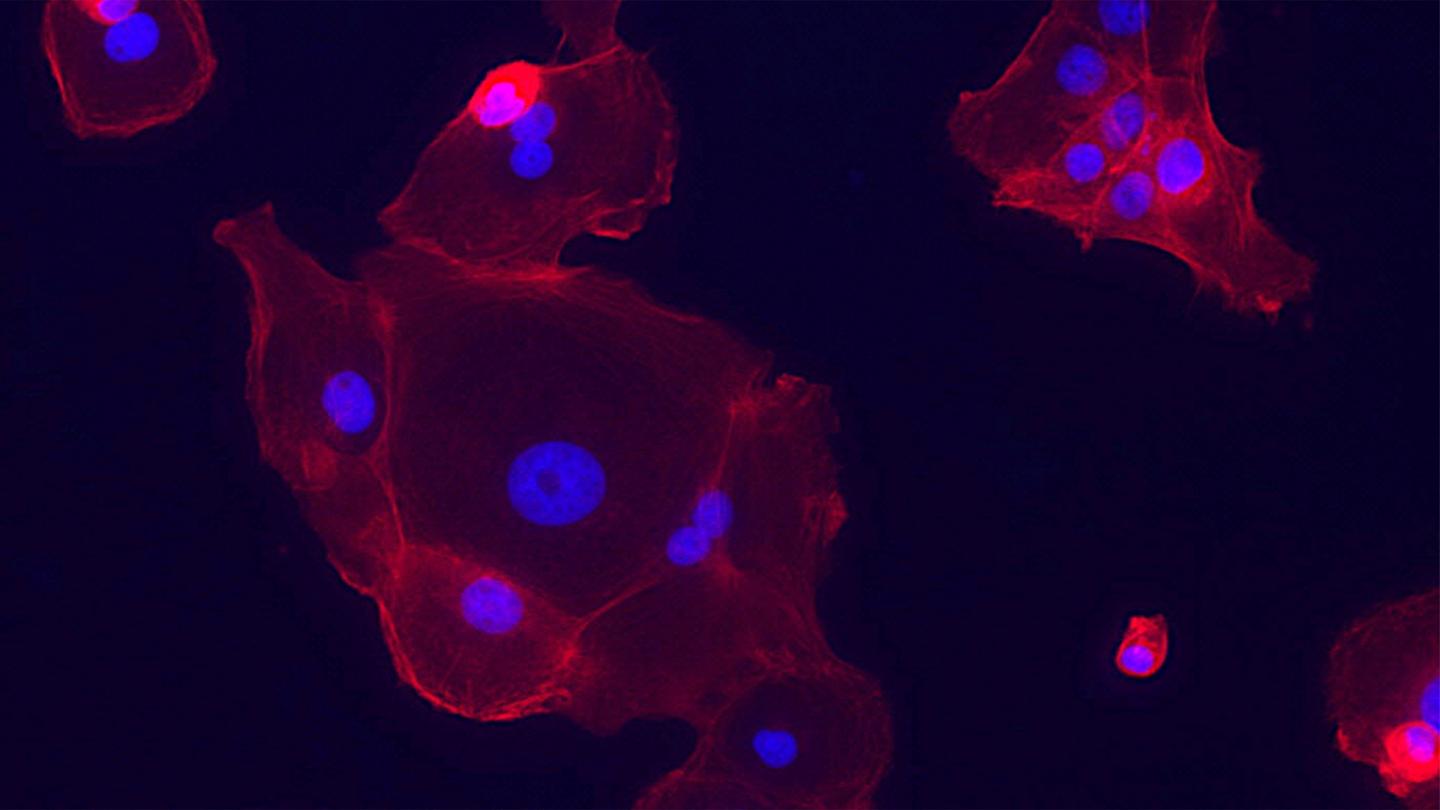
Credit: Sordella lab/CSHL, 2021

When a doctor gives a patient antibiotics for a bacterial infection, they usually require them to finish the entire treatment, even when symptoms go away. This is to ensure the drugs kill off any remaining bacteria. Cold Spring Harbor Laboratory (CSHL) Visiting Scientist Raffaella Sordella investigated a similar problem that occurs in some lung cancers.

Approximately 15% of non-small cell lung cancers have a mutation in a growth receptor called EGFR, causing tumor cells to grow uncontrollably. Researchers developed an effective drug that inhibits EGFR and kills cancer cells, but the tumor grows back later. Sordella wanted to understand the molecular mechanisms behind this relapse and how to prevent it.

Sordella and her team discovered that a small percentage of drug-resistant cancer cells were already present before treatment. Instead of relying on EGFR, these cells are dependent on another gene (AXL) for survival. Furthermore, they observed that the cells could transition between these drug-sensitive and drug-resistant “states.” When patients finish EGFR treatment, random modifications constantly occur in the remaining cells, causing both types of cells to grow back.

Sordella and her team worked with clinicians at Northwell Health and former CSHL Professor Gregory Hannon, now at the Cancer Research UK Cambridge Institute. Hannon’s research focuses on microRNA, a molecule that regulates cells by managing transcribed (copied) genes. Sordella explains:

“The genome is like a library. So when you have to do a recipe to bake something, you go there, you transcribe your recipe, you take it out from the library, you go in the kitchen. What these microRNAs do, they intercept all the recipes that are getting out from your library. And then, they decide whether this is a recipe that the cell should care about or not. So they are what they call ‘gatekeepers’ of a cell state.”

The researchers discovered that a certain microRNA called miR335 determines the “state” of the cancer cell. If the cancer cell loses miR335, a cascade of events is triggered that allows cells to use the alternative AXL pathway; the cells are not killed by drugs that target EGFR. These drug-resistant cells survive and eventually, the tumor grows back.

Understanding how resistance arises in lung cancer is key to figuring out how to eliminate a tumor. Sordella hopes that these findings could help develop treatments to wipe out both AXL- and EGFR-dependent cells from the start.

###

Media Contact
Sara Roncero-Menendez
[email protected]

Original Source

https://www.cshl.edu/preventing-lung-cancers-unwelcome-return/

Related Journal Article

http://dx.doi.org/10.7554/eLife.66109

Tags: BiologycancerGeneticsMedicine/Health
Share13Tweet8Share2ShareShareShare2

Related Posts

Acute Psychedelic Effects on Brain Entropy Revealed

June 24, 2026

Global Drop in Intimate Partner Violence Linked to Shifts in Attitudes and Behavior

June 24, 2026

Epiblast Diversification Fuels Early Blood Formation

June 24, 2026

Neutrophil S100A8/A9 Hinders Megakaryocyte Maturation

June 24, 2026
Please login to join discussion

POPULAR NEWS

  • Saying Goodbye to PGY-6: Pediatric Fellowship Realities

    103 shares
    Share 41 Tweet 26
  • Multi-Hospital Study Reveals Long Covid Burden Is Twice as High as Current Estimates

    92 shares
    Share 36 Tweet 23
  • Detection of EDCs in Breast Milk and Infant Urine Up to Six Months Highlights Early Exposure Risks

    77 shares
    Share 31 Tweet 19
  • New Drug Candidate Developed at McMaster Shows Potential for Treating Brain Cancer

    58 shares
    Share 23 Tweet 15

About

We bring you the latest biotechnology news from best research centers and universities around the world. Check our website.

Follow us

Recent News

Decades of Data Reveal Which Orcas Call Puget Sound Home

Introducing a Revolutionary Pixel Technology

Plasma Technology Extends Catalyst Lifespan in Hydrogen Production

Subscribe to Blog via Email

Enter your email address to subscribe to this blog and receive notifications of new posts by email.

Join 82 other subscribers
  • Contact Us

Bioengineer.org © Copyright 2023 All Rights Reserved.

Welcome Back!

Login to your account below

Forgotten Password?

Retrieve your password

Please enter your username or email address to reset your password.

Log In
No Result
View All Result
  • Homepages
    • Home Page 1
    • Home Page 2
  • News
  • National
  • Business
  • Health
  • Lifestyle
  • Science

Bioengineer.org © Copyright 2023 All Rights Reserved.