

• HOME
  • NEWS
  • EXPLORE
    • CAREER
      • Companies
      • Jobs
    • EVENTS
    • iGEM
      • News
      • Team
    • PHOTOS
    • VIDEO
    • WIKI
  • BLOG
  • COMMUNITY
    • FACEBOOK
    • INSTAGRAM
    • TWITTER
Thursday, March 26, 2026
BIOENGINEER.ORG
No Result
View All Result
  • Login
  • HOME
  • NEWS
  • EXPLORE
    • CAREER
      • Companies
      • Jobs
        • Lecturer
        • PhD Studentship
        • Postdoc
        • Research Assistant
    • EVENTS
    • iGEM
      • News
      • Team
    • PHOTOS
    • VIDEO
    • WIKI
  • BLOG
  • COMMUNITY
    • FACEBOOK
    • INSTAGRAM
    • TWITTER
  • HOME
  • NEWS
  • EXPLORE
    • CAREER
      • Companies
      • Jobs
        • Lecturer
        • PhD Studentship
        • Postdoc
        • Research Assistant
    • EVENTS
    • iGEM
      • News
      • Team
    • PHOTOS
    • VIDEO
    • WIKI
  • BLOG
  • COMMUNITY
    • FACEBOOK
    • INSTAGRAM
    • TWITTER
No Result
View All Result
Bioengineer.org
No Result
View All Result
Home NEWS Science News Health

Pregnancy reprograms breast cells, reducing cancer risk

Bioengineer by Bioengineer
May 27, 2020
in Health
Reading Time: 2 mins read
0
IMAGE
Share on FacebookShare on TwitterShare on LinkedinShare on RedditShare on Telegram

IMAGE

Credit: Chen Chen

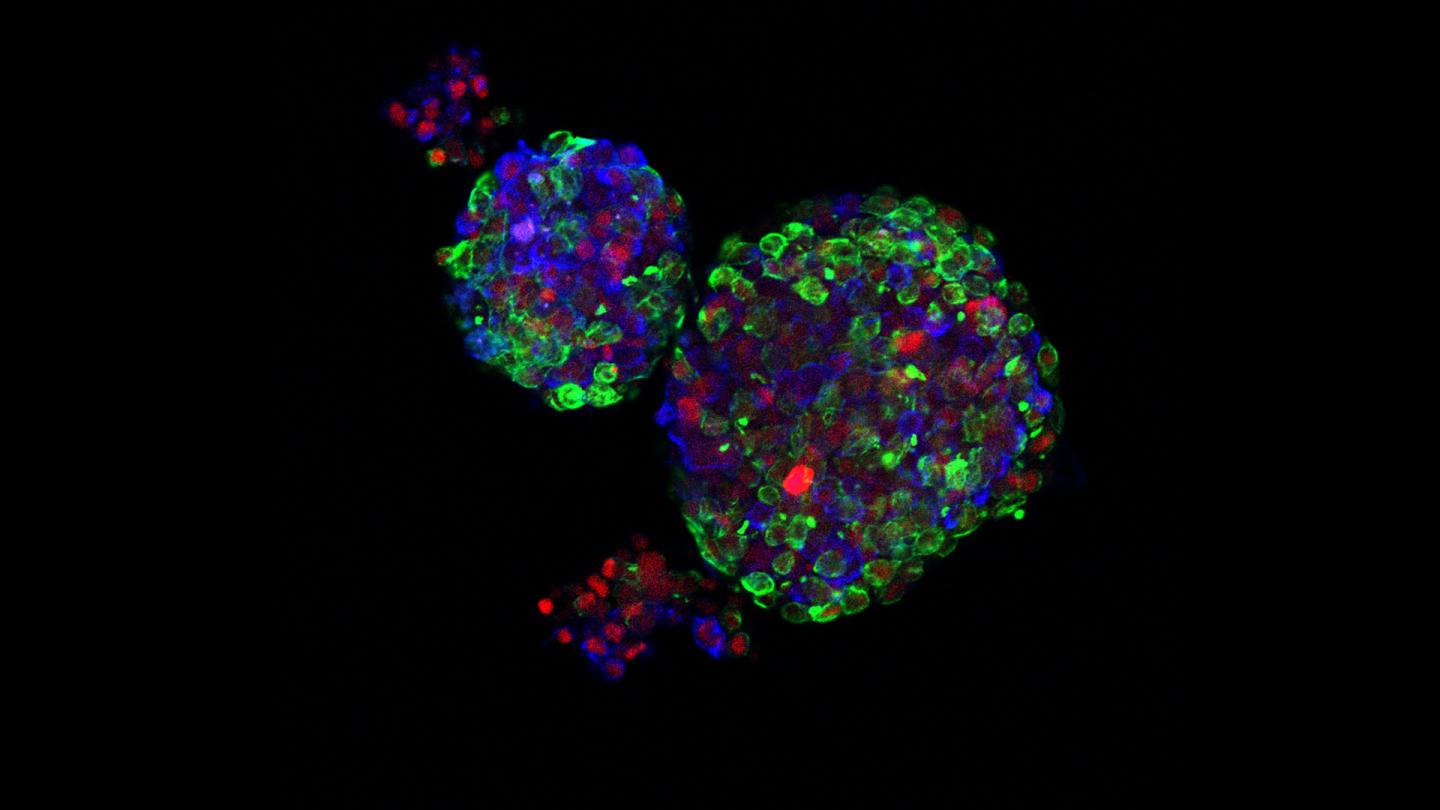
An early age of pregnancy (25 years and younger) is known to reduce the overall risk of breast cancer by over 30%. CSHL Assistant Professor Camila dos Santos spent several years teasing out the molecular details behind the protective effects of pregnancy. She discovered that one way breast cells protect themselves from cancer after pregnancy in mice is to tuck away a particularly potent cancer gene, cMYC, where it cannot cause harm. Another trick is to keep breast cells suspended in a state of “pre-senescence,” a moment in the cell’s life cycle between dying, living, and potential cancer. These findings provide new insights into future cancer treatment and better ways to identify risk before a tumor develops.

Pregnancy blocks the deadly action of cMYC by rolling the gene away. Dos Santos suggests a familiar image:

“The event of pregnancy itself changes how regions of DNA are open or closed. Think of a yo-yo. The center of the yo-yo is what we call the nucleosome. It’s a bunch of proteins that protects the DNA. When you release a yo-yo, you have a string, which represents that part of the DNA became open. And because it’s open, now transcription factors can bind and either turn on or off genes. If you pull your yo-yo back, everything gets inside the yo-yo. That’s what we call closed chromatin, so transcription factors cannot bind there.”

Pregnancy turns off the cMYC gene and turns on another set of genes that promotes senescence. Cells repeat the pattern open and closed DNA in subsequent pregnancies.

Senescent cells “are in the gray zone, not growing or dying,” says dos Santos. Depending on how the cells are pushed, they can either stay senescent, die, or grow too much and turn into cancer cells. “It’s a very strong system, but you can mess up with it. And if you do mess up with it, that’s when cancer develops. It allows us now to work on how we can keep those senescent cells from being perturbed.”

Dos Santos says this is one of the few examples showing that a normal developmental process such as pregnancy can inhibit a cell from interacting with a cancer-promoting gene. She summarized her key findings this way: “You have cancer genes being shut down at the same time that genes leading this cell to a kind of a precipice, like they’re going to jump out and die, get turned on. We believe these signals are the key players for why these cells do not turn into cancer.”

Dos Santos and her team are currently working with human breast tissue organoids to see if human tissues act like those in mice. She’s also transplanting cells altered by pregnancy into mice that have never been pregnant, in order to ascertain whether the altered cells can affect a non-pregnant environment. Both experiments suggest new drug targets. “This has opened up doors for us to further explore questions that have not been explored before,” said dos Santos, such as whether puberty or aging can prevent cancer the way pregnancy does.

###

Media Contact
Sara Roncero-Menendez
[email protected]

Tags: BiologyBreast CancercancerMedicine/Health
Share12Tweet8Share2ShareShareShare2

Related Posts

Aversive Learning Hijacks Brain Sugar Sensor

March 25, 2026

Can Psychosocial Factors Influence Cancer Risk?

March 23, 2026

Depression Factors in Elderly: Pre vs. Post-COVID Analysis

March 23, 2026

Hidden Health Crises Among US and UK Volunteers in Ukraine Uncovered in New Study

March 23, 2026
Please login to join discussion

POPULAR NEWS

  • blank

    Revolutionary AI Model Enhances Precision in Detecting Food Contamination

    96 shares
    Share 38 Tweet 24
  • Imagine a Social Media Feed That Challenges Your Views Instead of Reinforcing Them

    1003 shares
    Share 397 Tweet 248
  • Uncovering Functions of Cavernous Malformation Proteins in Organoids

    54 shares
    Share 22 Tweet 14
  • Promising Outcomes from First Clinical Trials of Gene Regulation in Epilepsy

    51 shares
    Share 20 Tweet 13

About

We bring you the latest biotechnology news from best research centers and universities around the world. Check our website.

Follow us

Recent News

In-Sensor Cryptography Links Physical Process to Digital Identity

Can Psychosocial Factors Influence Cancer Risk?

Depression Factors in Elderly: Pre vs. Post-COVID Analysis

Subscribe to Blog via Email

Success! An email was just sent to confirm your subscription. Please find the email now and click 'Confirm' to start subscribing.

Join 78 other subscribers
  • Contact Us

Bioengineer.org © Copyright 2023 All Rights Reserved.

Welcome Back!

Login to your account below

Forgotten Password?

Retrieve your password

Please enter your username or email address to reset your password.

Log In
No Result
View All Result
  • Homepages
    • Home Page 1
    • Home Page 2
  • News
  • National
  • Business
  • Health
  • Lifestyle
  • Science

Bioengineer.org © Copyright 2023 All Rights Reserved.

