Credit: Emily Grason/University of Washington
Recognizing the signs of a predator can mean the difference between living to see another day and becoming another critter's midday snack.
All prey animals, whether a swift-footed deer or a slow-moving snail, use cues from their environment to sense the presence of a threat. It's what keeps them alive — or at least gives them a shot at getting away.
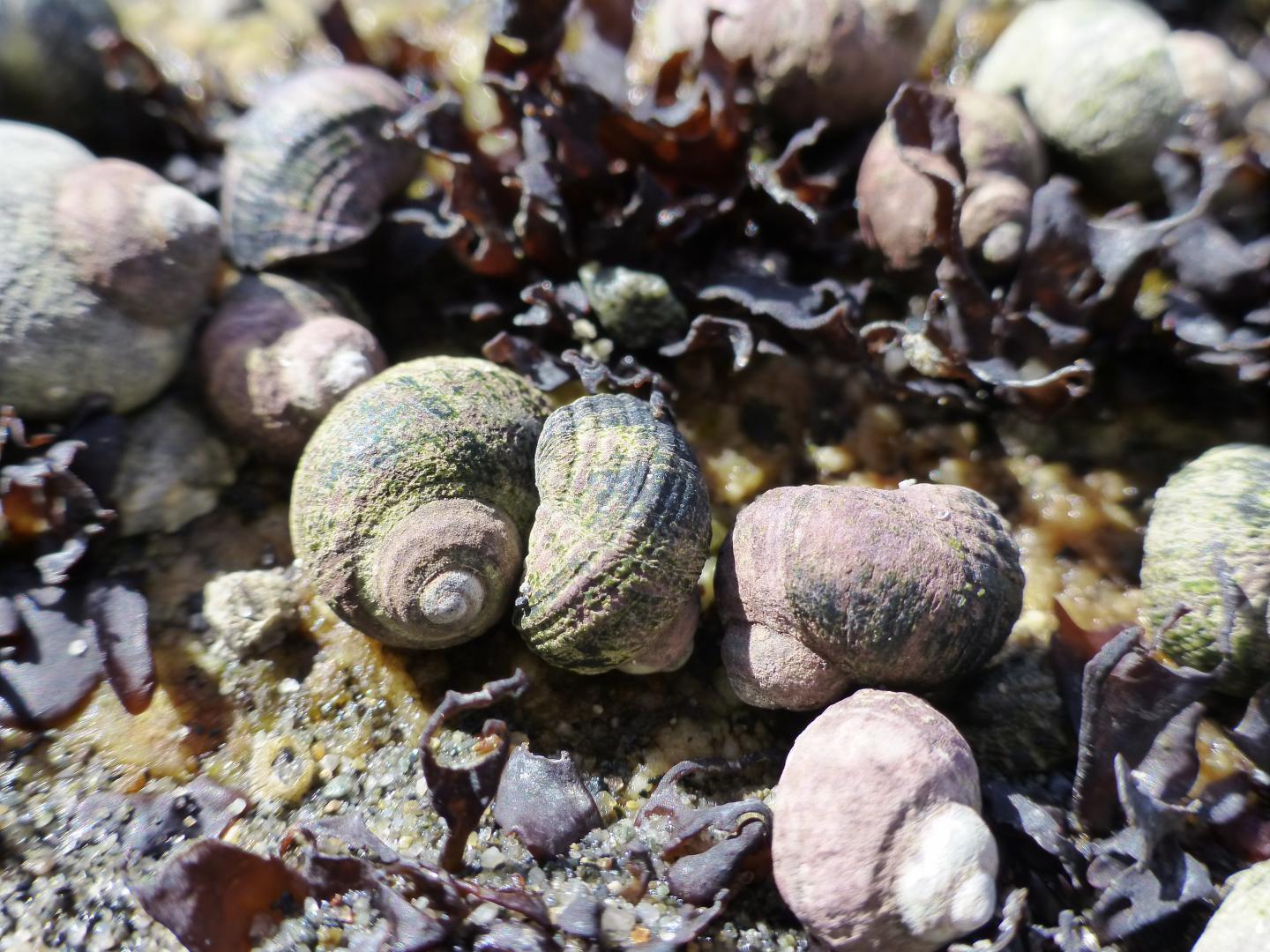
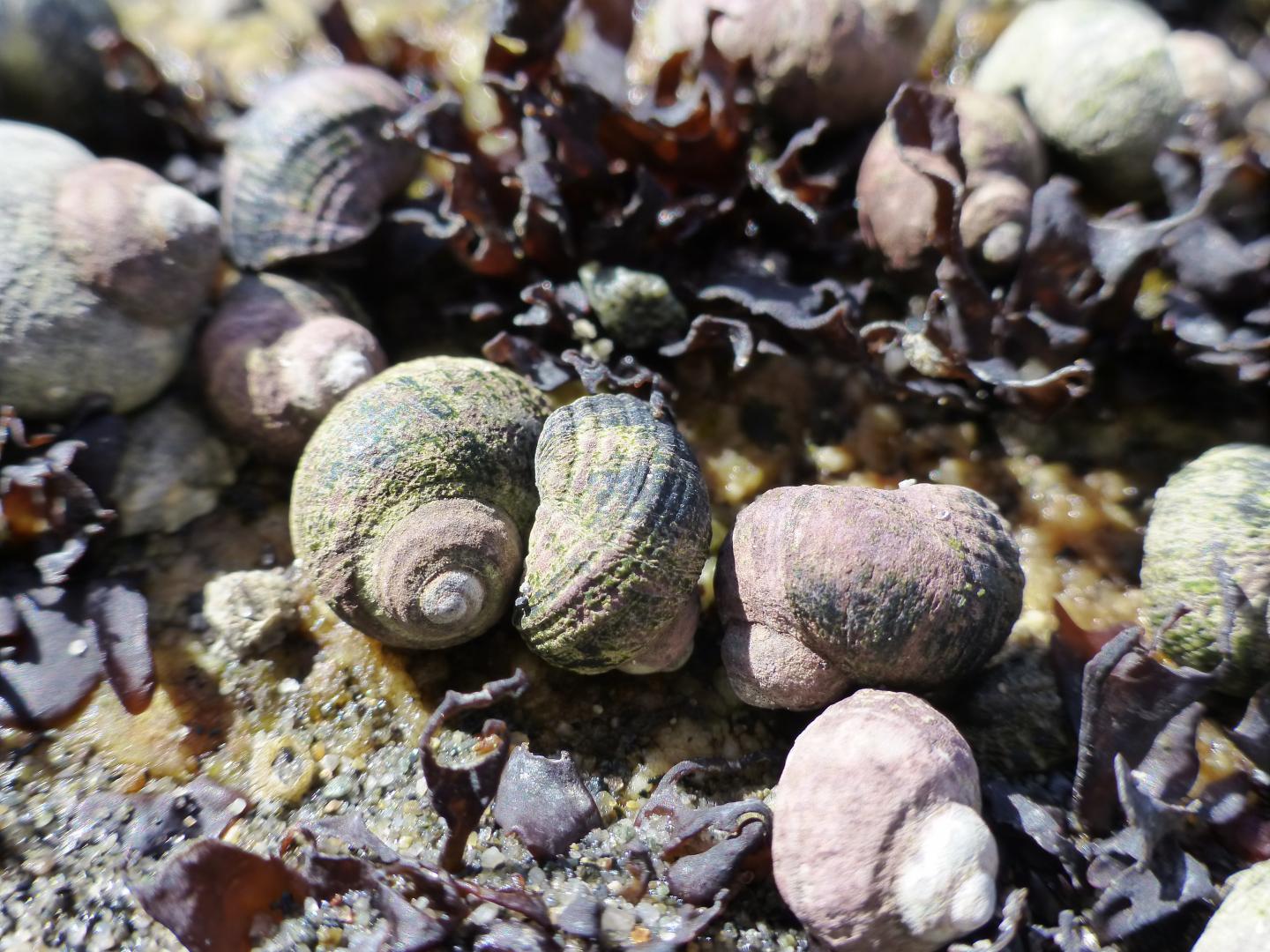
But the specific cues that trigger prey defenses vary depending on the species of prey and their history in the ecosystem, a new University of Washington study finds. The research, published online Jan. 12 in the journal American Naturalist, analyzed the behavior of seven species of marine snails found in Washington waters — three native and four invasive — and discovered that native and invasive snails use different cues to assess risk.
The invasive snails were introduced unintentionally at least a century ago as hitchhikers on imported oysters. In experiments with these invasives, a UW researcher found that they fled quickly (as snails can do) and hid when they smelled chemicals released from crushed snails of the same species — meant to mimic a predator eating their close kin. This is surprising because these so-called "alarm cues" don't provide the snails with much of a clue as to what or where the danger might be. Panicking with only vague information to go on could even be counter-productive, causing snails to miss their lunch unnecessarily, or actually make them more vulnerable to a predator.
By contrast, the three species of native snails didn't react when they encountered the same situation. Instead, they went about their business until they had multiple sources of information, including from a predator and other prey, before fleeing or hiding.
In other words, the fear reactions in native snails were more finely tuned, while the invasive snails jumped ship at the first whiff of a threat.
"It's pretty rare for a distinction between native and invasive species to be as consistent as it is here — which suggests it might hold true in other species and locations," said author Emily Grason, an invasion ecologist at UW-based Washington Sea Grant who recently completed her doctorate in biology at the UW.
This study is the first to compare multiple species and their reactions to threats using many different predator cues. Because the reactions of native and non-native snails split neatly, it suggests there could be a link between sensitivity to alarm cues and invasion success. On one hand, that can keep them from important tasks like eating and mating, but it also can fortify their strength as an invader, Grason explained.
"The non-native snails show up and they are just neurotic enough, and a bit wary, and that actually helps them survive in certain situations," she said. "You end up with invasive snails that hide at the right time, even if they don't know what the predator is. And that's exactly what happens when snails show up in a new spot; they are surrounded by predators never encountered before. General wariness might keep them alive."
Grason ran separate lab experiments for each species of snail. Two bins, with flowing seawater, were attached by a pipe, and she manipulated cues of a predation threat in the upstream bin while recording snails' behavior in the downstream bin. The cues tested for all species included a crab, either hungry or fed, crushed snails of the same species and two other combinations of these factors.
The invasive snails' catchall reaction to signals of danger can help ecologists better understand invasions and predict their impact on ecosystems, which is never easy.
"Ultimately, biological invasions are a Pandora's box because we don't know what will happen," Grason said. "Nevertheless, understanding the details of an invasion — especially where there are and aren't patterns — is important. Thinking about biological invasions in new ways is going to offer us more tools with which to understand and hopefully intervene, or mitigate the impacts on other species."
###
This study was funded by the UW, the Conchologists of America, the National Shellfisheries Association, the Pacific Northwest Shell Club and the National Oceanic and Atmospheric Administration.
For more information, contact Grason at [email protected].
Media Contact
Michelle Ma
[email protected]
206-543-2580
@UW
http://www.washington.edu/news/
############
Story Source: Materials provided by Scienmag